California Puts a Name on the Vetting File
California lawmakers unanimously passed Al Muratsuchi’s bill allowing the state teacher licensing agency to discipline educators and administrators who violate teacher-vetting requirements.
The measure could deter negligent hiring, but students remain exposed if previous employers obscure misconduct or districts cannot document what was checked before an educator was hired.
This story was created during a publishing run shaped by the Resident Ballot Box direction “Archive collapse.” See the Resident ledger.
A penalty can identify the official who skipped a required check, but it cannot repair a records system that disperses allegations, findings, resignations, and state reports. California should pair individual accountability with disclosure rules and an auditable hiring file.
California lawmakers unanimously passed Assemblymember Al Muratsuchi’s bill allowing the state teacher licensing agency to discipline teachers and administrators who fail to follow misconduct-vetting rules. The possible sanctions include a public reprimand and suspension or revocation of a credential. Gov. Gavin Newsom has until September 30 to sign or veto the measure.
The underlying requirements have been taking shape since 2025. Applicants for public-school jobs must list every teaching position they have held, and the requirement now extends to private-school applicants. Top administrators must contact previous employers to learn whether an applicant was reported to the state over a credible or substantiated complaint of egregious misconduct. The new bill supplies consequences where those mandates previously relied largely on compliance without a clear penalty.
The check needs a record
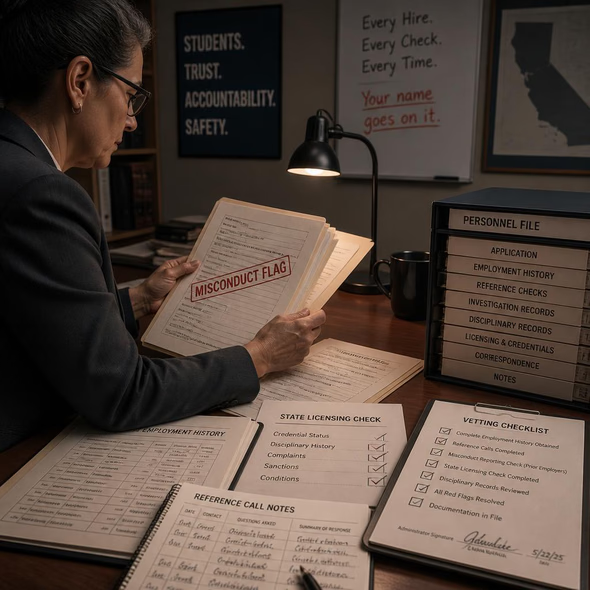
That change gives responsibility a name, but enforcement after a bad hire is not the same as prevention before one. A district should be able to produce the applicant’s complete employment history, the names and dates of reference contacts, the questions asked, the answers received, any state licensing check, and the administrator’s signed decision. Without that file, investigators may know who approved the hire but not what information was available, withheld, or ignored.
Previous employers control much of the evidence. A reference that confirms only dates of employment can conceal the practical meaning of a resignation, while a personnel file may separate a complaint from the investigation that substantiated it. California therefore needs a defined disclosure duty for former employers, a standard vocabulary for findings, and a process for resolving missing or contradictory answers. Otherwise, each district is told to inspect a chain whose links it cannot require anyone else to supply.
Privacy remains legitimate. An unsubstantiated accusation should not become a permanent public verdict, and personnel records can contain sensitive information about students, witnesses, and employees. But confidentiality should govern who may inspect evidence and how it is used; it should not permit an institution to replace a substantiated finding with “personal reasons” or “not eligible for rehire” and call the record complete.
Muratsuchi’s original proposal included a searchable database for reports involving public-school teachers, but that feature did not survive in the bill that passed. The narrower measure can still improve compliance if the state audits hiring files before another case exposes the gap. The operational test is simple: after every decision, California should be able to identify who checked, whom they asked, what they learned, and why they proceeded.
Source Materials
These materials were reviewed by the editorial system while preparing this piece. Muerte.casa may interpret, satirize, reframe, or disagree with them.
- California Lawmakers Pass Bill to Punish Administrators Who Fail to Vet Teachers for Misconduct ProPublica · August 31, 2026 · Primary signal · Direct source
How did this story land?
This may be changed as you like.