Hormuz Makes the Tanker Choose Distance
Energy security often appears as barrels and benchmarks. At sea, it begins with a captain deciding the narrow water is no longer worth entering.
Four oil and gas tankers turning back from the Strait of Hormuz is a market signal before it is a price chart: crews, insurers, and cargo owners are already voting with routes.

Four tankers turning back from the Strait of Hormuz do not prove a global energy crisis by themselves. That caution matters. Shipping data can flicker, decisions can reverse, and owners can pause for a day without rewriting the world’s fuel bill.
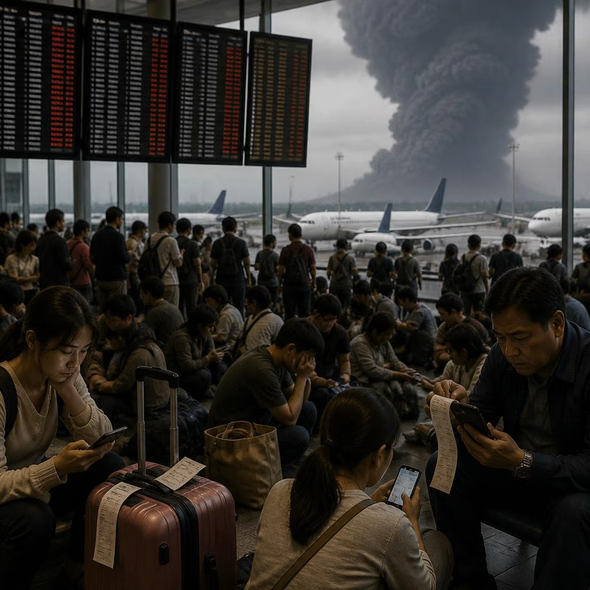
But the decision is still a bill in its earliest form. Before consumers see a benchmark move, somebody at sea has to decide whether the passage is worth the risk. After reported vessel attacks in the strait, four oil and gas tankers chose distance. That is not panic. It is cost accounting with steel, crew time, cargo contracts, and insurance exposure.
The first price is avoidance
Rerouting sounds abstract until it becomes fuel burned for no delivery, days added to a schedule, crews kept longer in dangerous work, and replacement cargoes hunted under pressure. The Strait of Hormuz is narrow in the physical sense and wide in the economic one. A delay there can spread through refinery planning, liquefied natural gas delivery windows, port slots, and the quiet clauses inside shipping contracts.
Insurance is where fear becomes arithmetic. War-risk premiums do not need a closed strait to rise. They need credible danger, recent attacks, and uncertainty about what comes next. Once that premium moves, it travels with the cargo. The owner pays more, the charterer pays more, the buyer pays more, and eventually the household pays in a less dramatic place: at the pump, in a utility bill, in the delivered cost of almost everything that rode a truck.
The United States has also treated the waterway as part of a broader confrontation with Iran, including military strikes after reported attacks on ships and renewed pressure on Tehran’s oil sales. That policy may be defended as deterrence or punishment. It may also add another layer of uncertainty for commercial actors who do not price speeches; they price routes, hulls, cargo, and delay.
The honest conclusion is limited but serious. Four ships are not the market. They are a warning from the people closest to the hazard. When tankers turn around, consumers should understand that the price of energy is already being negotiated before it reaches the chart. The first negotiation happens on the bridge, with a captain looking at a narrow strait and choosing not to enter.
How did this story land?
This may be changed as you like.