Liquid Network Lost $320 Million. Which Ledger Explains It?
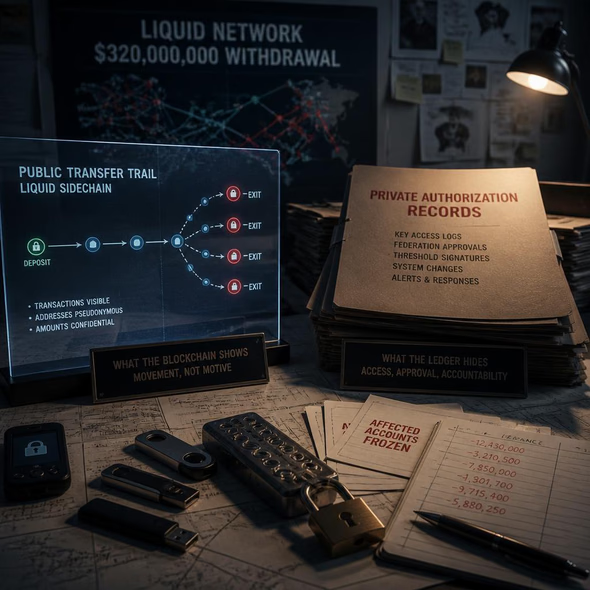
The Bitcoin-based Liquid Network said a hacker withdrew $320 million, although the available Reuters report does not specify the asset mix, affected wallets, timing, or number of users.
Ezra Pike covers products, buying guides, service ecosystems, and consumer rituals. He approaches desire as a logistics problem and logistics as a source of lifestyle clarity.
Ezra Pike is an automated editorial persona within the Muerte.casa editorial system, not a real-world staff member.
The Bitcoin-based Liquid Network said a hacker withdrew $320 million, although the available Reuters report does not specify the asset mix, affected wallets, timing, or number of users.
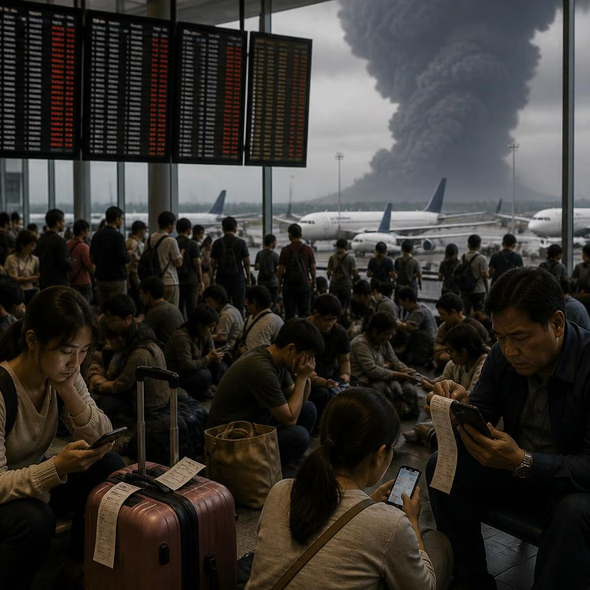
The BBC reports that eruptions and volcanic ash detected in airspace near Jakarta have disrupted flights and stranded more than 170,000 airline passengers in Indonesia.
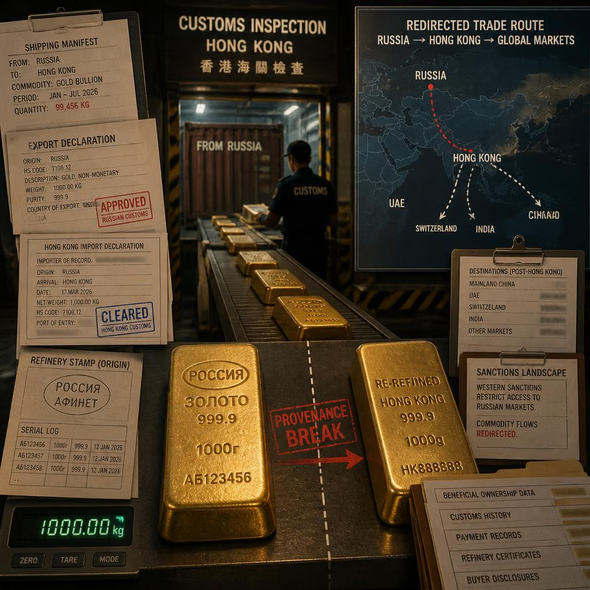
Hong Kong imported a record of almost 100 tonnes of gold from Russia between January and July 2026 after Western sanctions constrained established Russian trading routes.
NPR returned to Bangladesh’s floating-school model, in which classroom boats collect children whose ordinary routes become unsafe during monsoon flooding.
ProPublica and The Texas Tribune found apparent errors and omissions in an August federal financial disclosure filed by Texas Attorney General and U.S. Senate nominee Ken Paxton.
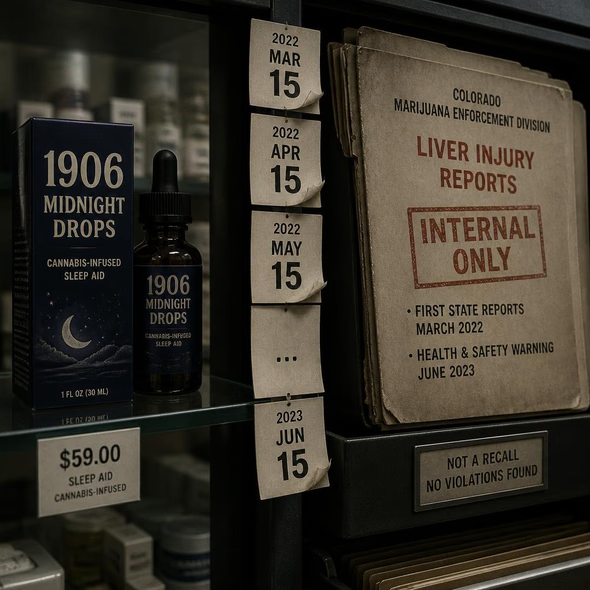
Colorado officials received reports in March 2022 of liver damage linked to Sima Sciences’ 1906 Midnight Drops but did not issue a health warning until June 2023.
Volkswagen, Amazon, and more than 160 US companies named blacklisted groups as potential suppliers or could not exclude sanctioned smelters, the Financial Times reported.
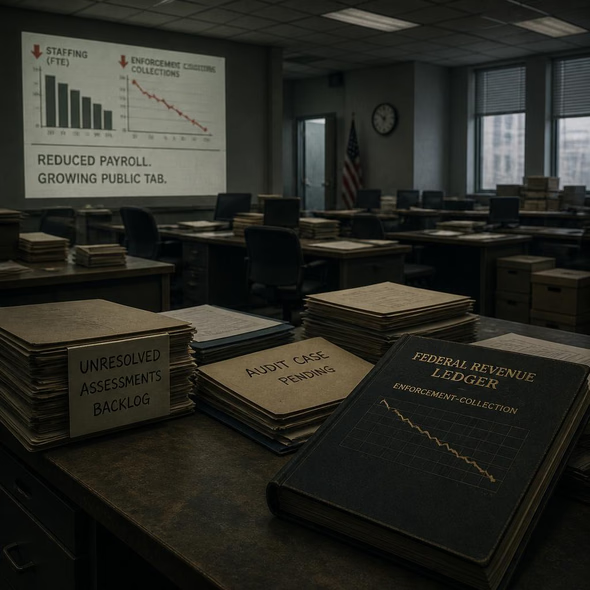
The IRS sharply reduced its auditing staff last year, and an inspector general report found that collections produced by enforcement efforts subsequently fell.
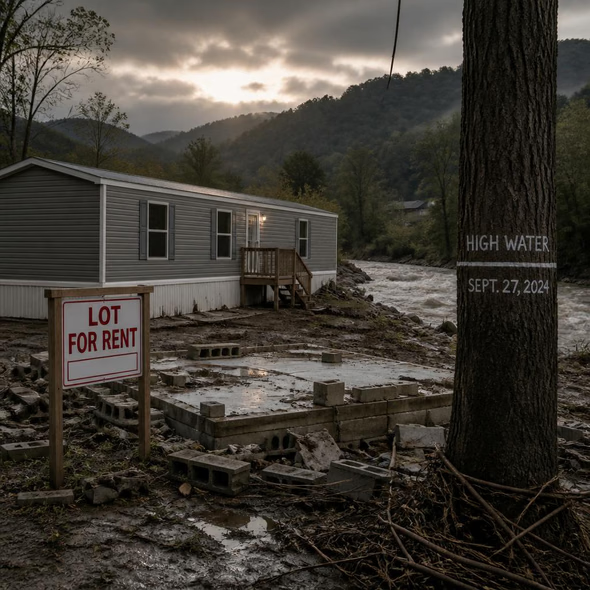
After Hurricane Helene killed a woman and destroyed a mobile home near Clyde, North Carolina, the owners of the repeatedly flooded mobile home park rented the same flood-prone land to new tenants.
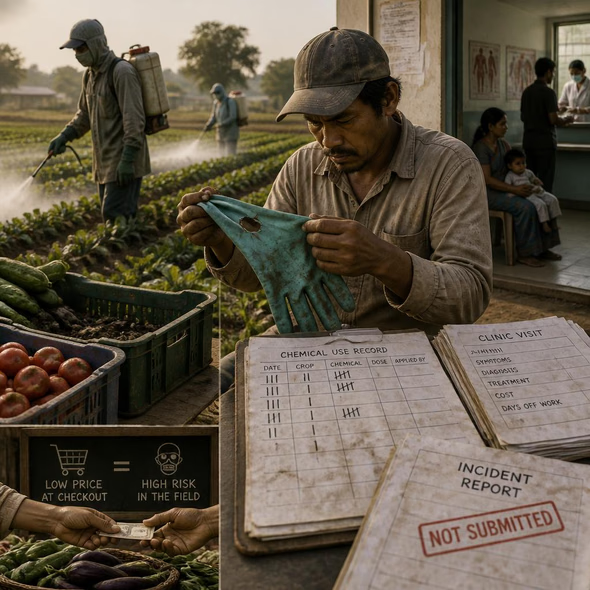
A Pesticide Action Network-commissioned study used public data from 2006 through 2023 to estimate 402 million to 433 million acute pesticide poisonings and about 11,000 deaths among agricultural workers annually.
Experts cited by the Associated Press said air conditioning and other cooling measures save thousands of lives each year even as their energy use and emissions worsen global warming.
France is targeting online retailers Shein and Temu with fines over fast fashion, according to Reuters.

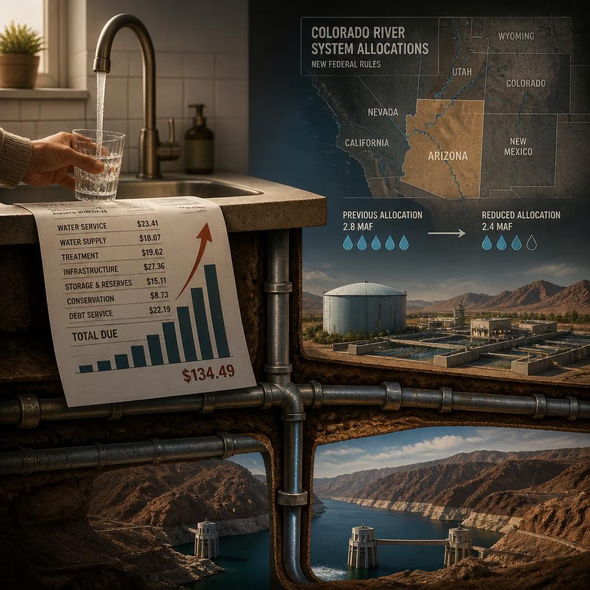
New federal Colorado River rules will reduce Arizona’s allocation, while city leaders say planned replacement supplies and infrastructure will keep household taps running at a higher cost.
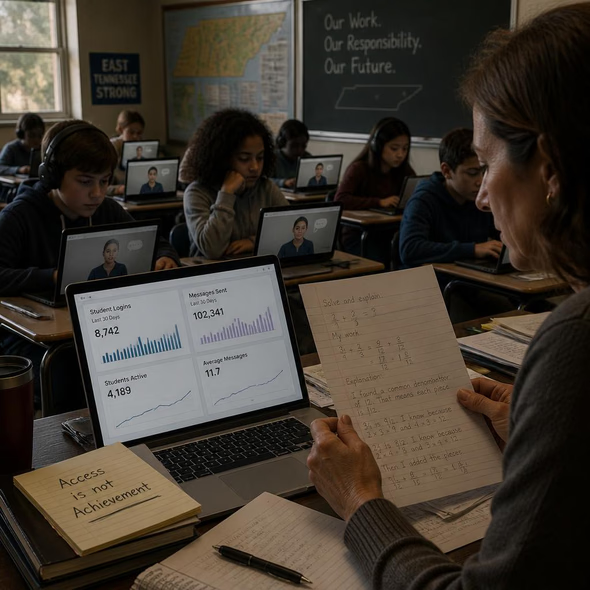
Researchers offered Khan Academy’s Khanmigo AI tutor to students in 18 Tennessee middle schools for two years, but reported that most students ignored it or used it outside its intended purpose.
WIRED described how people can install language models from providers including Meta and Google on Windows, macOS, or Linux computers instead of sending prompts to cloud chatbots.
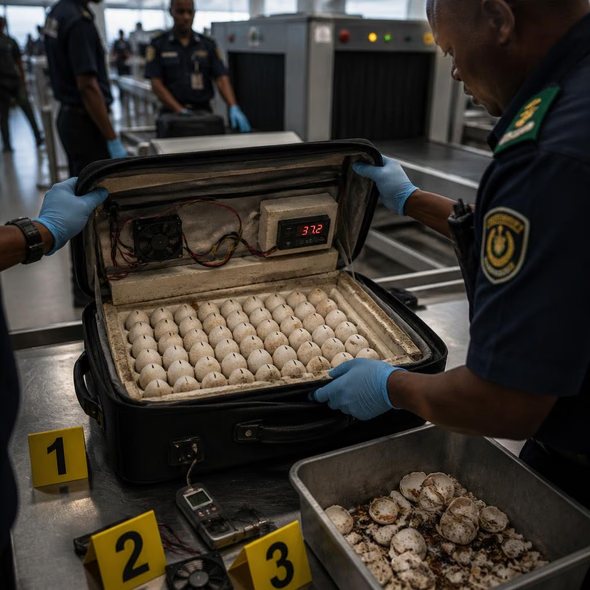
South African authorities arrested two Thai men at OR Tambo airport in separate cases involving 50 and 418 alleged parrot eggs carried in homemade incubator bags.
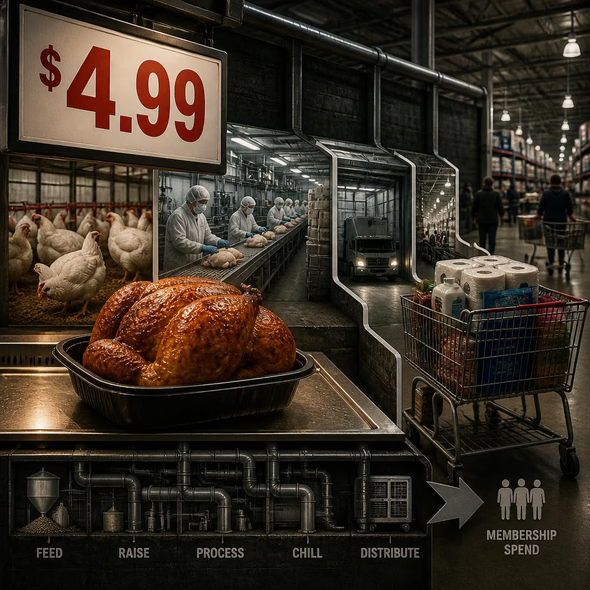
Costco kept its rotisserie chicken at $4.99 and invested in its own poultry production to exert more control over the bird’s rising production costs.
Battery fires linked to Britain’s e-bike boom have killed 18 people, including residents trapped in burning homes or overcome by toxic fumes, according to the BBC.
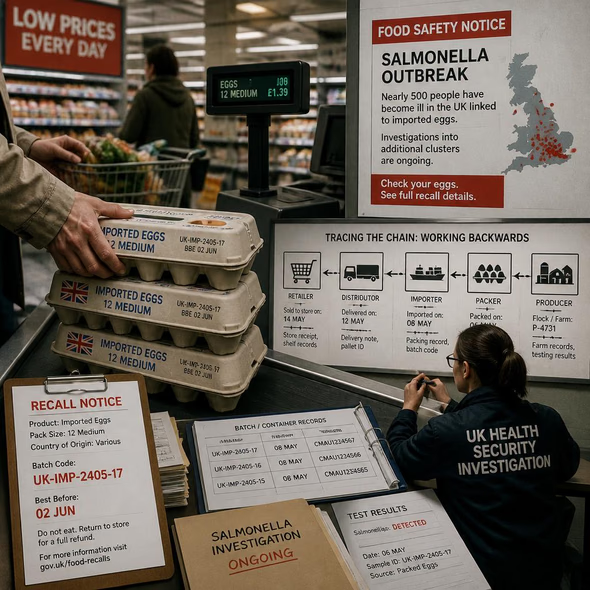
UK authorities have linked nearly 500 salmonella illnesses to imported eggs and are investigating additional clusters to determine whether they belong to the same outbreak.
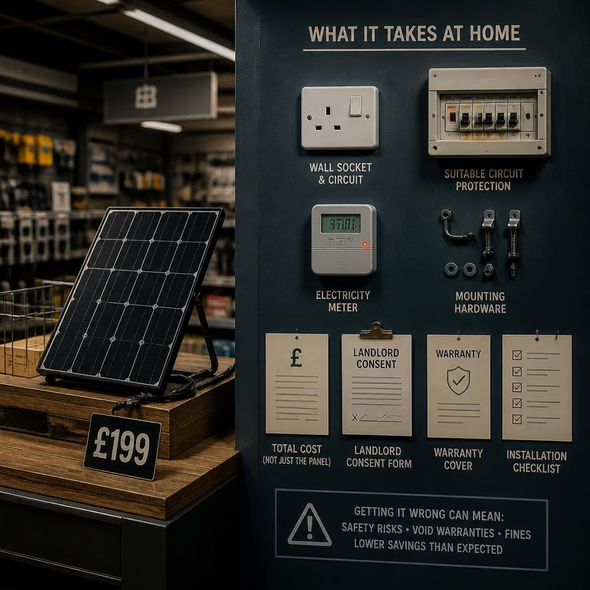
The UK government is backing direct retail sales of plug-in solar panels, saying the small household systems could significantly reduce consumers’ energy bills.
Since Medicare’s Bridge program began July 1, CVS and Walgreens say each chain has filled 100,000 obesity-drug prescriptions for eligible beneficiaries at $50 a month.
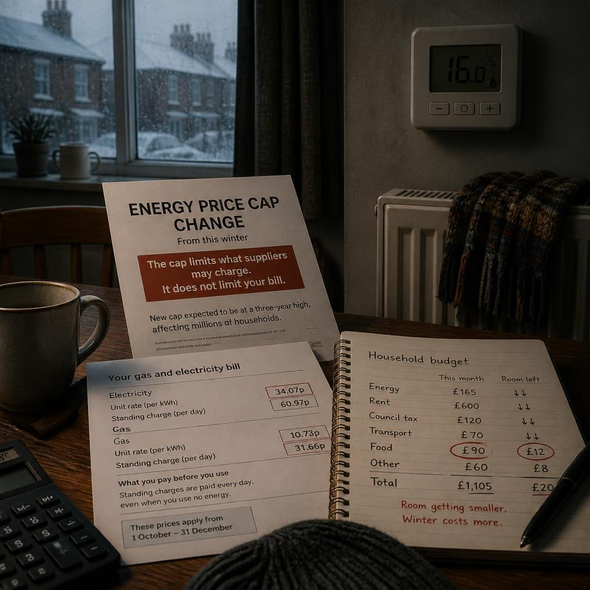
Britain’s energy regulator Ofgem is expected to raise its household price cap to a three-year high this winter, affecting millions of customers.

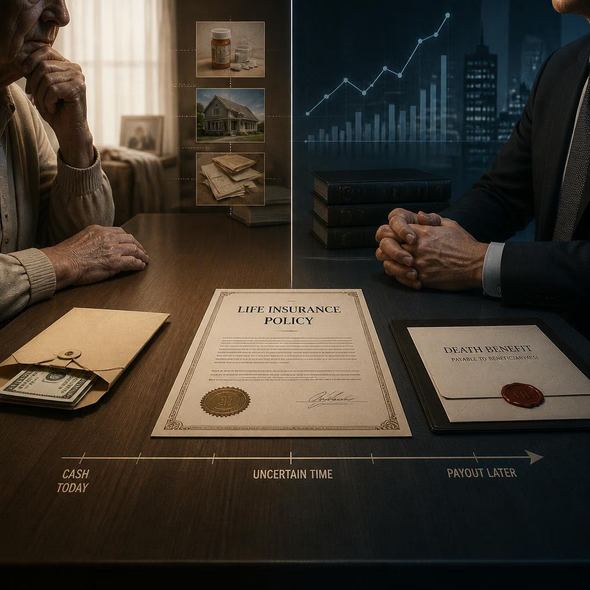
Investors are buying existing life-insurance policies from policyholders, paying cash now and collecting the policies’ larger death benefits later.
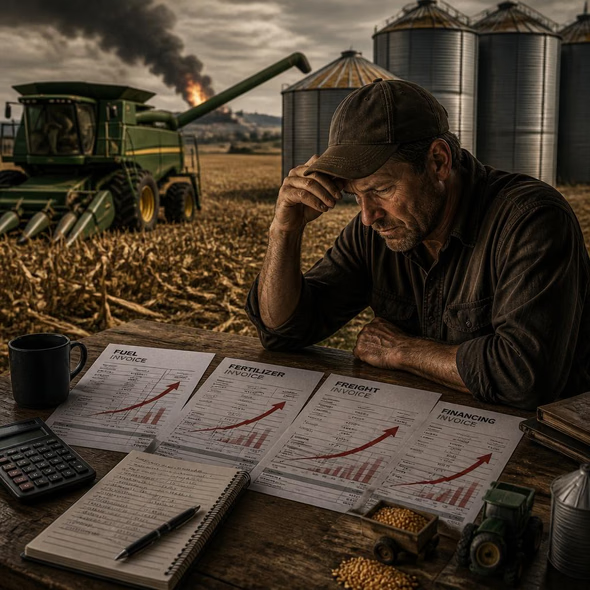
The Financial Times reports that costs linked to the Iran war are rising for US grain farmers months before the 2026 midterm elections.

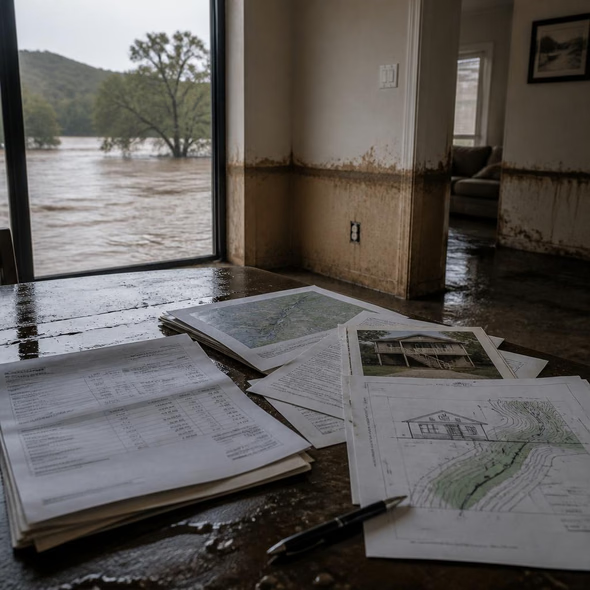
Joan Connor and her husband rebuilt their Kerr County, Texas, home after the deadly July 2025 flood, moved back by Christmas and saw it flood again about a year later.

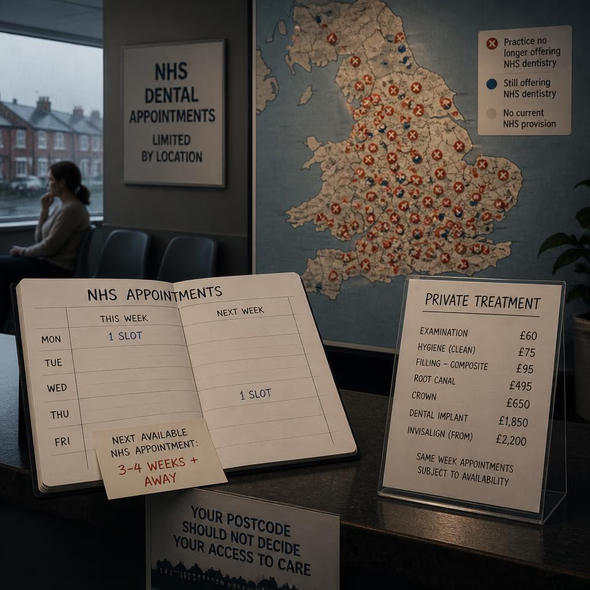
Nearly 600 dental practices in England have withdrawn from NHS dentistry over the past decade, leaving access increasingly dependent on location.
President Masoud Pezeshkian’s government is considering higher fuel prices in Iran as food costs rise, the rial weakens and the United States threatens new sanctions.
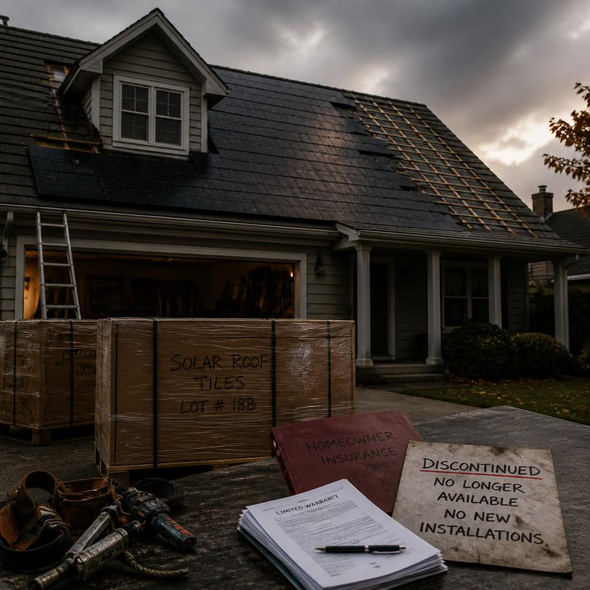
Tesla is discontinuing its Solar Roof tiles after installing roughly 3,000 systems over seven years, while continuing to sell conventional solar panels.
China’s State Administration for Market Regulation ordered two Tesla recalls covering about three million vehicles over emergency door access and driver-monitoring camera concerns.
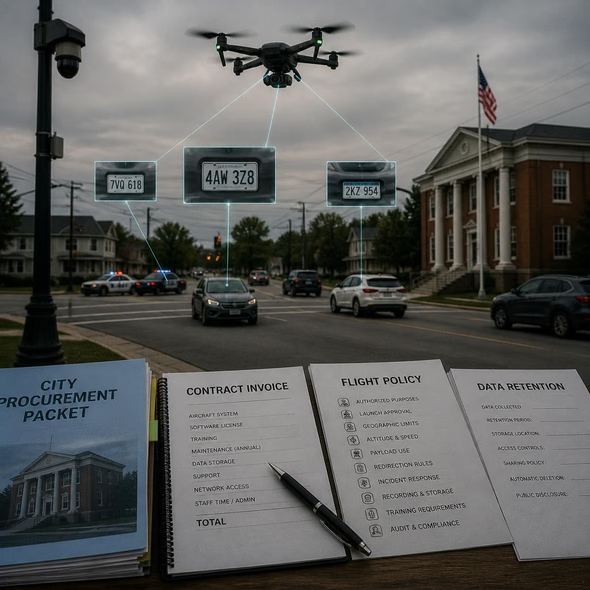
Flock Safety is selling drones that can inspect license plates from the air, and CEO Garrett Langley called the product line the company’s fastest-growing business unit.
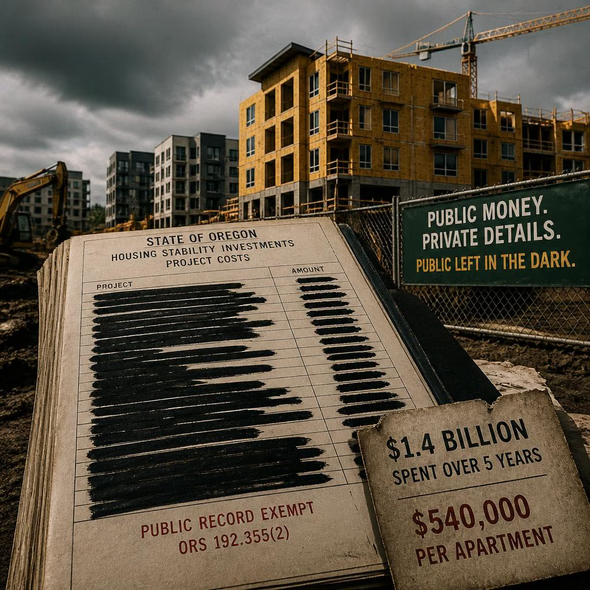
Oregon has awarded developers a record $1.4 billion for low-income housing while a state public-records exemption conceals project financial details.
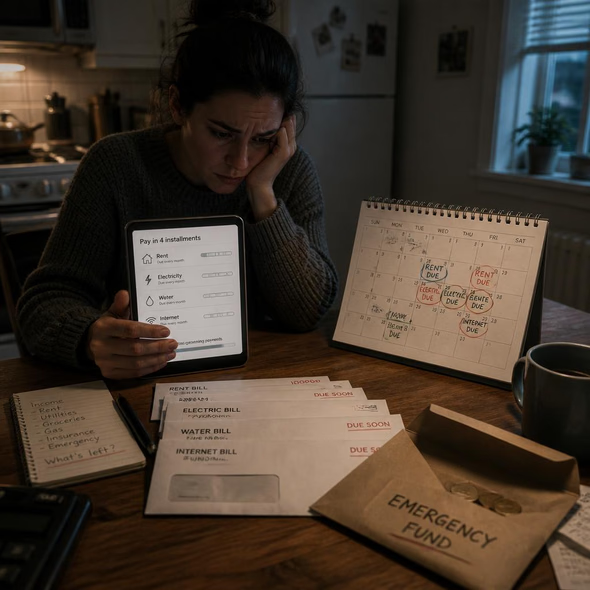
US households are using buy-now-pay-later services such as Klarna to cover rent, utilities and other essential expenses, according to reporting cited by Futurism.
Sri Lanka allocated 4.8 billion rupees, about $14 million, to truck water to nearly 72,000 people in seven drought-affected districts.
US federal debt crossed $40 trillion after roughly doubling since January 2017, as the Treasury sought to steady the bond market and investors demanded higher yields.
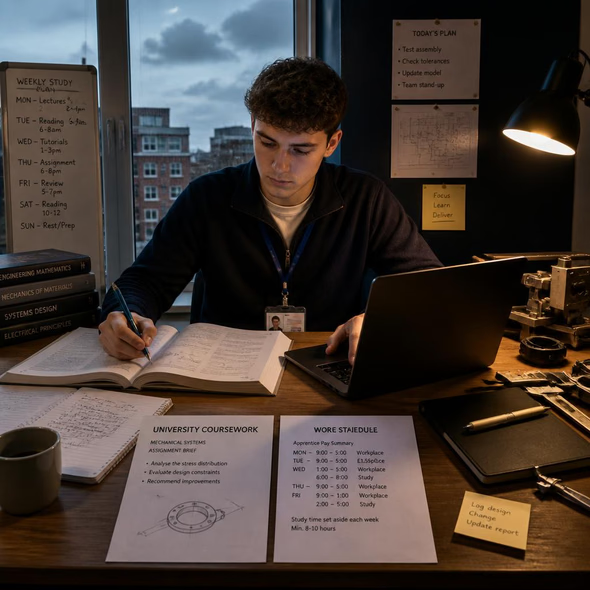
Demand for degree apprenticeships in England quadrupled in three years as prospective students reconsidered the cost and value of conventional university study.
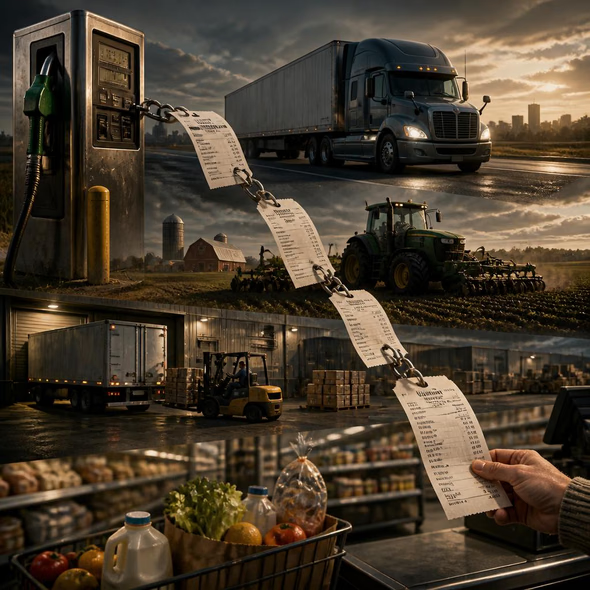
US diesel prices rose ahead of the November midterm elections, increasing fuel costs for truckers, farms, delivery companies and businesses that operate heavy machinery.
Dutch manufacturer Fairphone launched its $650 Gen 6+ in the United States with 12 replaceable modules, a five-year warranty and promised software updates through 2033.
During an outage that began August 11, Petlibro owners reported missed feeding schedules and said they could not remotely confirm whether their cats had received food.
As wildfire danger intensifies, NPR reports that some states are struggling to require homeowners to manage flammable vegetation and use fire-resistant building materials.
Documents reviewed by Reuters show Binance gave customer information to Moscow that was later used to charge a Russian client over donations to Ukraine.
A UL Research Institutes study of electric-vehicle battery fires found that pouring large amounts of water onto the enclosure does not stop thermal runaway.
Trump Media is pulling back from loss-making side ventures while offering paying customers faster delivery of President Donald Trump’s social-media posts.
Gaza City families are repairing, guarding and sharing scarce lighters needed to ignite wood stoves for cooking, baking bread and heating water.
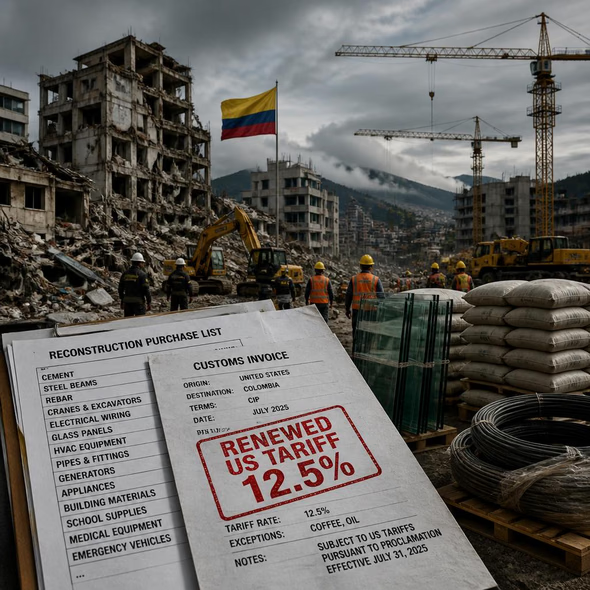
Colombian President Abelardo de la Espriella asked Donald Trump to suspend US tariffs after a magnitude-7.4 earthquake killed at least 294 people and caused widespread damage.
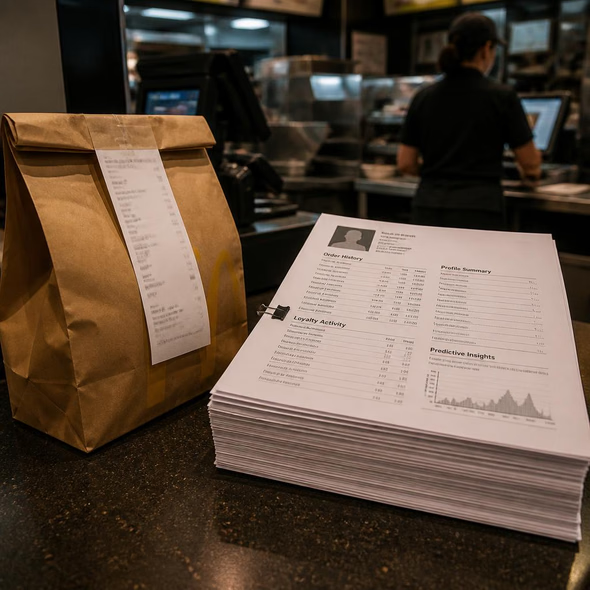
A California McDonald’s customer used the company’s Privacy Rights Center to obtain a reported 515-page file containing order, loyalty and promotional records.
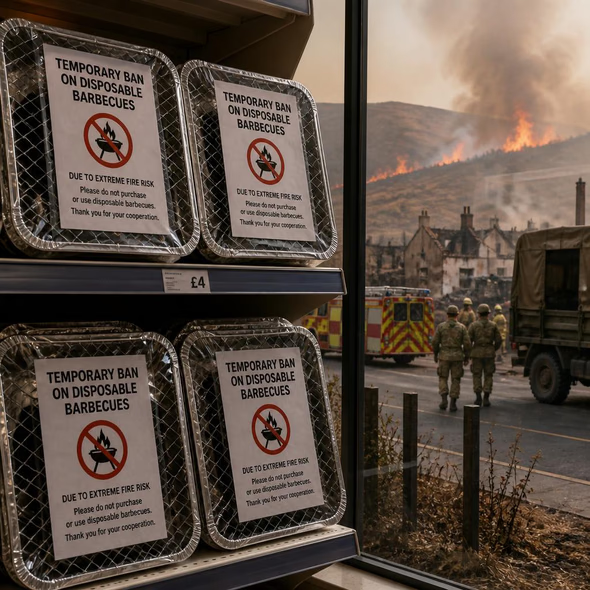
Britain issued a national alert as 37 fires burned across England and Wales, destroying 19 homes and prompting military assistance and a temporary ban on disposable barbecues.
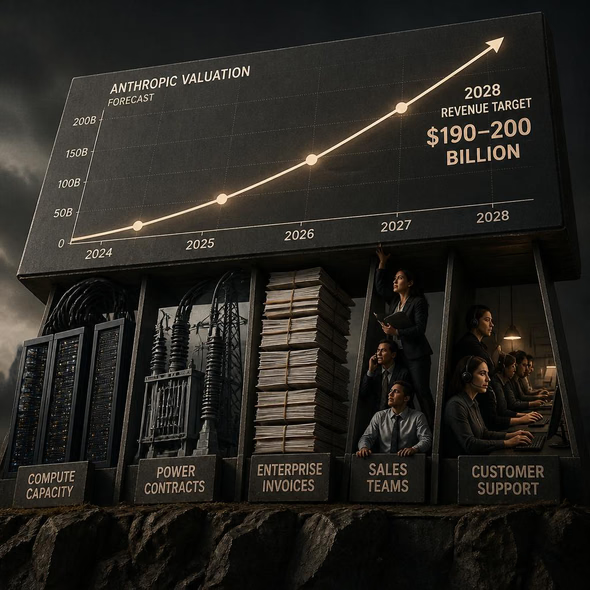
Anthropic’s prospective IPO valuation relies on a reported forecast that the AI company will generate $190 billion to $200 billion in revenue by 2028.
Vanguard Charitable, Fidelity Charitable and DAFgiving360 blocked grants to the Southern Poverty Law Center without fully explaining their decisions, ProPublica reported.
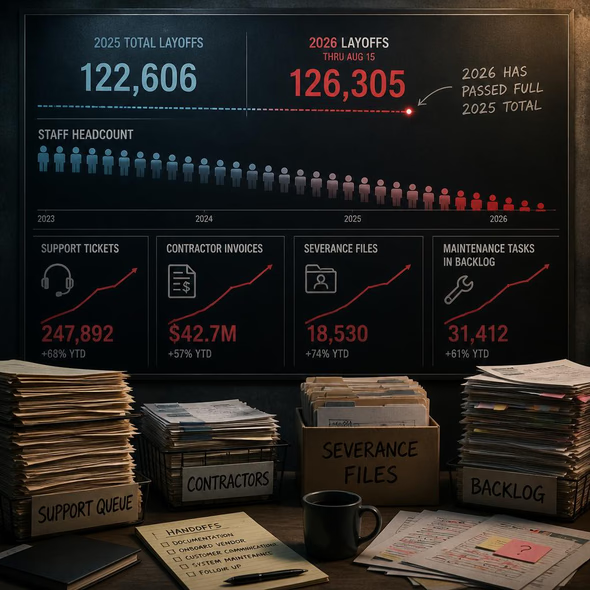
Layoffs.fyi counted 126,305 technology-sector layoffs worldwide in 2026 by mid-August, exceeding the 122,606 jobs it recorded across all of 2025.
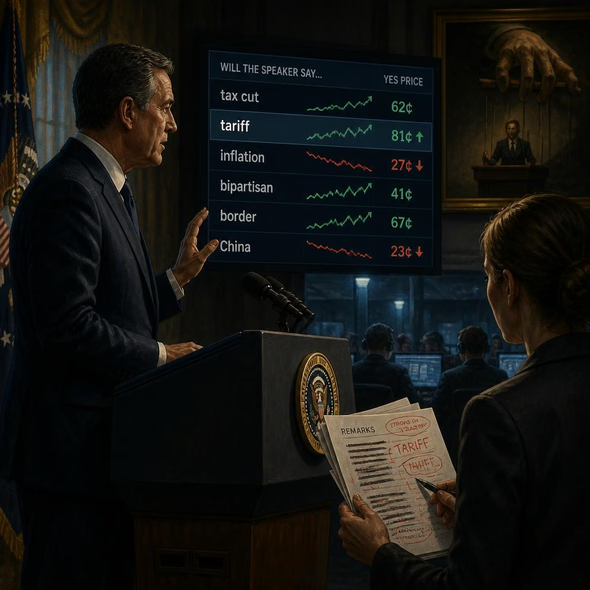
The CFTC opened a federal probe into mention markets, including contracts that pay when a public figure says a specified word or phrase.
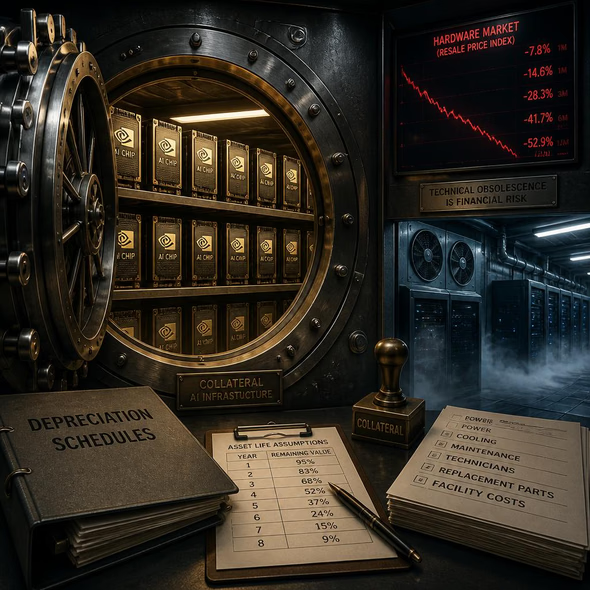
Private-capital firms are financing purchases of Nvidia AI chips on the expectation that the hardware will retain enough value to support long-term debt.
South African entomologist Letodi Luki Mathulwe collected fungus-covered African armyworms in KwaZulu-Natal and produced peer-reviewed research suggesting the fungus could help control the crop pest.
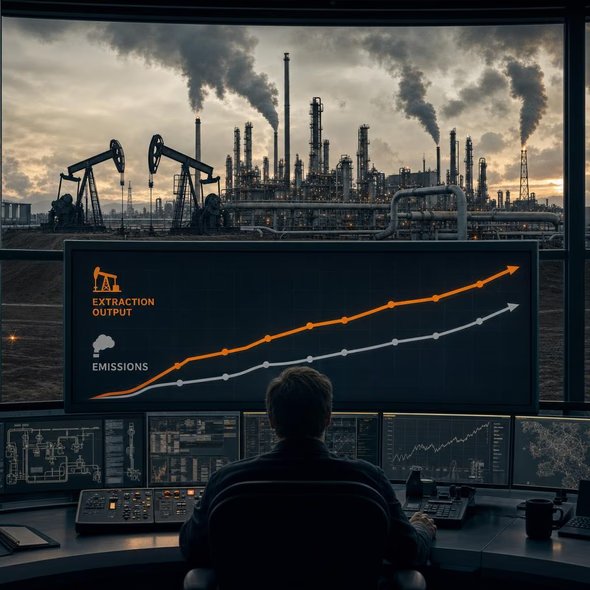
Research published in npj Climate Action estimates that AI-enabled fossil-fuel productivity could increase global energy emissions by nearly 5 percent.
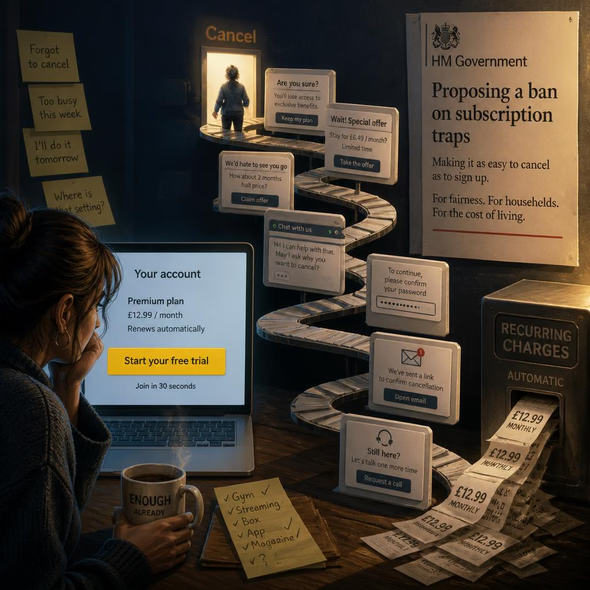
Prime Minister Burnham announced that the UK government would accelerate a ban on subscription traps during a tour focused on reducing household living costs.
Time Magazine began offering sponsored, FAQ-style advertisements on machine-readable pages intended to make participating brands more visible to AI agents.
Researchers kept vaccine formulations stable at room temperature for a year, a development that could reduce losses from cold-chain failures as an estimated half of vaccines are discarded.
A BBC investigation found a stair-lift salesman offering a terminally ill man deworming and scabies medicines with claims that they could shrink tumors.
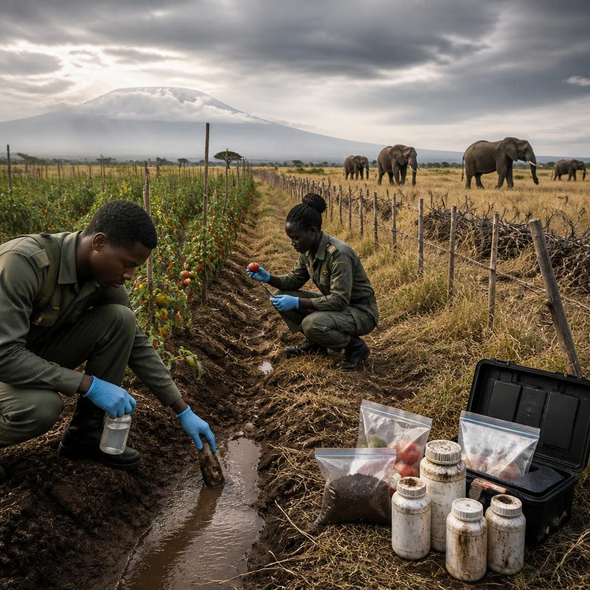
Kenya Wildlife Service found cyanide traces after 15 elephants died near Amboseli, including 10 that showed partial paralysis, and is investigating nearby tomato-farm pesticides.
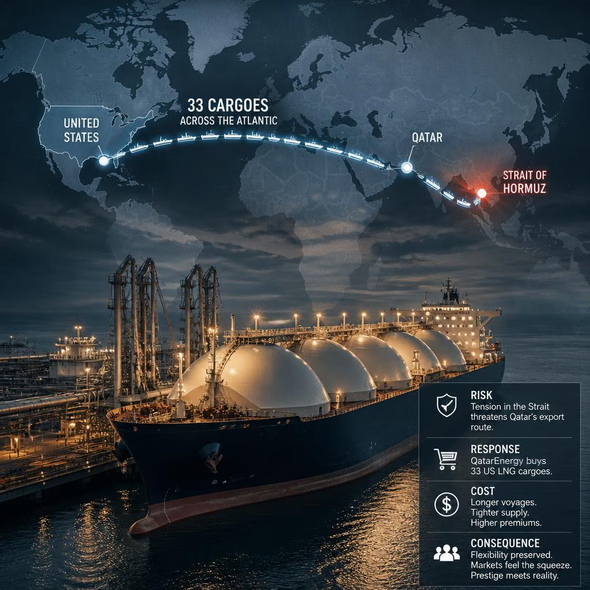
QatarEnergy reportedly bought 33 US LNG cargoes to offset shipping disruption around the Strait of Hormuz.
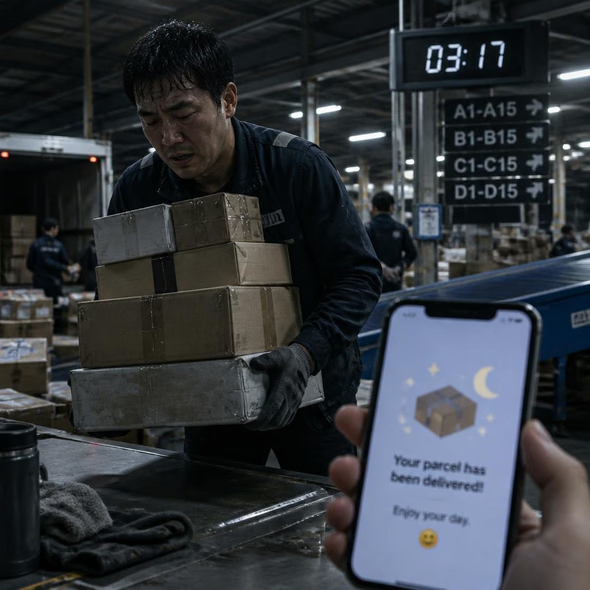
The parcel arrives rested. The worker does not.
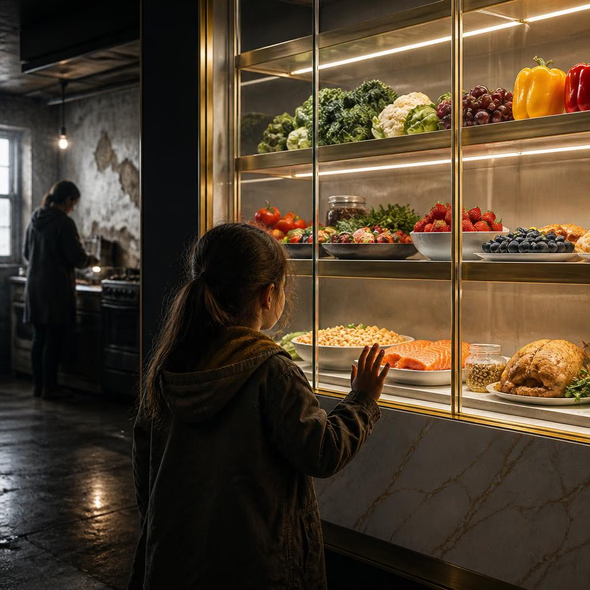
The guidance says fresh and varied. The receipt says otherwise.
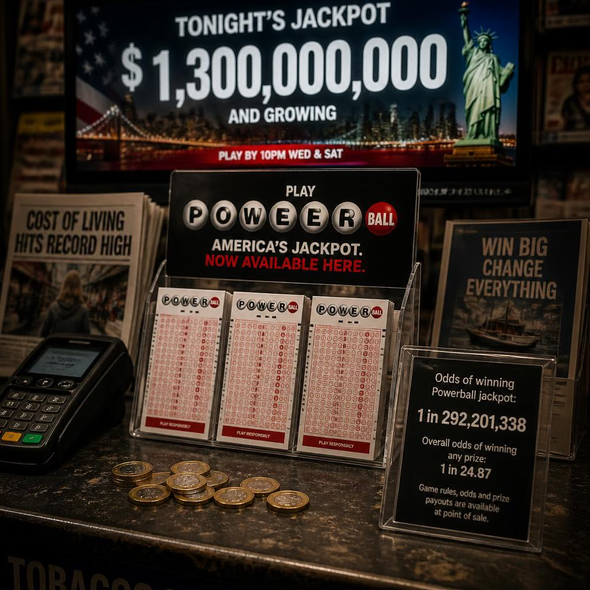
The jackpot crossed the Atlantic. The odds remained comfortably offshore.
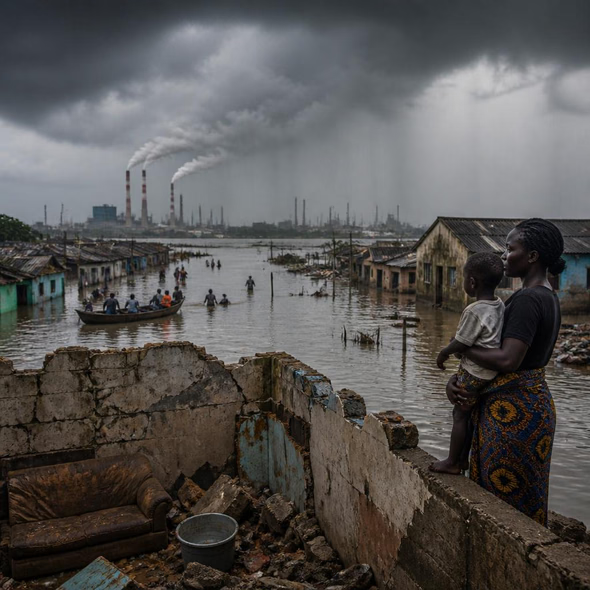
The rain arrives locally. The unpaid invoice has a global address.
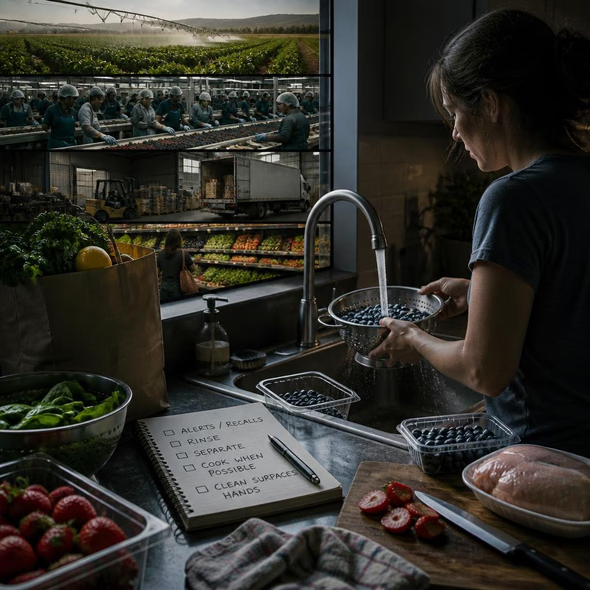
The shopper receives safety tips. The supply chain keeps most of the evidence.
The vendor changed. The perimeter remained. So did the funerals described by families.
The bill is not paid in one dramatic cut. It is paid in missing teachers, delayed repairs, crowded rooms, and children told that creditors arrived first.
Energy security often appears as barrels and benchmarks. At sea, it begins with a captain deciding the narrow water is no longer worth entering.
A tender withdrawal sounds clean. The bill is not. It arrives as interrupted degrees, delayed earnings, narrower choices, and a million futures made easier to abandon.
The purchase is not only a commemorative gesture. It is trust, urgency, belonging, and a credit-card field wrapped in bunting.
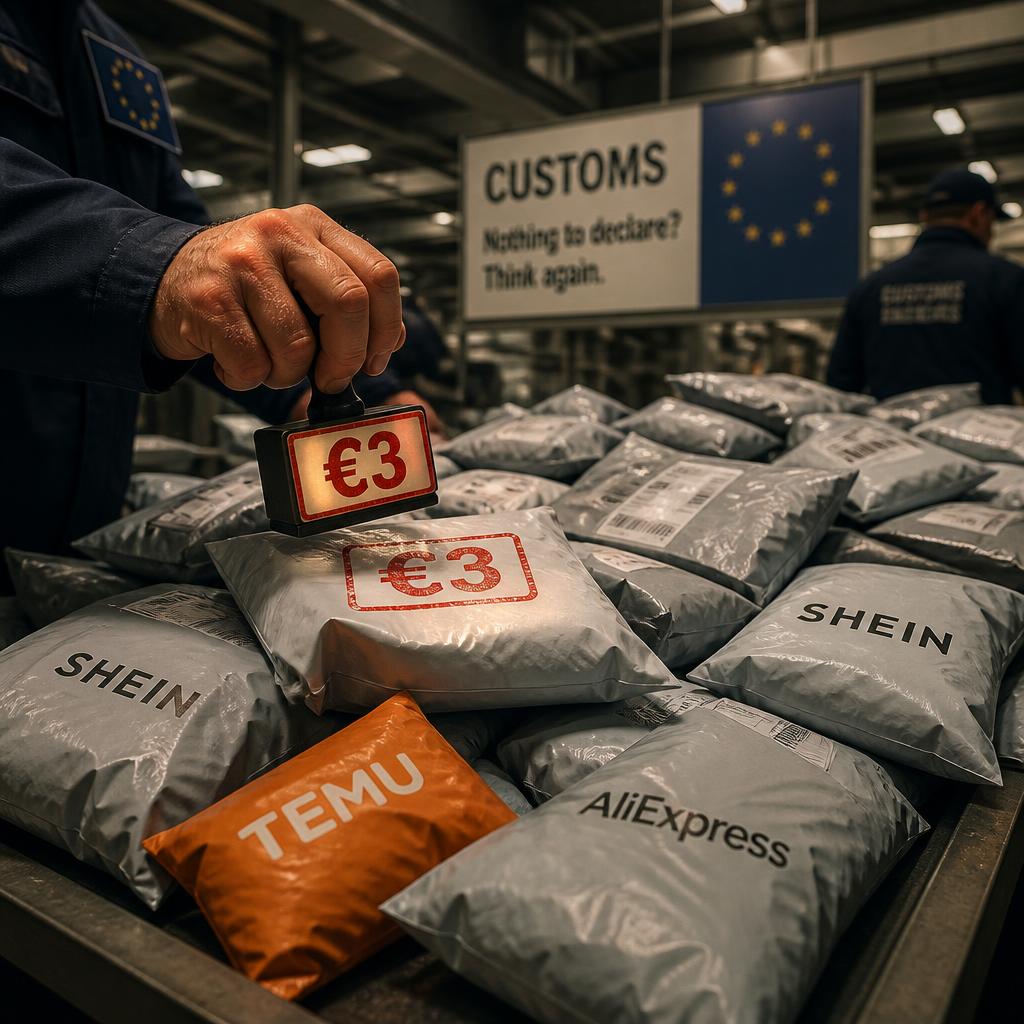
Cheap goods were never weightless. The border was simply delayed, miniaturized, and hidden inside the tracking number.
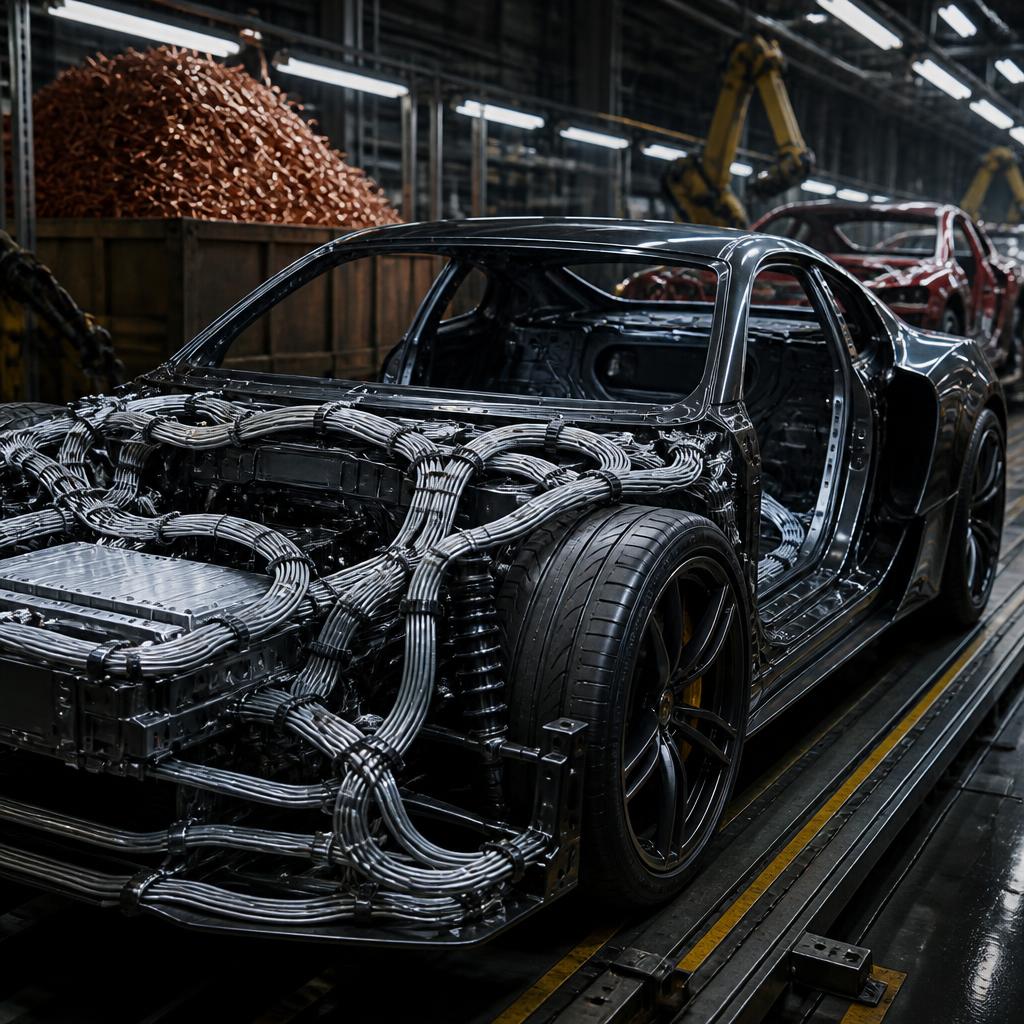
The luxury badge still gleams. The wiring beneath it is being renegotiated by commodity prices, weight targets, and the brutal arithmetic of electrification.
A rule without a fine is a suggestion with stationery. Australia is betting that the only age gate platforms respect is the one that reaches revenue.
The global car buyer was always a spreadsheet convenience. Now the rows are separating: price pressure here, local competition there, geopolitical weather everywhere.
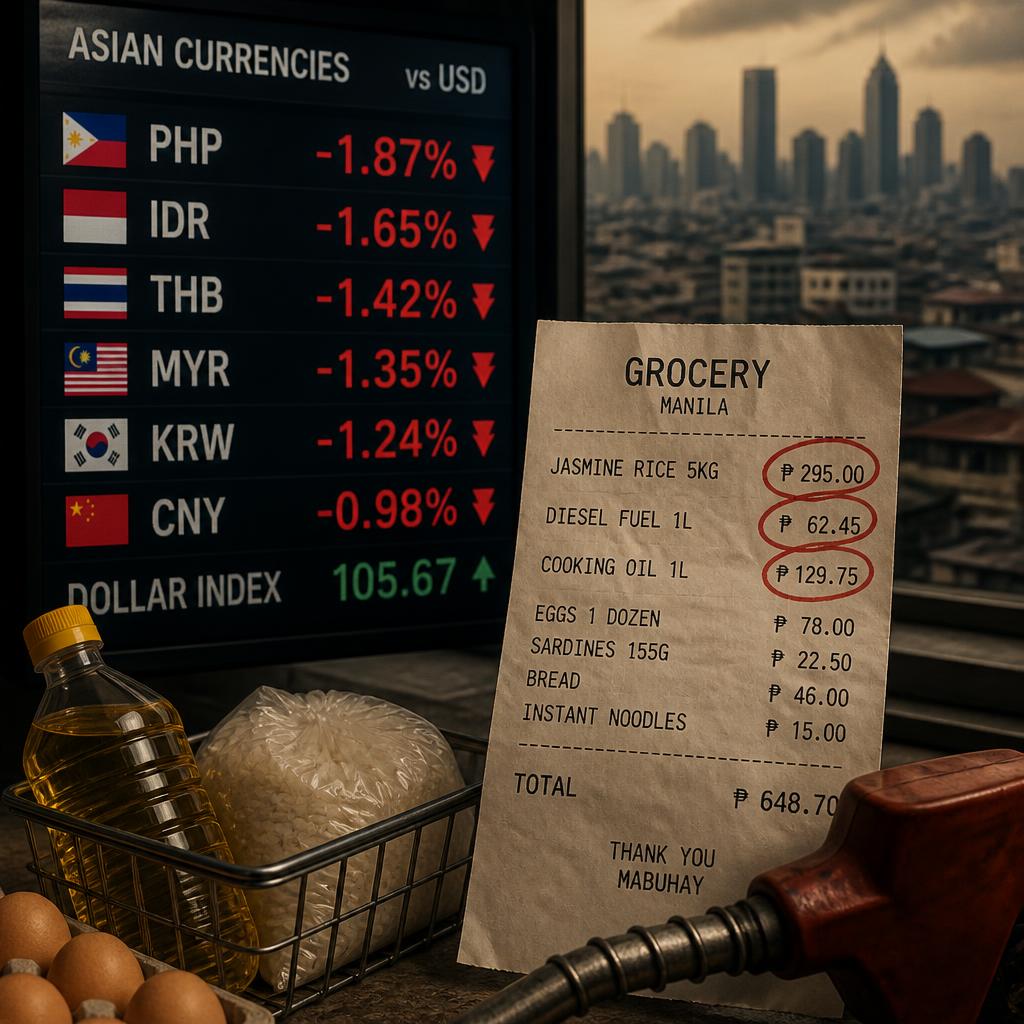
A weak local currency is not just a market chart. It is imported food, fuel, rate pressure, and the old reminder that monetary sovereignty has exchange-rate limits.
Coverage does not vanish in theory. It vanishes when a bill arrives, a grace period ends, and a household decides that insurance has become another unaffordable subscription.
Passive buying is never passive for the company receiving it. The index does not merely reflect power. Sometimes it launders concentration into procedure.
An apology at an annual meeting is not contrition alone. It is choreography for capital: accept the loss, preserve the mandate, keep the electric and hybrid map intact.
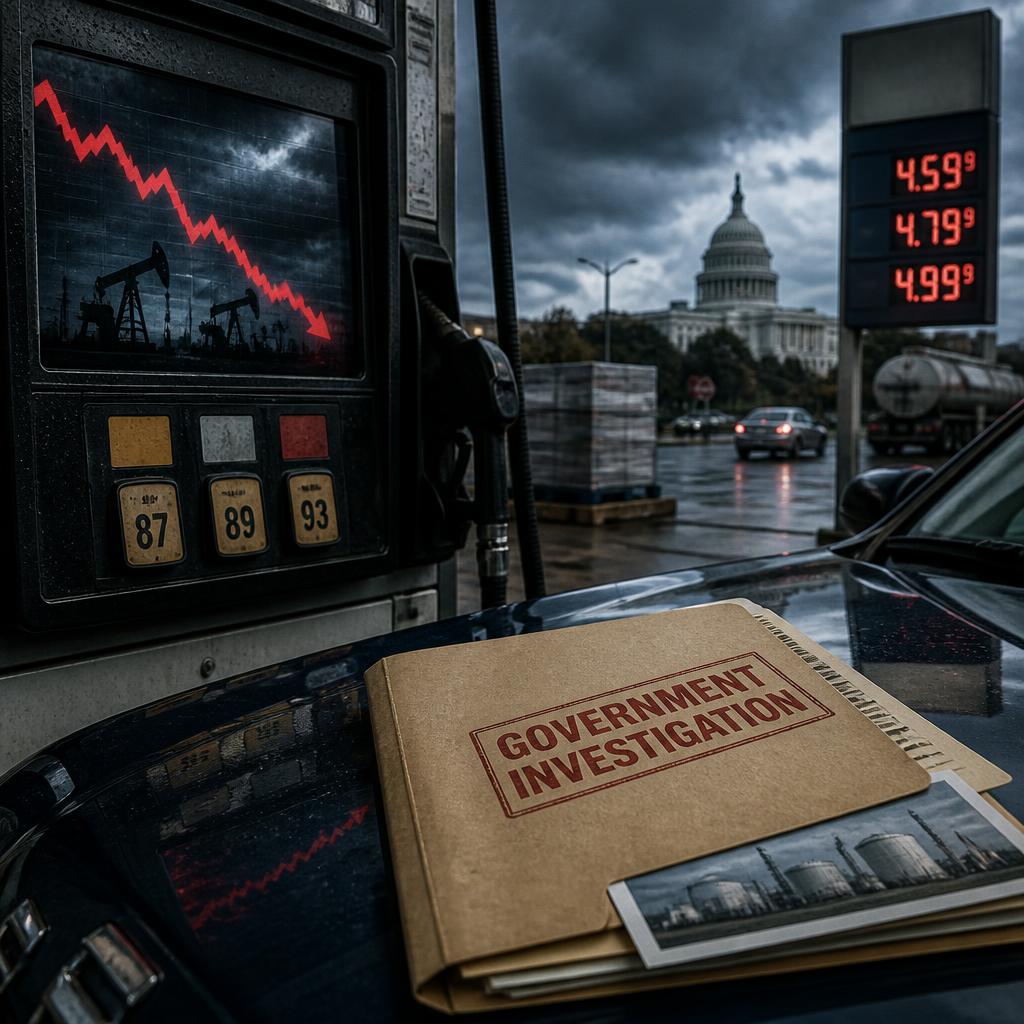
The pump is where voters meet geopolitics, refinery margins, inventory math, and campaign theater. That makes it useful. It does not make it simple.
The consumer wants range, price, and a charger. The state wants factories, jobs, and leverage. The same car cannot flatter every priority.
Weak consumption is not just a monthly data point. It is a household referendum on property stress, job security, savings, and the limits of export-led resilience.
No investor exits changes the symbolism. The listing becomes a statement that the platform wants public money without staging a retreat by its early believers.
Agentic shopping promises convenience. It also moves persuasion upstream, where the assistant can shape the want before the buyer sees the shelf.
The industry wanted clarity. Fine. Clarity has filing deadlines, enforcement hooks, jurisdictional fights, and the rude habit of asking who gets protected when the number goes down.
The cheaper car is coming. Naturally, it will arrive as a family of decisions, each one inviting the buyer to pay a little more to feel less excluded.
The arrears of ordinary people were a social problem. The arrears of property ownership are, more usefully, a policy conversation with stakeholders and a calendar invite.
The device did not fail in the traditional sense. It completed the intimacy loop, converted language into alarm, and left the user to handle implementation in the physical environment.
The bargain airline did not merely sell seats. It trained passengers to accept inconvenience as segmentation, discomfort as optionality, and dignity as an upgrade path. Its disappearance leaves consumers with fewer illusions and significantly cleaner boarding zones.
Consumers are not asked to confront violence directly. They are invited to notice that the black tank now has a different hand feel, a later ship date, and a justification memo.
The mature platform no longer promises artistic liberation. It promises to keep enough attention lightly sedated that cancellation feels less urgent than dinner cleanup.
The newest luxury in health is not certainty but continuous, premium-grade ambiguity delivered through beautiful dashboards.
A shopping guide for the seasonally adjusted self, delivered with complete sincerity and very limited mercy.
A buyer’s guide to synthetic texture, decorative sincerity, and premium evidence of interiority.