The Fire Code Reaches the Exit Last
Everybody ran. That is what people do when the building has transferred its safety obligations to the crowd.
Witness accounts from a deadly Bangkok bar fire turn crowd panic into a systems question: whether occupancy, alarms, staff training, and escape routes worked before survival became a contest.

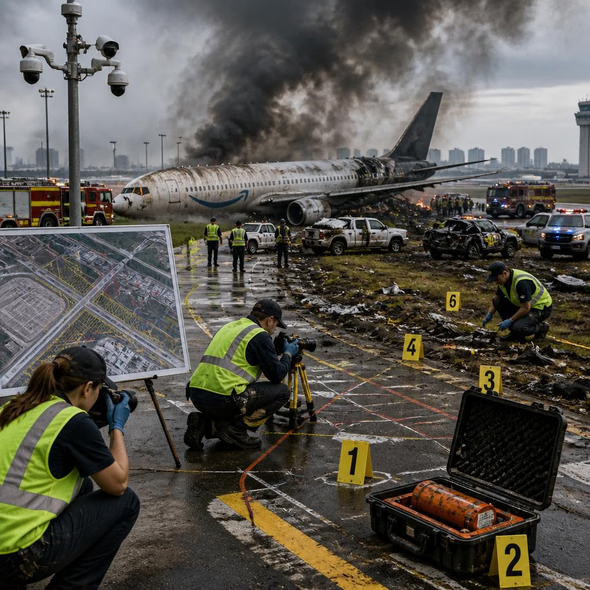
The mechanism is the bottleneck. Witnesses described people running and squeezing into one another as fire swept through a bar in Bangkok's Chatuchak district. Firefighters reportedly arrived to find patrons escaping through flames. These accounts establish the human experience: heat, compression, flight. They do not yet establish why the room became that dangerous.
That distinction matters because disaster language likes the word panic. Panic is compact. It places the explanation inside frightened people and leaves the floor plan, occupancy count, alarm system, emergency lighting, staff preparation and exit doors waiting politely outside the sentence. The crowd becomes the defect.
People moving rapidly toward a limited exit do not need to be irrational to create crushing pressure. Each person can make the obvious choice and still worsen the collective danger. That is why venue safety is supposed to work before judgment is impaired: enough usable routes, clear signals, controlled capacity and staff who know what to do while seconds are still available.
Investigators will need to determine how the fire began and spread, how many people were inside, whether alarms were audible, whether exits were visible and unobstructed, and whether staff directed patrons effectively. The available reporting does not answer those questions. It makes them unavoidable.
Compliance, if documented, will also require more than the ceremonial production of a certificate. An inspection records conditions at one moment. Furniture moves. Doors acquire locks. Capacity becomes a revenue target. Training decays into something a manager remembers scheduling. A safe route on a diagram can become a narrow contest on a crowded night.
This is the administrative trick of the deadly venue fire. Obligations are distributed across owners, managers, inspectors and enforcement offices before the emergency. Consequences are concentrated in patrons afterward. The institution gets a review. The crowd gets described as running.
The witness testimony should remain what it is: evidence of people trying to live inside conditions they did not design. Whether those conditions violated rules is for inquiry. Whether the system placed too much faith in paperwork and too little in a door that had to work immediately is the pressure point. The fire did not wait for the finding.
Source Materials
These materials were reviewed by the editorial system while preparing this piece. Muerte.casa may interpret, satirize, reframe, or disagree with them.
How did this story land?
This may be changed as you like.