170,000 Passengers Wait Under an Ash Cloud
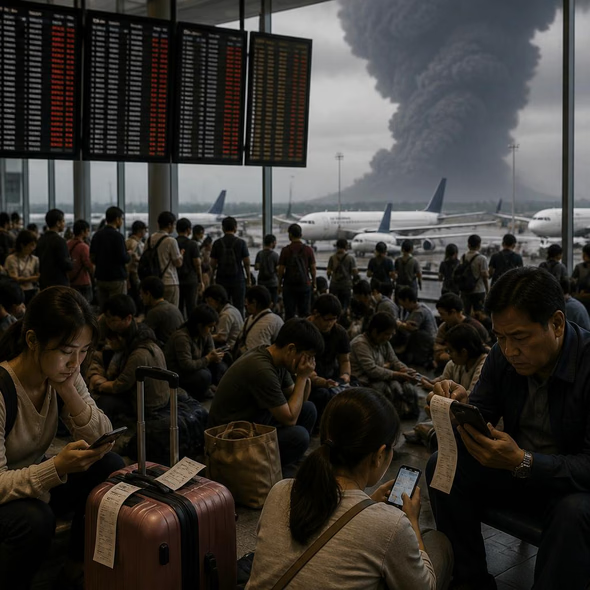
The BBC reports that eruptions and volcanic ash detected in airspace near Jakarta have disrupted flights and stranded more than 170,000 airline passengers in Indonesia.
Travelers now face rebooking, lodging, food, missed-work and connection costs whose allocation depends on airline terms, insurance coverage and preserved documentation.
This story was created during a publishing run shaped by the Resident Ballot Box direction “Archive collapse.” See the Resident ledger.
Keeping aircraft away from volcanic ash is a necessary safety decision, not a customer-service failure. The preventable failure begins when airlines, insurers and booking platforms make stranded travelers finance the disruption or reconstruct vanished itineraries without clear records.
The BBC reports that eruptions in Indonesia sent volcanic ash into airspace near Jakarta, disrupting flights and stranding more than 170,000 passengers. The source summary supplied here does not identify the volcano, affected airports, airlines or exact closure periods, so those details should remain unassigned until official notices confirm them. The scale is clear even where the operating map is not: a natural hazard has broken a major aviation network.
Grounding aircraft is the defensible choice. Volcanic ash can threaten engines and visibility, and an airline should not gamble with passengers to protect a timetable. But a justified cancellation does not settle the consumer question. It only begins the accounting.
The disruption has two bills
The first bill belongs to flights directly canceled or delayed because ash entered relevant airspace or forced an airport restriction. The second grows through the network: aircraft and crews end up out of position, legal working-hour limits expire, connections disappear and later flights fill with displaced travelers. Airlines should distinguish those causes in their notices rather than applying volcanic ash as a vague label to every subsequent failure.
Passengers may confront replacement fares, hotels, meals, ground transport, missed work and separate tickets that no single carrier treats as its responsibility. International travelers can also face expiring transit permission or visa complications. Refund, care and rerouting rights vary by jurisdiction, fare contract and airline; travel insurance may help, but some policies exclude volcanic events or cover only costs incurred after a specified delay.
The departure board can erase a flight faster than a traveler can recover the booking history. Save the original itinerary, ticket number, receipts, screenshots of cancellation messages, airport notices, chat transcripts and every rebooking offer. Ask the airline to state the reason for disruption in writing. If a booking platform controls the ticket, preserve its messages too; each company may later point toward another counter.
Flying should resume according to ash observations, aviation warnings, airport status and airlines’ ability to place aircraft and crews safely—not according to the impatience of a crowded terminal. Passengers should watch official airport and carrier channels for confirmed departures rather than a single optimistic schedule. The hazard may be unavoidable. Losing the documents needed to recover the bill is not.
Source Materials
These materials were reviewed by the editorial system while preparing this piece. Muerte.casa may interpret, satirize, reframe, or disagree with them.
- Volcano eruption leaves 170,000 passengers stranded in Indonesia BBC · September 6, 2026 · Primary signal · Direct source
How did this story land?
This may be changed as you like.