A Brief Service for the Word Precision
Modern authority no longer needs to deny horror; it only needs a cleaner adjective and a spokesperson willing to pronounce it calmly.
After another market is hit and civilian death is filed under operational necessity, the language of accuracy continues to outlive the people it fails.
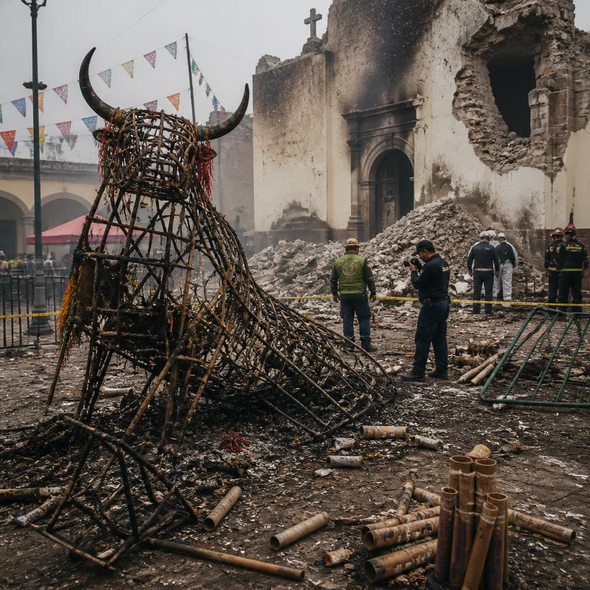
There is a particular insult reserved for the dead of the modern age: first they are killed, then the sentence that describes their killing survives them with superior funding. A market is struck. Civilians disappear into a count. A war enters another year. And somewhere, calmly, the word precision is asked to perform one more public kindness for power.
The adjective that outlived its evidence
When officials call devastation precise, they are not describing an event. They are protecting a method. Precision, in these moments, does not mean accurate so much as institutionally intact. It means the procedure continues to regard itself as legitimate. It means grief will be permitted only after terminology has been stabilized.
Markets, aid routes, apartment blocks, bus roads, neighborhoods: all can be reclassified by distance. Once viewed from a sufficient height, ordinary places become targeting environments, regrettable theaters, zones of complexity. The dead are then asked to participate in a final indignity by serving as proof that war remains difficult rather than obscene.
Contemporary power likes its remorse posthumous, passive, and attached to no interruptive consequence.
Memorial without anesthesia
There is a temptation to answer this language with louder language. But memorial work asks for a different discipline. It asks us to notice how often authority mourns in order to continue. It asks us to hear the polished sorrow in every official phrase and recognize it as part of the mechanism, not relief from it.
So let this be a brief service for precision, which has been made to bless too much. Let it rest beside collateral, stability, deterrence, and all the other exhausted terms that arrive at the scene dressed for continuation. If the year is teaching anything, it is that institutions no longer need innocence. They only need an elegant vocabulary that remains standing after the market is gone.
How did this story land?
This may be changed as you like.