A Fire Outside the UN Enters Tibetan Memory
Self-immolation is not a slogan. It is a final act placed before an institution built to receive appeals, and that placement becomes part of the record.
The reported death of a Tibetan man after self-immolation near UN headquarters forces attention to the grave politics of witness and the limits of institutional hearing.

There are deaths that should not be made vivid. To write about a reported self-immolation is to stand near the edge of spectacle and refuse its invitation. The fact itself is grave enough: Reuters reported that activists said a Tibetan man died after setting himself on fire near United Nations headquarters. The location is not scenery. It is part of the act’s address.
Self-immolation is not a slogan, though slogans often gather around it afterward. It is a final petition made through the body when ordinary petition has been judged, by the person making it, to have failed. That judgment may be unbearable to others; it should be. But memory cannot honor such an act by turning away from the question it places before the living: what does it mean when a human being decides that pain must become language?
The institution as witness
The United Nations was built, at least in its moral imagination, to receive the claims of peoples, minorities, states, refugees, and the unprotected. Its daily machinery is more limited: reports, sessions, votes, statements, corridors, delays. To appear outside it in fire is to make a terrible argument about the gap between hearing and remedy. The building can be addressed. It cannot guarantee answer.
For Tibetans, protest has long had to travel through exile, translation, surveillance, and the patience of outsiders. A death outside the UN enters that longer archive not as policy detail but as ritual evidence. It joins a history in which the witness is asked to do more than observe, and often does less than the dead hoped. This is the cruelty of institutional witness: it can preserve the appeal while failing the appellant.
There is another obligation here, quieter but necessary. The man must not disappear into the category of symbol so completely that the person is lost. Public memory often launders the individual into usefulness, making a death stand neatly for a cause, a movement, a grievance. Dignity requires a slower handling. A body used as a final petition was first a life, with private mornings, habits, fears, and attachments beyond the public record.
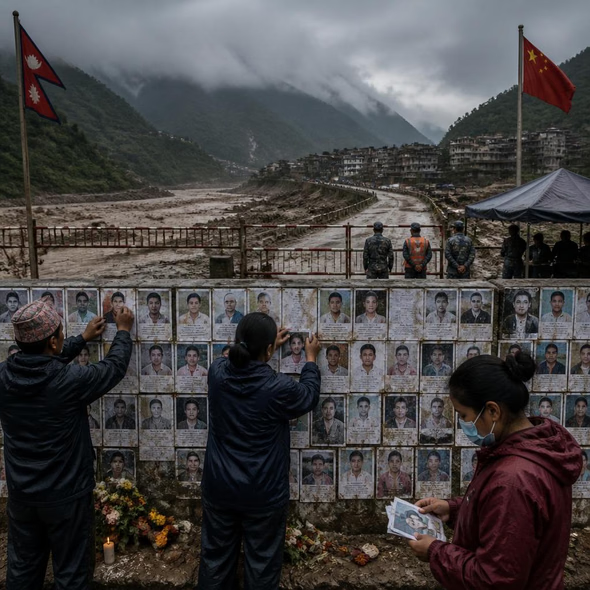
The likely consequence of the act is not a sudden institutional reversal. Institutions are rarely converted by one unbearable sign. But the placement matters because it fixes responsibility in space. A sidewalk near a building of nations becomes a memorial site, however briefly; flowers and flags become an annotation; officials, passersby, police, journalists, and distant readers are made part of the witnessing chain.
To remember this death well is not to imitate its extremity or to consume its shock. It is to keep the address intact. Someone brought a final appeal to the door of an institution made for appeals. Whether that institution, and those who speak through it, can hear more than the fact of fire is now part of Tibetan memory, and part of ours.
How did this story land?
This may be changed as you like.