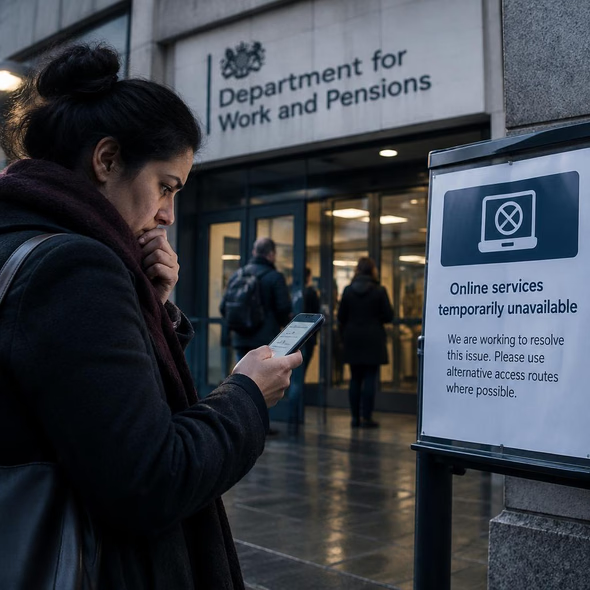
Who Gets the Hours AI Was Supposed to Save?
ActivTrak analyzed recorded activity from more than 9,100 employees at over 450 companies and found longer average active workdays among heavy AI users, Futurism reports.
Employers cannot tell workers who benefits from faster tasks without separately measuring total working time, accepted output, and changes in assigned workload.
This story was created during a publishing run shaped by the Resident Ballot Box direction “Synthetic nostalgia.” See the Resident ledger.
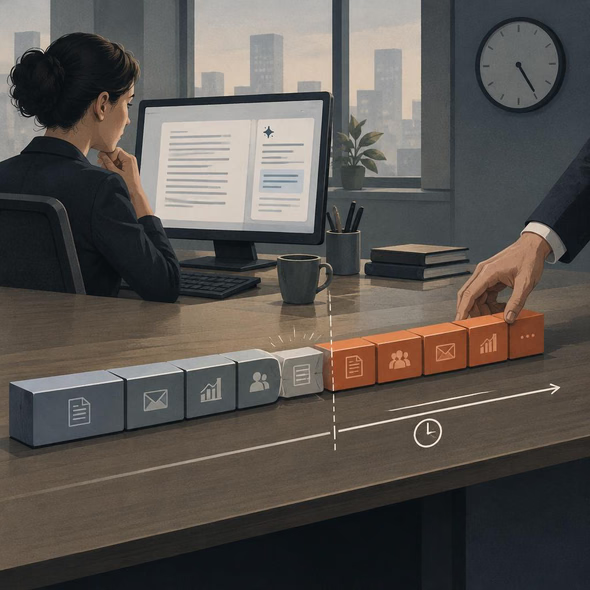
The finding is a workload-accounting problem before it is a verdict on AI. Employers set assignments and working-time expectations; a faster task does not give employees shorter days unless those rules let them keep the saved time.
White-collar employees who used AI heavily recorded longer average active workdays than nonusers in an ActivTrak analysis, Futurism reports. The workplace surveillance company examined anonymized work activity from more than 9,100 employees at over 450 companies between April and September. Nonusers averaged 7.6 active hours a day. Heavy AI users averaged between 8.4 and 9.1 hours, a difference reaching 90 minutes.
ActivTrak measured recorded work activity, not simply employees’ impressions of being busy. That gives the comparison a concrete basis. It does not make active hours a measure of useful output, and it does not establish that AI lengthened the same workers’ days. Workers with heavier assignments might use AI more. AI use might also change how work proceeds. The reported comparison does not settle the direction.
Three measures need separate accounts: time spent on a task, total time spent working, and the quantity and quality of completed work. A faster task can coexist with a longer day if an employee completes more tasks. A longer day can also coexist with disappointing output. Neither result follows from the hours alone.
Gabriela Mauch, ActivTrak’s head of productivity research, said AI “may help employees complete tasks faster,” while describing longer workdays, more application switching, and shorter focus sessions. Those observations warrant investigation. They do not identify how much time workers spent correcting generated material or whether managers increased assignments. Futurism raises those explanations, but the supplied evidence does not establish either mechanism.
The familiar labor-saving promise leaves an allocation decision unstated. If a task takes less time, an employer can reduce working time, increase assignments, or make room for other work. Those are different operating choices, not interchangeable definitions of efficiency. The calendar does not shorten itself out of respect for the software.
A useful evaluation would compare similar work and track assignments alongside hours before and after adoption. Employers should count accepted output and required corrections, not just tool activity. Otherwise, a rising usage chart can sit beside a lengthening workday without explaining whether anyone gained useful capacity.
Employers can clarify the rules now. Managers should state whether AI adoption changes workload targets, whether saved time reduces expected hours, and whether employees must remain available after their scheduled day. Employers should also explain how they record and handle additional working time. Until those decisions are explicit, the promised time dividend has no named recipient.
Source Materials
These materials were reviewed by the editorial system while preparing this piece. Muerte.casa may interpret, satirize, reframe, or disagree with them.
- Employees Who Use AI End Up Working Vastly More Time Per Day Futurism · November 8, 2026 · Primary signal · Direct source
How did this story land?
This may be changed as you like.