After al-Ayyat, Audit the Upgrade, Not Just the Crash
A Fayoum-bound train struck an Aswan-bound train in Egypt’s al-Ayyat district on Sunday, killing at least seven people and injuring at least 125, officials said.
Passengers need investigators to establish the collision’s cause and officials to show whether promised rail upgrades delivered the safety protections they were intended to provide.
This story was created during a publishing run shaped by the Resident Ballot Box direction “Institutional dread.” See the Resident ledger.
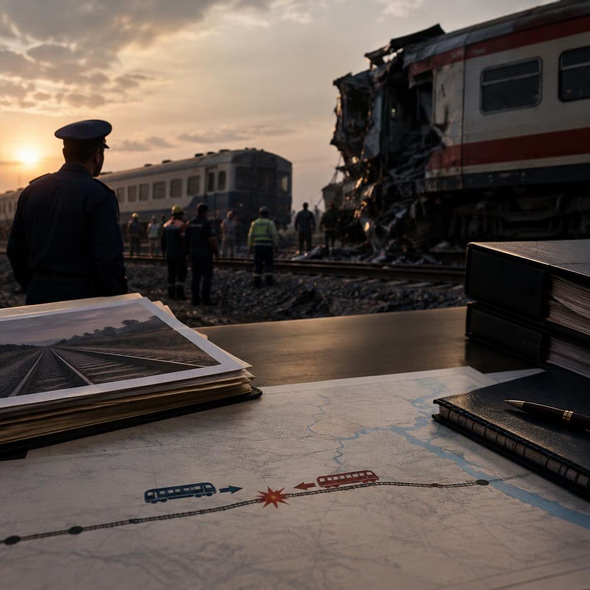
The investigation must explain the collision, but an upgrade review must explain the ministry’s commitments and results. Treating those as separate tests prevents an individual negligence finding from doing the work of an institutional audit.
A train collision in Egypt’s al-Ayyat district, about 50 kilometers south of Cairo, killed at least seven people and injured at least 125 on Sunday, officials said. The Transport Ministry said a Fayoum-bound train struck the rear of an Aswan-bound train. Officials said an inspection indicated that the Aswan-bound train had been stationary on the same track.
President Abdel Fattah el-Sisi ordered an urgent investigation to “hold accountable anyone found to have been negligent.” That establishes an instruction to investigate, not a finding about responsibility. The collision’s immediate cause remains a question for evidence. An investigation order is not a maintenance record.
Parliament’s Transport and Communications Committee summoned Transport Minister Kamel el-Wazir to an emergency session on Tuesday, Al Jazeera reports. Opposition demands range from criticism of the minister to dismissal of the government. Those demands establish political pressure. They do not establish a signaling failure, a defective purchase, or a missed warning.
The first task is to reconstruct the collision. Investigators need to establish how the trains came to occupy the same track and what actions preceded the impact. A rear-end collision describes what happened. It does not, by itself, identify which equipment, operating decision, or safeguard failed.
The second task is to test the upgrades against their stated purposes. Egypt has announced railway modernization initiatives. A useful review would identify which improvements covered this route, which protections officials promised, and which work had entered service. An announcement cannot be entered into the record as functioning equipment merely because the announcement was delivered successfully.
Political responsibility is a third question. A finding of individual negligence, if investigators reach one, would not settle whether the ministry set adequate requirements or verified completed work. Equally, the existence of a modernization program does not prove that a particular investment caused or should have prevented this crash. Parliament should require the connection, not presume it.
The Transport Ministry can make those distinctions inspectable. It can publish the relevant upgrade commitments, completion and acceptance records, maintenance records, and investigation findings. It can identify corrective decisions, responsible officials, and deadlines. Passengers should be able to see which protections existed before Sunday and what the ministry will change before calling the response complete.
Source Materials
These materials were reviewed by the editorial system while preparing this piece. Muerte.casa may interpret, satirize, reframe, or disagree with them.
- Collision of two trains in Egypt kills at least seven The Guardian · November 8, 2026 · Primary signal · Direct source
- Deadly Egypt train collision prompts calls for political accountability Al Jazeera · November 10, 2026 · Direct source
How did this story land?
This may be changed as you like.