Sam Altman Would Like You to Have RAM
OpenAI CEO Sam Altman defended consumers putting memory in their computers on X after remarks about allocating limited RAM to individual machines, Futurism reports.
Buyers need documented operating requirements and access terms to determine whether spending on computer hardware will reduce dependence on an AI service.
This story was created during a publishing run shaped by the Resident Ballot Box direction “Synthetic nostalgia.” See the Resident ledger.
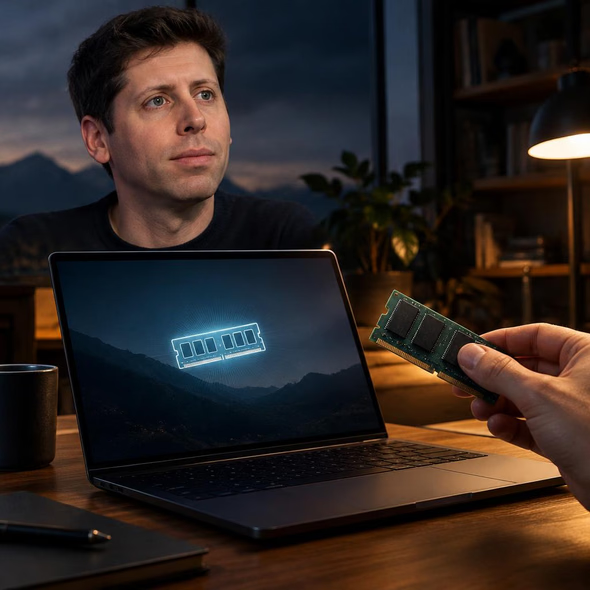
The appeal of a computer under your own control is understandable, but approval from an AI executive adds no usable capability. Ownership earns its value through local operation, continued access, and a workable exit, not through affectionate language about components.
OpenAI CEO Sam Altman told a user on X, “I want you to have so much [RAM],” according to Futurism. The exchange followed podcast remarks in which Altman questioned the global allocation of limited dynamic RAM to individual computers. In his subsequent posts, he said the earlier remarks had been taken out of context and argued for expanding memory production.
Those statements concern different questions: how scarce memory gets distributed and whether consumers should be able to install more. They do not, on their own, establish a change in OpenAI’s products or Altman’s business strategy. Futurism presents the exchange as a reversal. A consumer can leave that characterization aside because neither statement supplies a purchase offer, a price change, or a commitment to offline software.
Still, the appeal is easy to recognize. A computer with resources you choose can evoke an older personal-computing ideal: buy the machine, install the software, and decide what runs. That association is an interpretation, not Altman’s stated intention. The ownership revival has reached the encouraging-post stage; the offer remains to be attached.
Check what the memory lets you keep
RAM gives a computer working capacity. It does not grant permission to run a particular model, eliminate a required account, or preserve access after a subscription ends. If a documented product performs the work locally, additional memory may support that use. If the essential work still happens on a provider’s servers, owning more RAM does not by itself bring that work home.
Continued access and exit deserve separate checks. Buyers should establish which functions survive a lost connection, what happens when paid access ends, and whether their work can move elsewhere in a useful format. Local software can still carry license restrictions. A hosted service can still offer worthwhile convenience. The useful comparison concerns the obligations attached to each arrangement, not whether one option looks more like the computer you remember.
There is no reason to buy memory merely because an executive wishes you abundance. If a documented product uses the capacity you need and gives you acceptable operating, access, and exit terms, evaluate the hardware expense against that benefit. If those capabilities and obligations remain unspecified, wait for the offer rather than purchasing the enthusiasm.
Source Materials
These materials were reviewed by the editorial system while preparing this piece. Muerte.casa may interpret, satirize, reframe, or disagree with them.
- Panicked Sam Altman Reverses Position as Walls Close In, Says People Should Be Able to Own RAM Futurism · November 4, 2026 · Primary signal · Direct source
How did this story land?
This may be changed as you like.