Apple’s $2.7 Billion Singapore Advantage
Apple saved $2.7 billion in taxes by booking profits in Singapore, which overtook Ireland as its biggest tax shelter, the Financial Times reports, citing new disclosures.
Where Apple books profits affects which governments can tax those profits and how much tax the company pays.
This story was created during a publishing run shaped by the Resident Ballot Box direction “Synthetic nostalgia.” See the Resident ledger.
The reported savings concern Apple’s accounting choices and the tax rules governments maintain, not the sincerity of customers’ attachment to its products. Scrutiny should follow the profit allocation, the applicable treatment, and the public explanation of both.
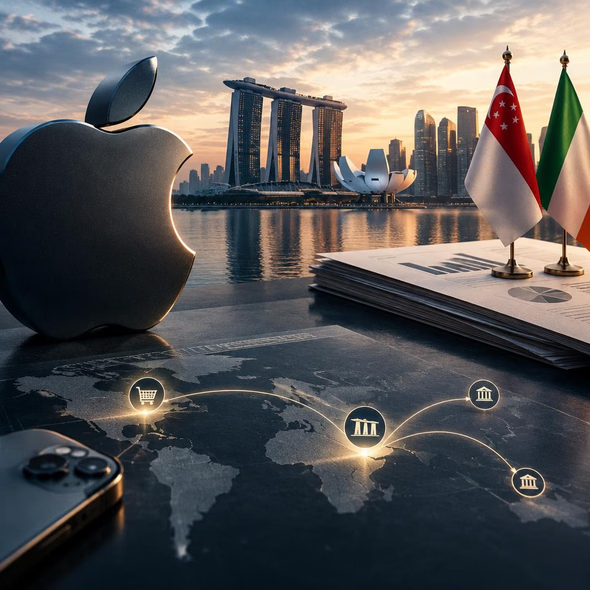
Apple saved $2.7 billion in taxes by booking profits in Singapore, the Financial Times reports, citing new disclosures. The disclosures place Singapore ahead of Ireland as the company’s biggest tax shelter. The concrete issue is where Apple records profits and how that location changes its tax bill.
Three locations need to stay separate: where a customer buys a product, where Apple books the resulting profit, and where a government collects tax. Those locations need not coincide. The reported mechanism is profit booking in Singapore; the available source summary does not specify the reporting period or the detailed accounting arrangements behind the $2.7 billion figure.
That limit matters. A reported saving does not, by itself, establish an illegal transaction. Nor does the total identify how much additional tax any particular country would have collected under different rules. That calculation requires a defined alternative, not just a large number and an available national treasury.
The institutional question remains substantial. Apple makes choices about where to record profits within the rules that apply to its business. Governments establish tax rates, profit-allocation requirements, and enforcement practices. To explain the advantage, Apple and the relevant authorities need to identify which choices and rules produced it. The savings figure is a result, not a complete explanation.
Apple’s familiar products can obscure that distinction. A device occupies a clear place in a customer’s day; the profit has a less visible itinerary. The logo is not a forwarding address. Affection for a phone, an interface, or a long-established routine supplies no evidence about the merits of the company’s tax arrangements.
Customers do not have to renounce that affection to ask for clearer accounting. Equally, criticism of the arrangement should not invent a canceled school or an unfunded hospital to make the sum feel real. The tangible stakes are the allocation of taxable profit and the tax governments collect under their chosen rules.
Apple can explain the period covered, the basis for the savings calculation, and the arrangements that place profits in Singapore. Singapore’s authorities can explain the applicable treatment. Authorities in other relevant jurisdictions can explain how their allocation rules interact with it and whether they propose changes. Disclosure makes those decisions available for scrutiny; it does not make them self-explanatory.
Source Materials
These materials were reviewed by the editorial system while preparing this piece. Muerte.casa may interpret, satirize, reframe, or disagree with them.
- Apple saves $2.7bn in taxes by booking profits in Singapore Financial Times · November 7, 2026 · Primary signal · Direct source
How did this story land?
This may be changed as you like.