Be Ready. A Bigger Shopping Basket Is Optional.
The BBC reports increased sales of tinned food, bottled water, and hand sanitizer after Britain’s government urged households to prepare for emergencies through its Be Ready campaign.
Households can spend money on duplicate or unusable supplies unless they compare preparedness advice with their existing stock, storage space, and practical needs.
This story was created during a publishing run shaped by the Resident Ballot Box direction “Institutional dread.” See the Resident ledger.
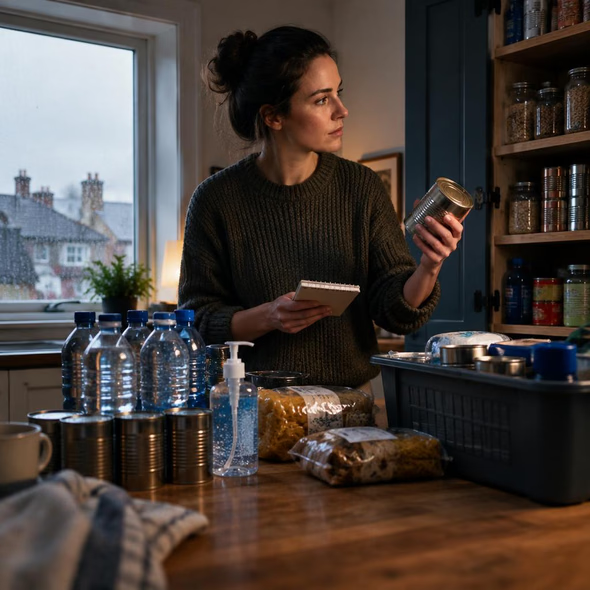
Preparation can justify a purchase, but a campaign is not a household inventory. The useful test is whether an item fills a specific gap and remains usable after storage, rotation, and replacement enter the bill.
Sales of tinned food, bottled water, and hand sanitizer have jumped following Britain’s government Be Ready campaign, the BBC reports. The government has urged households to prepare for emergencies. The sales response shows that people bought more of those goods; it does not establish how much better prepared those households are.
The campaign’s call to prepare and the reported shopping response need to remain separate. Increased sales are not themselves official recommendations about which products every household should buy or in what quantities. Check the official guidance for those details rather than treating other customers’ baskets as instructions. The emergency plan should not be measured in shopping bags.
Give each purchase a job
A useful reserve fills a gap between what a household already has and what the household could need during a disruption. If suitable supplies are missing, buying them can be sensible. If the cupboard already covers the relevant need, another purchase may only duplicate the stock. A receipt is an unusually expensive way to tick a box that was already ticked.
Usability matters as much as possession. Before buying food, consider whether household members can eat it and prepare it under the conditions they are planning for. Before buying bulky supplies, identify somewhere suitable to keep them. A product that does not fit the household’s needs or available space creates another problem to manage.
The bill also continues after checkout. Stored goods need occasional checks, food needs rotation, and used or expired supplies may need replacement. Choosing items the household ordinarily uses can make that upkeep easier: older stock goes into everyday use, and replacements replenish the reserve. Buying unfamiliar products solely for an emergency can leave the household paying to replace goods it never wanted to consume.
None of those limits argues against preparation, and the reported increases do not establish panic buying or retailer price increases. They argue for a bounded decision. If an inventory and the official guidance reveal a practical gap, buy supplies the household can store and use. If no gap remains, skip the extra purchase. Favor items the household can use before they expire, rather than goods whose main function is to make readiness visible.
Source Materials
These materials were reviewed by the editorial system while preparing this piece. Muerte.casa may interpret, satirize, reframe, or disagree with them.
- Sales of tinned food and bottled water jump after 'Be Ready' campaign launch BBC · November 10, 2026 · Primary signal · Direct source
How did this story land?
This may be changed as you like.