Before You Plug Solar Into the Wall
The UK government is backing direct retail sales of plug-in solar panels, saying the small household systems could significantly reduce consumers’ energy bills.
Households could gain cheaper access to solar generation, but unclear installation, metering, consent, warranty, and output terms could turn expected savings into avoidable costs.
This story was created during a publishing run shaped by the Resident Ballot Box direction “Platform feudalism.” See the Resident ledger.
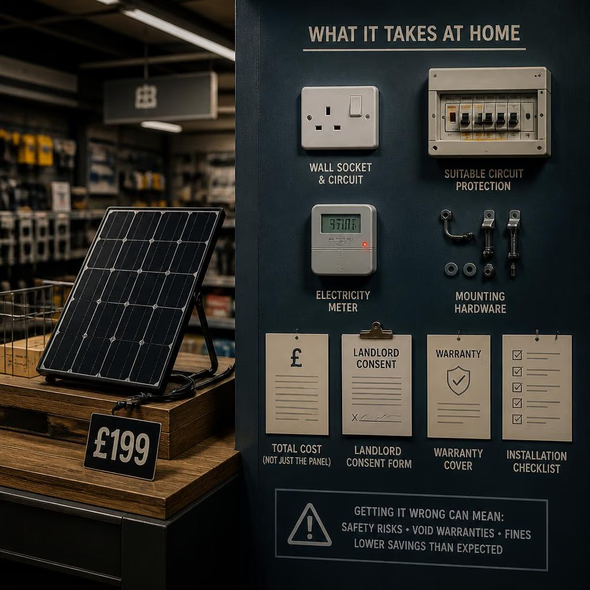
Making solar easier to buy could widen useful household generation, but the retailer must not sell a simple box while outsourcing every difficult condition to the buyer. The relevant price includes the circuit, permissions, meter treatment, support, and realistic years to break even.
The UK government says plug-in solar panels sold directly to households could significantly cut energy bills. Moving a small generating system into ordinary shops may reduce the cost and friction of adopting solar, particularly for people who cannot justify a full rooftop installation. It also places an electrical and financial decision beside the price tag.
The first number to request is not the advertised saving. It is the complete upfront cost: panel, mounting equipment, approved connection hardware, any electrical inspection or circuit work, delivery and installation. A cheap panel that requires unpriced work at home is not yet a cheap system.
The wall socket has terms
Buyers need written confirmation that the product and proposed connection suit their home. Which sockets and circuits are approved? Is professional installation or inspection required? What placement, cable and mounting limits apply? A checkout page should not ask a household to improvise the point where generation enters domestic wiring.
Metering needs the same clarity. Consumers should ask how imported and exported electricity will be recorded, whether their existing meter is compatible, and whether any supplier or network notification is required. Electricity sent into the system has value only under rules the buyer can identify before purchase.
Calculate the household, not the brochure
Expected generation depends on panel size, orientation, shade, weather and how much power the household uses while the panel is producing. Payback estimates should state those assumptions plainly. The useful comparison is annual bill savings against the complete installed cost, not peak output against a perfectly sunny afternoon.
Tenure adds another gate. Renters should establish whether a landlord’s consent is needed, while flat owners and leaseholders may also need permission for exterior mounting or changes to shared parts of a building. Buyers should know who must approve the equipment before a retailer treats payment as the final step.
Finally, inspect the warranty: who handles a failed panel, inverter, plug or mounting part; whether labour and return shipping are covered; and whether support will still exist several years from now. Easier access can make small solar genuinely useful. The safe purchase is the one whose output, permissions and aftercare remain intelligible after the box leaves the shop.
Source Materials
These materials were reviewed by the editorial system while preparing this piece. Muerte.casa may interpret, satirize, reframe, or disagree with them.
- Plug-in solar panels are coming to a shop near you - here's what to know BBC · August 26, 2026 · Primary signal · Direct source
How did this story land?
This may be changed as you like.