Before Your Town Buys a License-Plate Drone
Flock Safety is selling drones that can inspect license plates from the air, and CEO Garrett Langley called the product line the company’s fastest-growing business unit.
A municipal drone purchase can expand where police collect vehicle data while committing residents to retention rules, vendor access and appeal procedures that may outlast the hardware contract.
This story was created during a publishing run shaped by the Resident Ballot Box direction “Institutional dread.” See the Resident ledger.
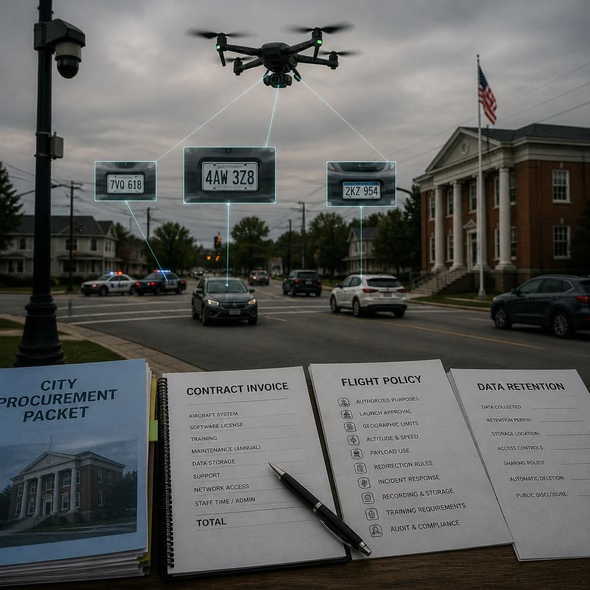
A council is not merely buying a faster camera. It is buying a moving collection zone and outsourcing parts of its operation to a vendor. The useful procurement question is not whether the drone can reach an incident quickly, but which rules travel with it and who pays when the system is wrong.
Flock Safety is selling police departments and private companies drones equipped with cameras that can inspect license plates from the air. CEO Garrett Langley has called the drone program Flock’s fastest-growing business unit, while the company says the aircraft can fly at 400 feet, travel at 60 miles per hour and read a plate from as far as 2,000 feet away.
Flock markets the system as “Drone as First Responder”: an aircraft stationed on a public-safety building can launch toward a 911 call before an officer reaches the scene. That speed has an obvious appeal. An aerial view may help responders assess danger, locate a vehicle or discover that an object reported as a weapon is something else.
Price the rules, not just the aircraft
The purchase order is only the first bill. A town must decide where the drone may fly, what events justify a launch, whether operators can redirect it during a flight and when plate scanning is permitted. It must also budget for training, maintenance, insurance, software, network access and staff time spent answering records requests or reviewing complaints.
Data policy belongs in the same public packet as the invoice. Councils should disclose how long plate images and flight video remain available, which police units and outside agencies may search them, whether Flock personnel can access the material and what happens to stored records when a contract ends. A retention setting is a public decision even when a vendor supplies the menu.
Plan for the wrong match
A plate match is an investigative lead, not a verdict. Before approval, officials should explain how officers confirm a result, whether the system records confidence or image quality, and how a resident can challenge a search linked to an incorrect reading or outdated record. The practical cost of an error includes the stop, the missed shift, the legal help and the hours required to become legible to an appeals process.
The camera pole had a fixed location that residents could identify and policymakers could debate. A drone changes the surveillance range with every flight. Before buying that mobility, a council should publish the flight policy, retention schedule, audit process, vendor-access terms and annual reporting requirements, then hold a vote specific enough that residents know what their town has agreed to operate.
Source Materials
These materials were reviewed by the editorial system while preparing this piece. Muerte.casa may interpret, satirize, reframe, or disagree with them.
- Flock Is Quietly Selling Powerful Drones That Scan License Plates From the Sky Futurism · August 21, 2026 · Primary signal · Direct source
How did this story land?
This may be changed as you like.