Britain’s Coroners Leave Families Waiting for the Record
A grieving family told the BBC that Britain’s strained coroner courts had failed them by delaying the inquest into a man’s death.
Delayed findings leave families without an official account and can postpone warnings that institutions need to reduce the risk of another death.
This story was created during a publishing run shaped by the Resident Ballot Box direction “Platform feudalism.” See the Resident ledger.
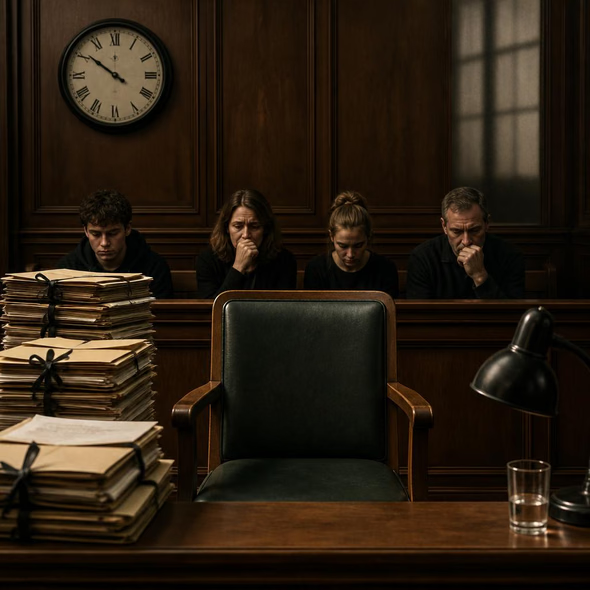
A coroner’s record belongs to more than the filing system that produces it. When workload, staffing, evidence, or procedure prolongs an inquest, the state controls when a family may receive an answer and when a death may begin to teach the public anything.
A grieving family has told the BBC that Britain’s coroner courts are not working for them, as the inquest into a man’s death remains caught in a system under growing strain. Their complaint concerns more than an inconvenient court date. They are waiting for the public process charged with establishing how he died and whether his death contains a warning for anyone still living.
Grief does not observe an adjournment. A family can hold a funeral, sort possessions and return to work while the official account remains unfinished. The absence of that finding can affect their understanding of the death, their dealings with institutions and their ability to challenge an account they believe is incomplete.
The inquest has a long civic purpose because a death can be both singular and instructive. It places a name and circumstances into the public record, tests evidence in a formal setting and may identify steps that could prevent another death. The ritual is restrained, but its promise is substantial: the state will not treat an unexplained or concerning death as private debris.
Delay changes that promise into controlled access. The court sets the calendar, admits the evidence and determines when the record becomes available; the family supplies patience without choosing the terms. Bereavement has been assigned a waiting number.
What the queue conceals
The reported strain does not by itself establish one cause for every delayed case. Is the pressure coming from caseloads, vacancies, medical evidence, expert reports, police inquiries, contested procedure, or several of these at once? Those distinctions matter because a staffing problem, an evidentiary problem and a poorly designed process require different repairs.
They also matter for accountability. A broad assurance that cases are complex may be true while revealing little about whether delays are unavoidable, unevenly distributed or made worse by administrative choices. Useful scrutiny would measure the age of pending cases, explain repeated adjournments and show families where responsibility for the next step actually sits.
The unanswered question is therefore not only when this family will receive a finding. It is whether Britain’s coronial systems can show which part of the process is failing, publish the scale of the wait and act before another family discovers that the warning mechanism itself has gone quiet.
Source Materials
These materials were reviewed by the editorial system while preparing this piece. Muerte.casa may interpret, satirize, reframe, or disagree with them.
- The grieving family who say the coroners' courts aren't working BBC · August 24, 2026 · Primary signal · Direct source
How did this story land?
This may be changed as you like.