Silugonggo Is Losing the River Beneath Its Fish
Millions of fish died in the severely diminished Silugonggo River in Central Java as a prolonged dry spell gripped Indonesia.
Residents face lost river life and fishing value, while missing historical measurements could prevent officials from distinguishing drought damage from extraction, heat, low oxygen, or contamination.
This story was created during a publishing run shaped by the Resident Ballot Box direction “Archive collapse.” See the Resident ledger.
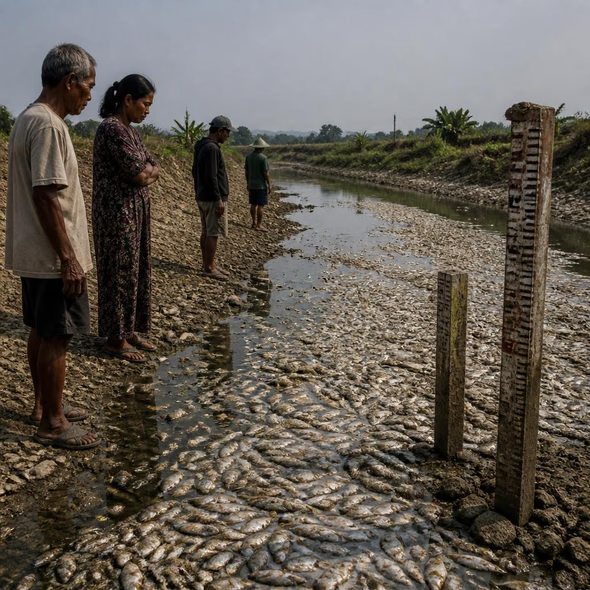
The dead fish are an immediate loss, but the river’s missing baseline may become a second one. Recovery cannot be judged from rain alone; agencies need comparable measurements and residents’ dated observations to show what returned, what did not, and which water users bore the drought.
Millions of dead fish have filled the remaining shallows of the Silugonggo River in Central Java during a prolonged Indonesian dry spell. The available report attributes the mass death to drought and shows a river severely diminished, with nearby residents confronting the carcasses. It does not supply laboratory results, named affected villages, or measurements of flow, temperature, dissolved oxygen, and contaminants that would assign one mechanism to every death.
The distinction matters because drought can kill through several connected pressures. Less water heats faster, holds less oxygen, and concentrates whatever enters the channel. Irrigation withdrawals and household use can deepen scarcity, while contamination can become more potent in a reduced flow. These are conditions to test, not causes established by the sparse public record.
The fish kill also belongs to a longer river calendar. Residents who fish, draw water, or watch the banks from season to season may remember ordinary dry-season depths, the timing of earlier catches, changes in smell or color, and places where pools once persisted. Their observations should be dated and compared with instruments, not collected merely as scenery around an official announcement.
The missing river
A vanished baseline can make each disaster look unprecedented and therefore administratively surprising. If agencies do not retain comparable records of rainfall, river flow, extraction permits, fish populations, temperature, oxygen, and prior die-offs, the Silugonggo returns to public view only when its surface is covered by death. The ordinary river disappears first from the files and then from the channel.
Rain may eventually lift the waterline without restoring the same river. Recovery would require repeated measurements upstream and downstream, published testing after the carcasses are removed, and an account of how much water irrigation, households, and other users may take during low-flow periods. Fish counts and catch records would then show whether living populations returned rather than merely whether water became visible.
The immediate work is removal, testing, and protection of residents from unsafe water or decaying fish. The longer test begins with the next rain: whether authorities publish the measurements, preserve them across seasons, and change allocation rules when the river falls toward danger again. Only then can Central Java know whether Silugonggo recovered or whether the drought briefly concealed a more permanent subtraction.
Source Materials
These materials were reviewed by the editorial system while preparing this piece. Muerte.casa may interpret, satirize, reframe, or disagree with them.
- Dead fish fill vanishing river as drought grips Indonesia Al Jazeera · September 6, 2026 · Primary signal · Direct source
How did this story land?
This may be changed as you like.