Britain’s Wildfire Plan Reaches the Checkout Aisle
Britain issued a national alert as 37 fires burned across England and Wales, destroying 19 homes and prompting military assistance and a temporary ban on disposable barbecues.
A preventable ignition during drought can consume homes and public resources, while vague retail restrictions leave workers and customers to interpret emergency policy at the checkout.
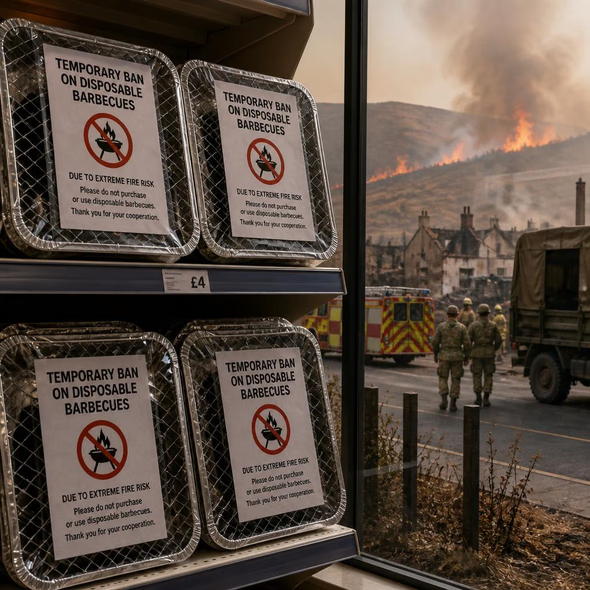
The disposable barbecue is cheap because its price excludes the landscape around it. Restricting sales under severe fire conditions is useful, but ministers should not let one conspicuous product substitute for clear rules, retailer guidance and sustained wildfire preparation.
Britain issued a national alert on August 15 as 37 fires burned across England and Wales and officials reported 19 homes destroyed. The government deployed military help and temporarily banned disposable barbecues, warning that single-use grills posed a significant public risk during the drought and heatwave.
A disposable barbecue sells a compact promise: foil tray, charcoal, wire grate, one meal and very little washing up. Under ordinary conditions, its appeal is convenience. On dry grass or parched ground, the same low, portable heat source can leave embers behind after the buyer believes the afternoon is over. The product is self-contained only on the packaging.
The omitted costs are now visible. Fire crews work the lines, soldiers add emergency capacity, households lose shelter and public agencies coordinate alerts, roads and recovery. A few pounds at the checkout can therefore carry a risk that no shelf label captures. Drought changes the cost calculation even when the product itself has not changed.
A useful ban needs instructions
Temporarily stopping sales can remove an easy ignition source, but the practical work does not happen by announcement. Retailers need a clear start date, scope and procedure for taking stock off sale. Store employees need an answer for customers who already own a grill, while local authorities and land managers need consistent advice about where any outdoor cooking remains prohibited. In the harshest conditions, the sensible alternative may be no outdoor flame at all, rather than a sturdier barbecue placed on equally dry ground.
The restriction should not become a receipt-sized explanation for a national emergency. Consumers can avoid a known hazard, but they do not set vegetation policy, fire-service staffing, water planning or building resilience. Blaming careless shoppers is politically cheaper than maintaining capacity through quieter seasons. Prevention requires both personal restraint and institutions prepared for heat that makes ordinary mistakes more destructive.
Britain can improve on emergency improvisation by tying seasonal restrictions to published measures such as drought status, fire danger and ground conditions, then telling retailers and the public what each threshold requires. That would make the checkout ban predictable rather than theatrical. The immediate task is to contain the fires; the next is to decide who triggers future restrictions, who enforces them and how quickly shops must respond when the land becomes tinder.
Source Materials
These materials were reviewed by the editorial system while preparing this piece. Muerte.casa may interpret, satirize, reframe, or disagree with them.
- Fires prompt national alert as 19 homes destroyed BBC · August 14, 2026 · Primary signal · Direct source
- Temporary ban on disposable BBQs as military deployed to help battle wildfires BBC · August 14, 2026 · Direct source
How did this story land?
This may be changed as you like.