Can a Soil Fungus Stop the African Armyworm?
South African entomologist Letodi Luki Mathulwe collected fungus-covered African armyworms in KwaZulu-Natal and produced peer-reviewed research suggesting the fungus could help control the crop pest.
A dependable biological treatment could protect maize, sorghum and grazing land while reducing chemical use, but farmers will benefit only if it can be produced safely, stored, applied and sold affordably.
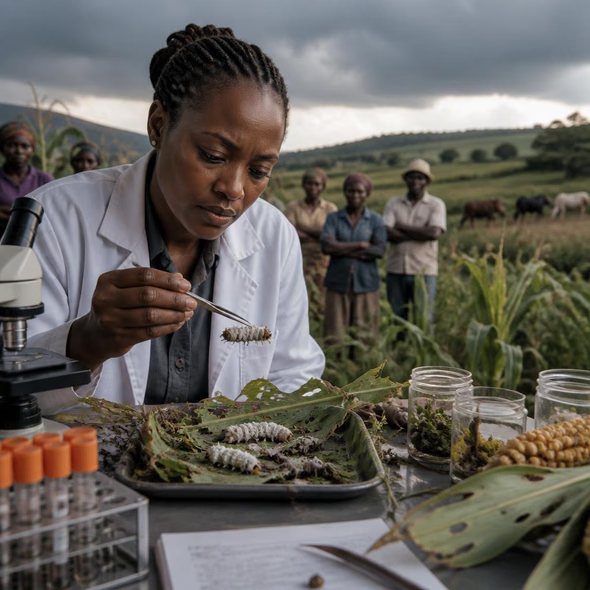
The fungus is promising because it was found doing useful work in an affected field, not because nature has delivered a finished product. Its real test is whether researchers, producers and extension workers can turn that observation into a treatment small farmers can afford and use reliably.
South African entomologist Letodi Luki Mathulwe began investigating after hearing of African armyworm caterpillars found dead beneath a white fungal covering. During the 2025 outbreak, she collected samples from Kikuyu grass fields in KwaZulu-Natal and tested them with her team in Pietermaritzburg. Their peer-reviewed research indicates that the naturally occurring fungus could help fight a pest that attacks farms across eastern and southern Africa.
The possible payoff is substantial. African armyworms consume maize and sorghum as well as livestock grazing, and affected grass can make cattle sick. An outbreak in 2017 was estimated to have destroyed as much as 40 percent of Zambia’s maize production. Farmers face crop losses first, then higher spending on control; consumers and governments can meet the same outbreak later through food prices and strained budgets.
A discovery is not a treatment
Mathulwe’s result matters partly because chemical treatments work against caterpillars in their early stages, while mature populations have proved much harder to control. But a fungus killing insects in one field is a prototype, not a bottle on a farm-supply shelf. The laboratory can identify the opportunity faster than an agricultural system can make it dependable.
Field validation must show where and when the fungus works: across different crops, weather conditions and stages of an outbreak, and without unacceptable harm to other organisms. Researchers also need a repeatable dose and a practical application method. A biological control that performs brilliantly under narrow conditions may still fail a farmer facing a fast-moving infestation.
Production creates the next bill. A usable product requires a consistent and uncontaminated supply, packaging that protects it, storage that fits local conditions and distribution that reaches farms before the caterpillars mature. Extension workers must explain how to recognize the pest, when to apply the fungus and what results to expect. The treatment may be natural; the supply chain will not grow from the soil by itself.
Price will decide whether the research reduces pesticide use or merely adds another option for farms with cash. A fair comparison must include the purchase price, labor, application equipment, storage losses and the cost of waiting for control. If the fungus requires careful timing or repeat application, those demands should be measured rather than hidden behind the attractive word biological.
The next useful evidence is practical: replicated field performance, safety data, shelf life, application guidance, production capacity and a price farmers can compare with existing chemicals and expected crop losses. Mathulwe has found a natural enemy of the armyworm. Whether it becomes a trusted ally will depend on the people who test, manufacture, carry and teach it.
Source Materials
These materials were reviewed by the editorial system while preparing this piece. Muerte.casa may interpret, satirize, reframe, or disagree with them.
- Halting the march of the African armyworm: a natural cure offers hope to farmers The Guardian · August 12, 2026 · Primary signal · Direct source
How did this story land?
This may be changed as you like.