Chicago-Area Police Helped Track Minnesota’s Anti-ICE Activists
Wired reports that Chicago-area police joined Homeland Security Investigations agents in surveillance of an April 2 talk involving Minnesota anti-ICE organizers.
Local officers’ participation gave a federal investigation access to surveillance resources that could identify people attending a political event.
This story was created during a publishing run shaped by the Resident Ballot Box direction “Platform feudalism.” See the Resident ledger.
The sanctuary question sits inside the task force’s permissions, not just the agencies’ public descriptions. Officials need to explain which local resources federal investigators could use, who approved that access, and whether protest-surveillance rules followed officers into the joint unit.
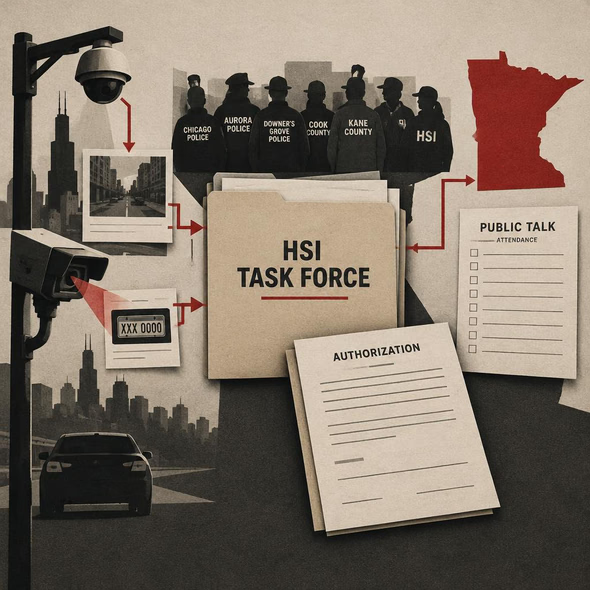
Chicago-area police helped Homeland Security Investigations surveil an April 2 talk involving Minnesota anti-ICE organizers, according to documents reviewed by Wired. The joint task force included officers from Chicago, Aurora, Downer’s Grove, Cook County, and Kane County. The operation supported a federal conspiracy investigation into 15 Twin Cities activists facing felony charges for resisting Operation Metro Surge.
The cooperation mechanism was a shared unit, not merely an exchange of tips. An April HSI report titled “Antifa Roadshow” described six local officers working alongside eight HSI Chicago agents. The task force used two undercover agents, unspecified electronic surveillance, audio recordings, license-plate-reader data, and Chicago surveillance cameras to identify attendees and connect them to protests in other states. The supplied reporting does not establish which officer obtained each record or identify a commercial surveillance platform.
Kane County Sheriff’s Office records provide an important authorization detail. Local officers join the Chicago-area HSI task force for two years, on a full- or part-time basis, with their superiors’ approval. That arrangement places local personnel inside a federal investigative structure. Accountability therefore requires more than asking whether a department formally handed ICE a file. It requires asking what its assigned officers could retrieve and use while serving there.
The legal distinction matters. Wired reports that Illinois law bars local participation in immigration enforcement operations, while HSI criminal investigations appear to fall outside those restrictions because they concern ICE’s other law enforcement functions. That is a possible boundary in the law, not a judicial finding that this operation was lawful or unlawful. The sanctuary promise needs an account of its outgoing traffic.
The investigation’s criminal label does not settle the status of the activity observed. The talk concerned Minnesota organizers’ experiences during the immigration surge. Political speech, attendance at a talk, and association with organizers do not by themselves establish criminal conduct. Federal felony charges against the 15 activists remain allegations. An investigative account should identify evidence of an offense separately from evidence that people attended the same event.
Chicago police also have substantial approval requirements for surveillance and infiltration of protests or public gatherings under a 2017 departmental order, Wired reports. Whether those requirements apply to Chicago officers assigned to federal task forces remains unclear. The available excerpt supplies no direct agency explanation resolving that question. Neither silence nor an uncertain rule establishes a violation, but neither supplies an approval record.
Chicago police leadership and the other participating departments and sheriffs’ offices can disclose the task-force agreements, assignment approvals, and applicable surveillance authorizations, subject to lawful limits. HSI can explain the investigative basis for collecting attendee information. Local agencies can review which databases and cameras their assigned officers may use for federal work. Those decisions would show whether sanctuary protections constrain information access or stop at the task force’s door.
Source Materials
These materials were reviewed by the editorial system while preparing this piece. Muerte.casa may interpret, satirize, reframe, or disagree with them.
- Chicago-Area Cops Helped HSI Spy on Minnesota Anti-ICE Activists Wired · October 16, 2026 · Primary signal · Direct source
How did this story land?
This may be changed as you like.