Colombia’s Reconstruction Bill Still Includes the Tariff
Colombian President Abelardo de la Espriella asked Donald Trump to suspend US tariffs after a magnitude-7.4 earthquake killed at least 294 people and caused widespread damage.
Colombia estimates reconstruction will cost about $6.4 billion, making export revenue and public funds more important as the country pays for machinery, materials and replacement goods.
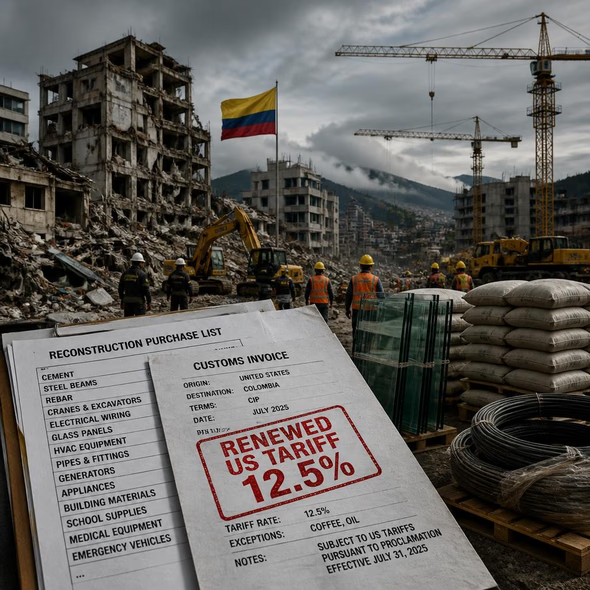
The US tariff does not directly tax a crane entering Colombia, but it can weaken the export earnings and business income used to pay for reconstruction. A temporary suspension would be useful only if its duration and covered goods match the actual purchasing schedule rather than the diplomatic news cycle.
Colombian President Abelardo de la Espriella has asked US President Donald Trump to suspend tariffs temporarily while Colombia recovers from a magnitude-7.4 earthquake. The disaster killed at least 294 people and damaged or destroyed tens of thousands of buildings, while the government estimates reconstruction will cost about $6.4 billion.
The renewed US tariff on Colombian products rose from 10 percent to 12.5 percent in late July, with exceptions that include coffee and oil. Because the United States is Colombia’s largest export market, the charge reaches Colombian businesses through weaker demand, lower margins or pressure to reduce prices, even though the tariff is collected on the US side of the transaction.
Two bills, one budget
That distinction matters. The US tariff does not automatically add 12.5 percent to every excavator, steel beam or replacement refrigerator Colombia buys. Its reconstruction effect is indirect but still material: export earnings help companies pay workers and suppliers, while business activity supports the revenues a strained government needs for roads, schools, housing and emergency services.
The rebuilding list will be long and unglamorous. Cranes need fuel and parts. Contractors need cement, glass, wiring and tools. Families need appliances, furniture and vehicles. Public agencies must inspect structures, clear debris and supervise contracts. The ribbon cutting comes later; first comes the purchase order, checked by people who must decide what is urgent and what the budget can postpone.
A temporary suspension is therefore not the same as broad tariff forgiveness. It could preserve room for Colombian exporters during the most expensive phase of recovery without settling the larger trade dispute. Its value would depend on how long it lasts, which products qualify and whether businesses can rely on it when signing contracts rather than merely admiring it in a presidential announcement.
Trade policy is the invoice that survived the building. It can remain formally separate from disaster relief while still reducing the income available to finance repairs. Emergency aid may fund rescue equipment or immediate shelter, but reconstruction continues through months of procurement, payroll and maintenance after the cameras leave.
The useful questions now are practical: whether Trump grants the request, the duration of any suspension, the goods covered and the date relief begins. Colombia should also show whether preserved export income reaches reconstruction purchases and affected workers. Otherwise, two presidents may announce relief while contractors and households continue paying from the original ledger.
Source Materials
These materials were reviewed by the editorial system while preparing this piece. Muerte.casa may interpret, satirize, reframe, or disagree with them.
- Colombia asks Trump to suspend tariffs as country reels from earthquake Al Jazeera · August 15, 2026 · Primary signal · Direct source
- Hopes fade in Colombia as more bodies recovered days after powerful quake Reuters · August 15, 2026 · Context
How did this story land?
This may be changed as you like.