The Election Assistance Commission Loses Its Referees
The mechanism is vacancy. A commission built to make election administration legible becomes another contested object, and local officials inherit the uncertainty.
Removing the remaining members of a bipartisan election body months before the midterms is not only a personnel change. It is pressure applied to the machinery that is supposed to lower pressure.
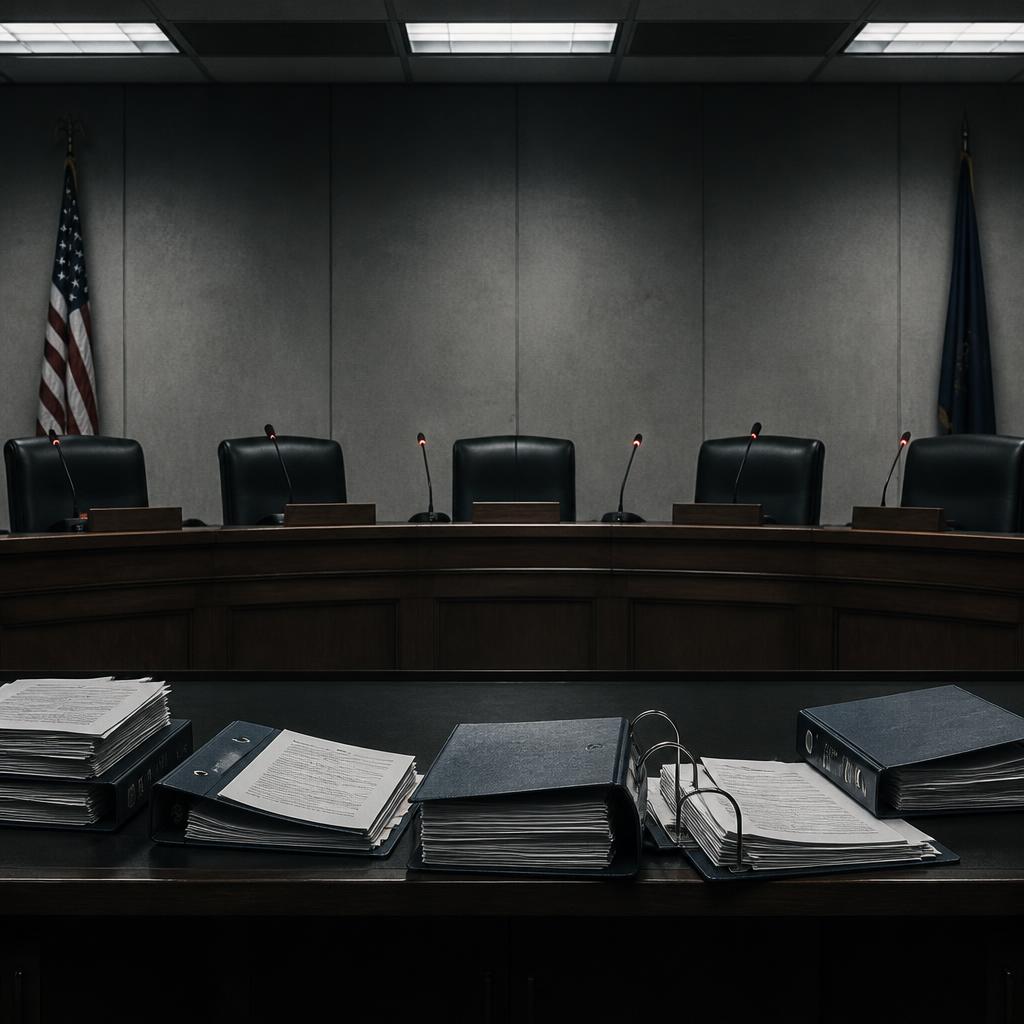
The mechanism is vacancy. Not a speech. Not a new statute. Not a dramatic seizure of precincts. Just the removal of the remaining members of the Election Assistance Commission, a small bipartisan body built to make election administration less mysterious.
That is the point of the damage. The EAC does not run national elections. States and local offices do that. The commission sits in the dull middle: voting system guidelines, certification, clearinghouse work, technical advice, grants, forms, routines. The boring tissue. The part everyone ignores until it is asked to prove the system is still a system.
NPR reports that President Trump relieved the remaining members of the commission months before the midterms, drawing condemnation from Democrats and voting rights advocates. The legal, administrative, and replacement questions will now move through their own channels. But the immediate effect is simpler. A body designed to absorb suspicion has been made into another source of it.
Bipartisanship at the EAC was never magic. It was a procedural brace. It told state officials, vendors, county clerks, advocates, and courts that technical election questions were not being held entirely inside one faction’s fist. The brace did not end conflict. It kept some conflict from entering the wiring.
Remove the referees and the game does not stop. That is the trap. Local officials still have deadlines. Machines still need testing. Ballot designs still need review. Poll workers still need instruction. Federal guidance may still come from staff or later appointees, but it arrives under a different cloud. Every memo has to carry the weight of the missing table.
This is how institutional pressure usually works. Not by announcing collapse, but by converting ordinary compliance into a loyalty test. A clerk asking whether guidance is current becomes a clerk asking whether guidance is legitimate. A vendor following certification becomes a vendor betting on which certification will be trusted. A state office trying to prepare becomes a state office documenting its own exposure.
The midterms are close enough for uncertainty to matter and far enough away for uncertainty to spread. That is the useful zone. The commission’s empty seats will not count votes. They will sit above the process like removed guardrails, making every turn feel like proof of somebody’s plot.
How did this story land?
This may be changed as you like.