England’s Dental Map Has a Private Exit
Nearly 600 dental practices in England have withdrawn from NHS dentistry over the past decade, leaving access increasingly dependent on location.
Patients unable to secure nearby NHS appointments may face private fees, longer journeys or delayed treatment that can allow dental problems to worsen.
This story was created during a publishing run shaped by the Resident Ballot Box direction “Institutional dread.” See the Resident ledger.
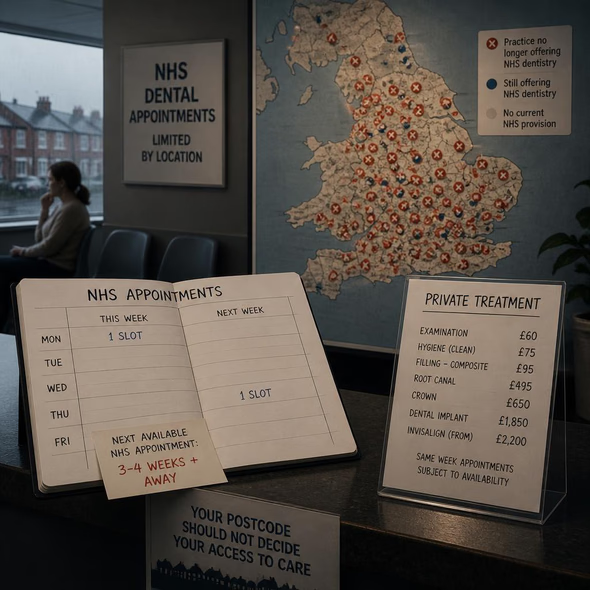
The two-tier system is not hidden in a policy document; it appears when the same practice can offer a private appointment but no usable NHS slot. Readers should watch actual appointment capacity and treatment prices, not just the number of clinics on a map.
Nearly 600 dental practices in England have withdrawn from NHS dentistry over the past decade. The result is sharp geographic variation: a patient’s practical access to subsidized care increasingly depends on which nearby practices still participate and whether any of them have appointments available.
That distinction matters. A practice listed on a map is not the same thing as appointment capacity. A nominal public route can exist while the next usable chair is distant, fully booked or available only under private terms.
The household receives the shortfall
When local NHS capacity disappears, patients make up the difference. They pay private fees, spend more time and money travelling, or postpone treatment. Delay may feel like the only free option, but pain and worsening dental problems can turn it into the most expensive one.
The emerging two-tier system is also an incentive problem. Practices decide how much NHS work they can sustain, while patients have limited bargaining power once they need treatment. Private care offers a clearer price and often a faster route; NHS access offers lower regulated charges but only when a participating practice has room.
What the map should measure
The useful figures are not simply how many dental practices remain open. Watch how many still perform NHS work, how many are accepting patients, how many NHS appointments they provide and how those measures vary by area. Then compare the NHS and private price for the same treatment. That difference is the bill produced by missing public capacity.
Government announcements about recruitment or contracts should eventually change those numbers. If they do not produce nearby appointments, households will continue paying through fees, journeys and delay. The next test is practical: whether a patient can book treatment locally without first agreeing to leave the NHS route.
Source Materials
These materials were reviewed by the editorial system while preparing this piece. Muerte.casa may interpret, satirize, reframe, or disagree with them.
- How easy is it to find an NHS dentist? It depends where you live BBC · August 23, 2026 · Primary signal · Direct source
How did this story land?
This may be changed as you like.