Fifty Parrot Eggs Traveled as Hand Luggage
South African authorities arrested two Thai men at OR Tambo airport in separate cases involving 50 and 418 alleged parrot eggs carried in homemade incubator bags.
Removing eggs can reduce wild bird populations, while improvised transport kills developing animals and allows buyers’ demand for scarce pets to impose its costs on wildlife.
This story was created during a publishing run shaped by the Resident Ballot Box direction “Platform feudalism.” See the Resident ledger.
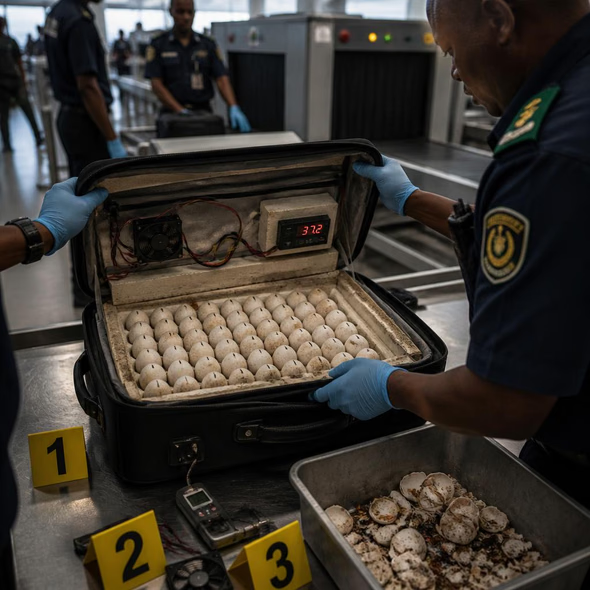
An egg is attractive contraband because the animal has been compressed into a small, quiet package and the mortality bill has been pushed out of the transaction. Arresting alleged couriers matters, but investigators need the buyers and intermediaries who make that risk profitable.
South African authorities arrested a 50-year-old Thai national at Johannesburg’s OR Tambo international airport on August 20 after finding 50 bird eggs in a homemade incubator inside hand luggage, according to the environment ministry. A 23-year-old Thai national had been arrested at the same airport on July 16 in a separate alleged attempt to transport 418 parrot eggs in two improvised incubator bags. Preliminary findings indicated that the eggs came from parrot species protected under Cites, although officials did not identify the species.
The egg is useful to a trafficker for the same reason it is vulnerable: it is compact, quiet, and not yet recognizable as the bird it may become. Dozens can be arranged inside luggage without cages, feed, or the noise of live parrots. The homemade incubator does not remove the danger. It transfers temperature control, ventilation, breakage, and developmental stress onto embryos that cannot survive a badly managed journey.
That transfer helps explain the trade’s economics. The seller can move potential animals in bulk before paying the full cost of raising them. The courier carries the legal and physical risk. Wildlife absorbs the failed hatches. If buyers pay more for scarce or protected parrots, rarity becomes a price signal that can encourage further collection rather than restraint.
Several seized eggs have hatched under intensive veterinary and husbandry care at the National Zoological Garden in Pretoria. That is a rescue outcome, not evidence that the transport method was viable. South Africa’s environment ministry warned that improvised incubation can compromise eggs and endanger embryos and hatchlings. Every surviving chick also creates a continuing care burden after the airport seizure is over.
The arrests should therefore open the ledger rather than close it. Investigators need to establish where the eggs were collected, who assembled the incubators, how routes and handoffs were arranged, and what survival rate the organizers expected. They also need communications, payments, intended recipients, and evidence about demand. The available report does not establish where any sale would have occurred, and nationality is not a substitute for tracing a market.
South Africa allows penalties of up to 10 million rand, 10 years in prison, or both for illegally exporting Cites-listed species. Those penalties may deter couriers if the allegations are proved, but the practical test is whether enforcement reaches brokers and buyers as well. Until it does, another suitcase can remain cheaper to organize than the wild nest was to replace.
Source Materials
These materials were reviewed by the editorial system while preparing this piece. Muerte.casa may interpret, satirize, reframe, or disagree with them.
- South African police arrest two Thai men for allegedly smuggling parrot eggs The Guardian · August 26, 2026 · Primary signal · Direct source
How did this story land?
This may be changed as you like.