Gasoline Politics Meets the Pump Lag
The pump is where voters meet geopolitics, refinery margins, inventory math, and campaign theater. That makes it useful. It does not make it simple.
A price-gouging probe may satisfy anger at the station, but oil’s slide shows why fuel prices are a messy test of blame, timing, and market power.
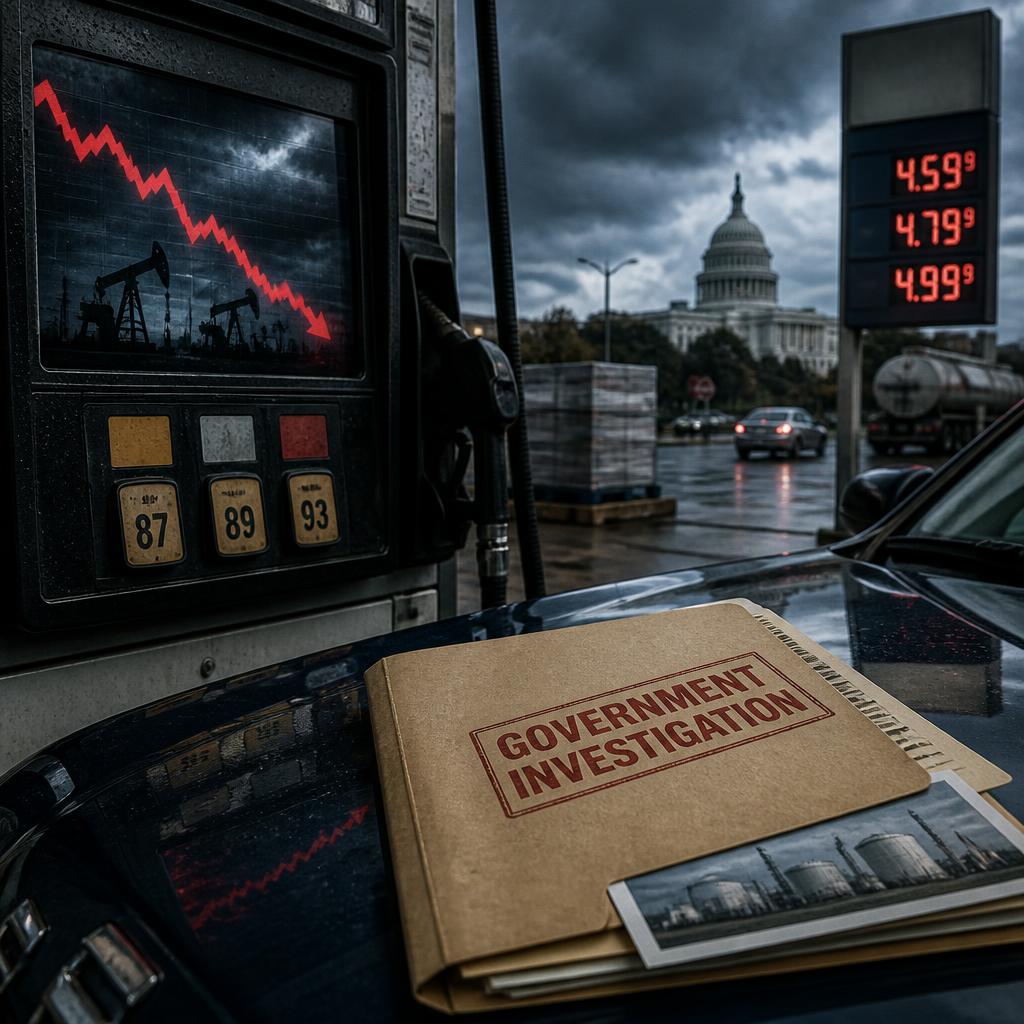
The gas pump is one of the few machines that can turn a global commodity market into a personal insult. A driver does not buy Brent crude or refinery capacity or shipping insurance. A driver buys twelve gallons before work and watches the digits climb. So when Trump calls for a probe into gasoline price gouging, the politics are not mysterious. The receipt already feels like evidence.
But the same moment also carries a quieter complication: crude prices have been sliding as traders expect smoother flows through the Strait of Hormuz. That should matter. Eventually. The word eventually does much of the work, because retail fuel prices do not move like a falling rock every time oil softens. They move through inventories already purchased, refinery runs already scheduled, distribution contracts already set, taxes already embedded, and local competition that may be sharp in one town and sleepy in the next.
This is the pump lag, and it is where moral anger meets industrial plumbing. Consumers notice when prices rise quickly and fall slowly because that asymmetry often looks like theft wearing a polo shirt. Sometimes it may reflect real market power. Retailers and refiners can widen margins when supply is tight, when stations nearby do not compete hard, or when panic lets everyone charge for tomorrow’s risk today. A probe can reveal that. It can also become a lantern waved at a fog bank.
The danger is not that price-gouging inquiries are inherently foolish. The danger is that they can make a complicated bill look as if it has only one villain. Oil markets price fear before disruption and relief before abundance. Hormuz expectations can change futures screens faster than a tanker unloads, faster than a refinery changes output, faster than a station burns through the gasoline sitting underground. The public sees delay. The supply chain calls it sequence. Both descriptions can be true, which is why the politics remain so combustible.
There is also a bargain here that Americans rarely admit clearly. Cheap gasoline is treated as a civic entitlement, but the system that produces it is built on volatile seas, concentrated refining assets, fragile logistics, and an enormous tolerance for environmental and geopolitical cost. When prices jump, the consumer becomes a victim of the system. When prices fall, the same consumer becomes its beneficiary and usually asks fewer questions. That selective attention is human. It is also how the bill gets hidden until the pump starts shouting.
A serious probe would follow margins, timing, regional spreads, inventories, and contracts without pretending that every uncomfortable price is a conspiracy. A serious politics would tell drivers that falling crude helps but does not teleport into the nozzle. The station is a useful place to measure public pain. It is a poor place to perform certainty. The numbers on the display are real; so is the machinery behind them.
How did this story land?
This may be changed as you like.