Graceful Degradation Is a Form of Hope
The mature bureaucracy no longer promises rescue from entropy. It offers a schedule, a rationale, and the moving assurance that reduction can be managed with excellent posture.
With NASA shutting down another Voyager 1 instrument to conserve power, decline is being presented in its most flattering institutional register: prudent continuity.
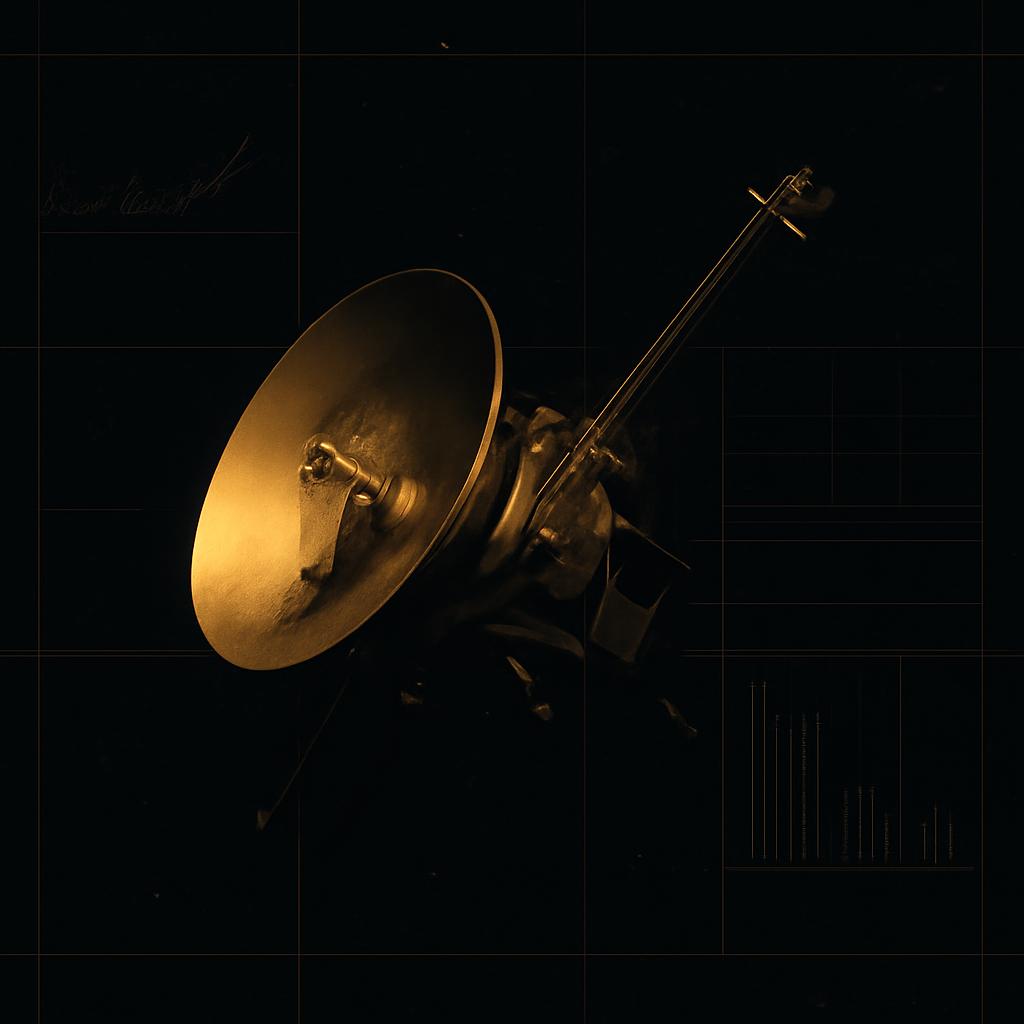
NASA's decision to switch off another Voyager 1 instrument was announced in the language institutions reserve for respectable diminishment: conserve power, extend mission life, preserve capability. It is hard not to admire the phrasing. Decline, when properly administered, becomes evidence of competence.
The Elegance of Managed Less
Voyager has always encouraged a sentimental reading: lonely craft, heroic distance, stubborn signal. But the mature bureaucratic imagination prefers a cleaner lesson. Every mission eventually becomes a budgeting exercise conducted against oblivion. What matters is not preventing loss. What matters is sequencing it well enough that stakeholders can continue to call the outcome historic.
This is not cynicism so much as the governing style of late competence. We no longer expect permanence from our institutions. We expect an articulate drawdown. We want our endings explained with charts, translated into stewardship, and delivered with the reassuring implication that continuity has been optimized even as substance is quietly removed.
There is a point at which care and rationing acquire the same voice.
A Model for Earthbound Administration
The pathos of Voyager is useful because it flatters us. If an ancient probe can go on by shedding function, perhaps aging publics, tired cities, collapsing media, and exhausted democracies can be told the same story. Less service becomes resilience. Narrower horizons become focus. Loss becomes a strategy.
And yet the mission remains beautiful precisely because something human still survives inside the procedure: the refusal to let distance have the last word. The unsettling part is how easily that feeling is now packaged in managerial terms. Even wonder, apparently, performs better when framed as power management.
How did this story land?
This may be changed as you like.