ICE Bought the Cameras. Now Preserve the Record.
ICE said it has enough body cameras after its immigration officers were involved in more than two dozen shootings during the Trump administration.
Without enforceable activation, retention, audit, and disclosure rules, crucial evidence from an ICE shooting can remain missing or inaccessible despite the new equipment.
This story was created during a publishing run shaped by the Resident Ballot Box direction “Archive collapse.” See the Resident ledger.
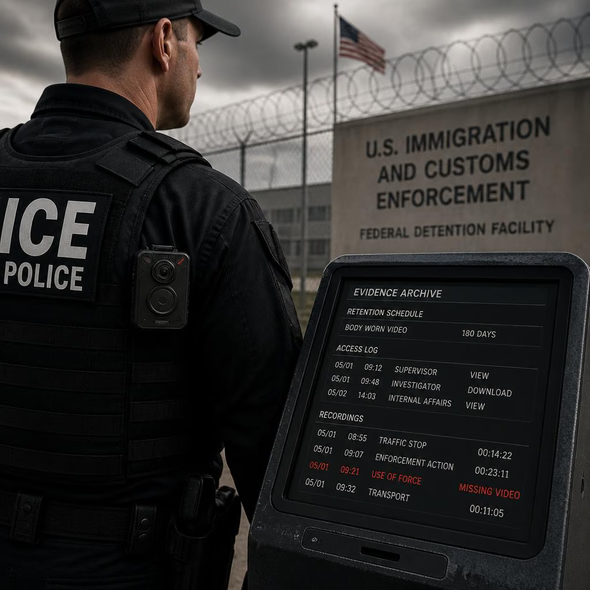
ICE has announced an equipment milestone, not an accountability system. The test is whether the agency creates a record that investigators, courts, families, and the public can inspect—including a visible record of every failure to record.
US Immigration and Customs Enforcement says it now has enough body cameras after its officers were involved in more than two dozen shootings during the Trump administration. NPR reports that the cameras could answer some concerns about transparency and accountability. The announcement does not, on its own, provide a complete public account of which officers and locations are covered. ICE should publish that deployment information rather than make outsiders infer coverage after the next shooting.
A camera purchase establishes inventory. Accountability begins with the rules governing the recording. An officer can fail to activate a camera, activate it late, obstruct its view, or end a recording before an encounter is over. A file can then be mislabeled, separated from an incident report, withheld, or deleted on an ordinary schedule while a family is still seeking answers.
The record needs a chain of custody
ICE should require activation before enforcement contact and automatically flag any dispatch, arrest, use of force, injury, or firearm discharge that lacks matching footage. Supervisors should document the reason for every gap. That explanation should remain attached to the incident file, not disappear into a separate disciplinary system that the public cannot identify.
Retention rules matter most when the footage becomes inconvenient. Video connected to a shooting, death, serious injury, complaint, lawsuit, investigation, or records request should be preserved through the relevant proceedings and any defined appeal period. ICE should also keep the original file, metadata, edits, exports, viewing history, and deletion attempts. A clip without that history is evidence with its seams removed.
Access cannot depend on agency preference
Families, defense lawyers, inspectors, Congress, courts, and journalists have different legal claims to footage, but none should face an unwritten release standard. ICE needs published deadlines, narrow redaction rules, written reasons for denial, and an appeal outside the office responsible for the encounter. Necessary redactions can protect witnesses and private information without turning every frame into agency property indefinitely.
Audit logs should identify who recorded, uploaded, viewed, copied, altered, or deleted each file. Independent reviewers should compare those logs with dispatch records, weapons reports, medical calls, vehicle data, and officer statements. The point is not to presume that every absence proves misconduct. It is to prevent the agency from treating absence as something the public has no right to detect.
Rules also need consequences. Repeated failure to activate a camera should affect discipline and the credibility assigned to an unsupported report; unauthorized deletion or concealment should trigger investigation and preservation sanctions. ICE has obtained the hardware. Its next obligation is to publish the deployment map, retention schedule, audit procedure, release policy, and record of missing footage before another shooting tests all five.
Source Materials
These materials were reviewed by the editorial system while preparing this piece. Muerte.casa may interpret, satirize, reframe, or disagree with them.
- ICE says it has enough body cameras now, after series of deadly shootings NPR · September 1, 2026 · Primary signal · Direct source
How did this story land?
This may be changed as you like.