Illinois Prosecutors Built ICE a Data Pipeline
Prosecutors in one out of every six Illinois counties shared defendants’ addresses, birth dates, court dates, police reports, and tickets with federal immigration agents.
Defendants who appeared in local court could be located and detained by ICE through records gathered for their criminal cases, often without their lawyers knowing.
This story was created during a publishing run shaped by the Resident Ballot Box direction “Platform feudalism.” See the Resident ledger.
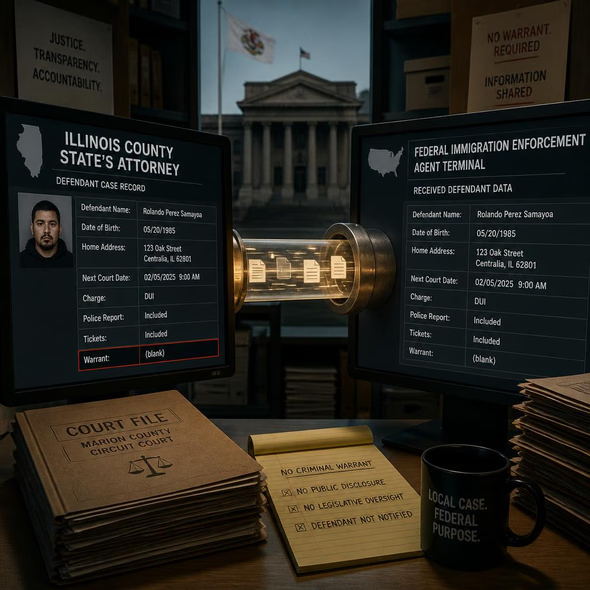
This was not a dramatic database breach. It was a quiet change in function: county offices converted records collected for prosecution into location intelligence for federal immigration enforcement. The ordinary email made the transfer look routine while notice, warrants, and oversight disappeared.
County prosecutors across Illinois shared defendants’ personal information with federal immigration agents during the first 15 months of President Donald Trump’s second term, according to emails reviewed by Injustice Watch and WIRED. Offices in one out of every six counties supplied details including home locations, dates of birth, court dates, police reports, and tickets. The exchanges occurred without criminal warrants, public disclosure, legislative oversight, or, typically, the knowledge of defendants and their lawyers.
Rolando Perez Samayoa shows how the mechanism worked. After his October DUI arrest in Marion County, he attended his hearings. In January, assistant state’s attorney John Christeson emailed a Homeland Security Investigations agent with Samayoa’s birth date, next court date, and city of residence. When the agent asked for more, Christeson sent the police report and tickets. Federal agents apprehended Samayoa outside his home three weeks later and also took his 17-year-old son.
No elaborate integration was required. A prosecutor opened a file assembled for a local case, selected facts useful to a federal agent, and pressed send. Sometimes county employees volunteered information. Sometimes they answered Department of Homeland Security requests. Paralegals, assistant prosecutors, and elected state’s attorneys participated. The pipeline was made of inboxes.
Illinois adopted the TRUST Act in 2017 to limit local participation in federal deportation operations without a federal criminal warrant. The reported correspondence exposes the gap between a sanctuary promise and the offices able to route around it. Whether a particular disclosure is legally available is not the same question as whether it is accountable. Prosecutors possess information because the state has compelled, arrested, charged, or investigated someone. That power does not make every secondary use neutral.
The pressure falls first on noncitizen defendants, including people who comply with court dates. Attendance can confirm where and when immigration agents will find them. A home address can direct agents toward relatives. A police report can carry allegations beyond the criminal proceeding before a court resolves them. The defendant faces two governments. Only one handoff may appear in the case file.
Interrupting this channel requires rules aimed at the transfer, not assurances about institutional intent. Counties could log every immigration-data request and disclosure, notify defense counsel before release, require a judicial warrant, restrict secondary use of case records, and publish regular audits identifying the offices, data categories, and outcomes involved. State lawmakers could also specify that prosecutors fall within the TRUST Act’s limits rather than leaving the boundary to local interpretation.
The immediate unanswered questions are countable: how many defendants were identified, how many arrests followed, which relatives were exposed, and which offices still share records. Illinois can require those answers. Until it does, a person entering county court cannot know whether the prosecutor’s file is also serving as an ICE tip sheet.
Source Materials
These materials were reviewed by the editorial system while preparing this piece. Muerte.casa may interpret, satirize, reframe, or disagree with them.
- The County Prosecutors Who Became ICE Informants Wired · August 25, 2026 · Primary signal · Direct source
How did this story land?
This may be changed as you like.