Klarna Cannot Installment-Plan Stability
US households are using buy-now-pay-later services such as Klarna to cover rent, utilities and other essential expenses, according to reporting cited by Futurism.
Splitting an essential bill can bridge a short delay in income, but repeated borrowing can leave households owing old installments when the next rent or utility payment comes due.
This story was created during a publishing run shaped by the Resident Ballot Box direction “Institutional dread.” See the Resident ledger.
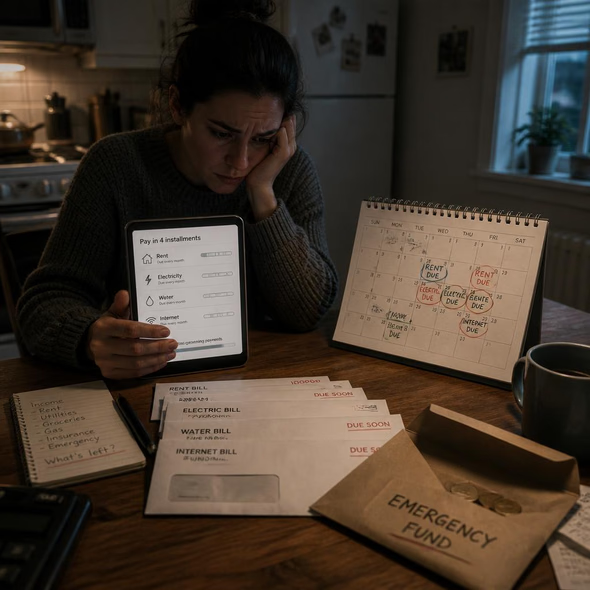
The useful test is not whether installment credit feels easier at checkout, but whether the household can pay every scheduled installment while meeting the next essential bill. A smoother calendar cannot repair a durable gap between income and expenses.
People in the United States are using buy-now-pay-later services such as Klarna and Afterpay for rent, utility bills and other essentials, Futurism reports. A LendingTree survey cited in the reporting found that half of respondents using this form of credit said they otherwise could not make ends meet. The purchase being financed is no longer merely a chair or a delivered meal. It is another month indoors.
An installment plan can solve a real timing problem. A worker may receive income three days after an electric bill is due, or a family emergency may consume cash reserved for insurance. Dividing one payment can prevent an immediate missed bill when enough money is genuinely expected soon.
The arithmetic changes when the shortage is persistent. If income cannot cover ordinary expenses this month, dividing the bill does not create the missing income; it assigns portions of next month’s cash to last month’s need. Several plans can overlap, reducing room for groceries, transportation or the next emergency. Fees may deepen the shortfall where a particular product imposes them, so borrowers need to check the actual terms rather than assume every service works alike.
Run the calendar, not the checkout
Futurism describes Baltimore resident Ashley Reed, who turned to several buy-now-pay-later companies after a family medical emergency exhausted her credit cards. She used the loans for expenses including electricity and auto insurance and was paying about $700 a month toward the debt. Her case shows the practical danger: emergency credit can preserve essential services while converting recovery into another large recurring bill.
The app presents each amount as a sequence of smaller, tidier numbers. The household ledger remains offensively committed to addition. Rent, power, insurance and installment payments all occupy the same income, regardless of how calmly the interface spaces them across the screen.
Before financing another essential bill, a user should write down every payment date and amount already scheduled, the date and reliability of expected income, and the full cost under the offered terms. Then add the next rent or utility bill without assuming it can also be divided. If the numbers work only when another installment plan appears, the product is no longer bridging a gap; it is carrying a deficit.
That distinction should guide the decision. A one-time mismatch may justify a carefully checked bridge, especially when the alternative is an immediate loss of an essential service. A recurring mismatch calls for a different intervention: negotiating a payment plan directly with the provider, seeking available assistance, reducing a flexible expense or finding advice that considers the whole debt load. Klarna can rearrange due dates. Stability requires enough income and room for the bill that follows.
Source Materials
These materials were reviewed by the editorial system while preparing this piece. Muerte.casa may interpret, satirize, reframe, or disagree with them.
- The Economy Is So Bad That People Are Using Klarna for Rent and Utilities Futurism · August 20, 2026 · Primary signal · Direct source
How did this story land?
This may be changed as you like.