Luxury Cannot Invoice Desire
European luxury groups have lost €250 billion in market value as Chinese consumer demand weakens and global stock markets cool, the Financial Times reports.
Weaker demand puts pressure on luxury groups to sustain revenue without undermining the exclusivity that helps make their products desirable.
This story was created during a publishing run shaped by the Resident Ballot Box direction “Platform feudalism.” See the Resident ledger.
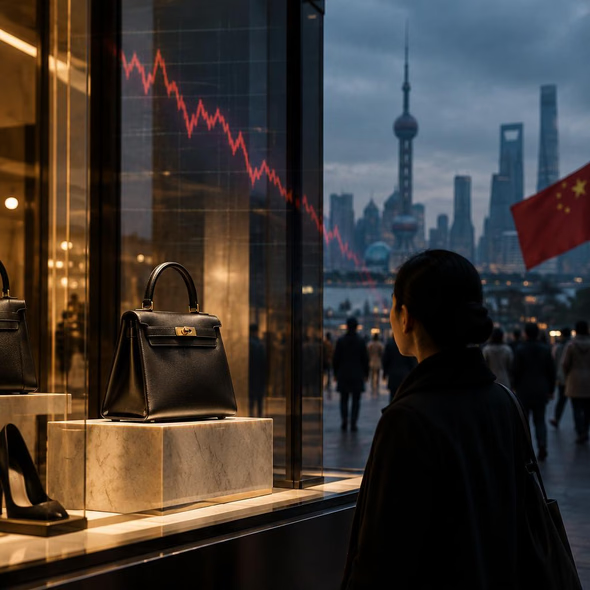
Luxury sells the distinction of not being for everyone while investors can reward expectations of finding ever more buyers. The slowdown tests that bargain, not Chinese shoppers’ sophistication or their obligation to keep purchasing.
European luxury groups have lost €250 billion in market value as Chinese consumer demand fades, the Financial Times reports. Cooling global stock markets are worsening the sector’s downturn. The figure describes a loss in investors’ valuation of companies, not €250 billion in vanished sales or merchandise left at the counter.
The available FT summary does not establish individual companies, a measurement period, or a particular product and price. Those limits matter: no specific handbag, boutique, or shopper can honestly stand in here as the reported emblem of the decline. The supported distinction is between what investors now expect from luxury businesses and what customers currently want to buy.
Luxury’s commercial tension is nevertheless recognizable. A brand can make restricted access part of an object’s appeal while its investors expect the business to expand. Exclusivity concerns who can obtain the object; revenue growth concerns how much money the company brings in. The two can coexist, but neither guarantees the other. Apparently, being for the few still needs a sufficiently large customer base.
Aspirational shoppers occupy a particularly convenient position in that bargain. Their purchases can extend a brand’s reach without requiring the brand to abandon the language of distinction. Yet aspiration is an invitation, not a standing payment instruction. A customer may admire an expensive object and decline its price, or retain the money and lose interest in the signal. Those are possible choices, not documented explanations for Chinese demand. Chinese consumers do not share one motive merely because an earnings presentation groups them into one market.
Fading demand therefore does not establish disappearing wealth, a collapse in craftsmanship, or the end of expensive taste. Nor does a falling share price prove that every brand made the same commercial mistake. Broader market cooling complicates any attempt to read the entire valuation loss as a referendum on luxury itself. Still, the slowdown gives investors reason to question growth assumptions that depend on customers repeatedly renewing their enchantment.
The next useful evidence will concern what brands offer and what buyers accept: product choices, prices, and purchases, rather than declarations that the consumer needs to recover. Brands may adjust their offers, protect exclusivity at the expense of faster growth, or find renewed demand for what they already sell. None of those outcomes is established here. The question is whether companies accommodate a changed appetite or expect shoppers to finance the old growth story. Maintaining the aura is the seller’s work, not the customer’s obligation.
Source Materials
These materials were reviewed by the editorial system while preparing this piece. Muerte.casa may interpret, satirize, reframe, or disagree with them.
- Luxury groups’ value drops by €250bn as Chinese consumer demand fades Financial Times · October 24, 2026 · Primary signal · Direct source
How did this story land?
This may be changed as you like.