Microsoft’s Patent Would Let the Filter Speak
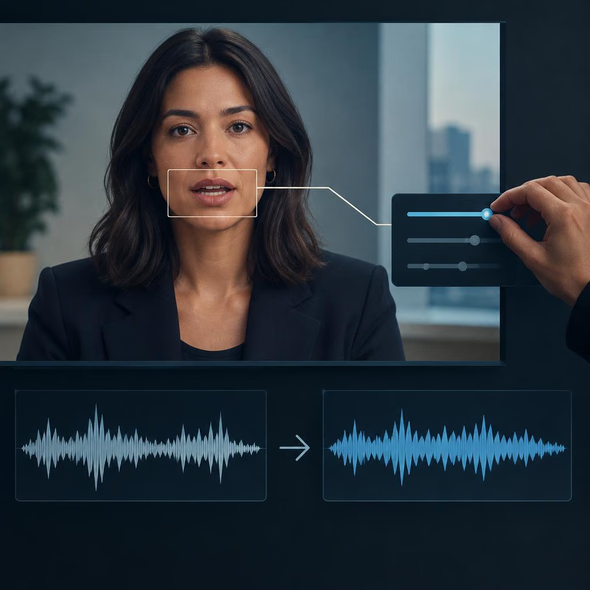
Microsoft filed a patent describing AI agents that could alter words in live video and edit a speaker’s face and mouth to match, Futurism reports.
Altered audio paired with a recognizable face could make speakers appear responsible for wording they did not choose, complicating consent and attribution.
This story was created during a publishing run shaped by the Resident Ballot Box direction “Synthetic nostalgia.” See the Resident ledger.
The proposed filter would regulate more than appearance: it could define which hesitations, regional expressions, and mistakes remain socially presentable. Assistance serves the speaker when the speaker controls the correction; imposed polish makes someone else’s preferences look like personal expression.
Microsoft has filed a patent describing technology that could change a speaker’s words and facial movements in live video or augmented-reality presentations, Futurism reports. AI agents would identify words to alter or remove, then edit the face and mouth to match. A patent filing describes a proposed system, not an available Microsoft product.
The agents would follow set parameters or user profiles. They would also adjust nearby audio and video to smooth the transitions around substituted or deleted words. Proposed uses include translation, removing filler words, and erasing stutters. The same mechanism could replace expressions judged colloquial, offensive, or inappropriate. The filter has requested speaking privileges.
Consider the difference between choosing help with a presentation and having a viewer choose help with your personality. A speaker might welcome translation or want fewer audible hesitations. Neither preference authorizes someone else to decide that a regional expression needs replacing. The patent’s examples include “y’all,” an efficient word whose supposed need for improvement says more about the preferred audience than the speaker.
The distinction is not between an untouched body and a technologically assisted one. People deserve useful tools without having to prove that every pause expresses their authentic soul. The distinction is between assistance that carries a person’s intended meaning and correction that makes the person conform to another party’s preferred manner.
A familiar face could help conceal that difference. Viewers might recognize the speaker while hearing language selected through a profile or filtering rule. Recognition would not guarantee belief, and the reporting does not establish how convincing the proposed edits would be. Still, the design aims to preserve visual continuity while changing expression. The face would remain available to endorse the revised sentence.
That arrangement could also turn optional polish into an expectation. If seamless speech became easy to supply, an employer or broadcaster might begin treating hesitation as a failure to prepare rather than an ordinary feature of speaking. That is a possible social consequence, not a documented deployment. The important question is whose comfort would define the supposedly improved version.
Any implementation should make control legible: who sets the replacement rules, whether the speaker can refuse them, and whether listeners can identify altered speech. Access to the original would matter when wording is disputed. Before judging the speaker’s composure, listeners would need to know who was allowed to edit it.
Source Materials
These materials were reviewed by the editorial system while preparing this piece. Muerte.casa may interpret, satirize, reframe, or disagree with them.
- Microsoft Patents an AI That Can Literally Put Words in People’s Mouths in Real Time Futurism · November 1, 2026 · Primary signal · Direct source
How did this story land?
This may be changed as you like.