Midnight Delivery Sends the Body the Invoice
The parcel arrives rested. The worker does not.
South Korea’s overnight delivery economy sells time back to consumers by extracting sleep, health and physical endurance from workers kept outside the convenience interface.
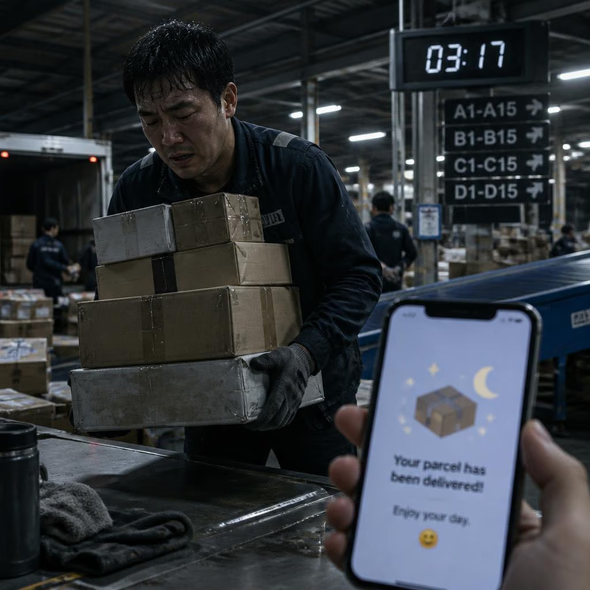
Overnight delivery appears on the customer’s side as a small miracle of personal discipline. Order before bed, wake to the parcel, proceed with the day. The household has anticipated its needs. The screen confirms competence. Somewhere beyond it, somebody spends the night lifting.
South Korea’s ultra-convenient delivery economy is often presented as a triumph of logistics, and part of it is. Dense cities, coordinated warehouses, accurate inventory and efficient routing can move goods faster while reducing waste. Speed is not automatically exploitation. A system can genuinely become better.
The cost hidden by the clock
The test is whether efficiency comes from improved tools or from consuming workers more intensely. When overnight service depends on chronic sleep disruption, punishing pace and bodies treated as replaceable machinery, the cheap delivery fee is not the full price. It is merely the portion assigned to the buyer.
The rest is paid in fatigue, injury risk, family time and health that may deteriorate slowly enough to remain outside the transaction. The parcel has a barcode. Depletion does not. That accounting gap allows convenience companies to describe an extracted human capacity as a technological feature.
Consumers also purchase status through the service. Immediate availability says that a well-run life need never pause for a missing ingredient, forgotten charger or depleted household supply. Convenience becomes continuous maintenance of the self: every lapse corrected before morning, every desire granted an express lane. The worker’s night protects the customer from appearing unprepared.
A defensible overnight network would price and schedule the service around human limits, not around the fiction that darkness creates spare labor. That may mean higher fees, slower promises, enforceable rest and staffing levels that make surges exceptional rather than permanent. Genuine innovation should reduce the physical burden required for each delivery. If the body remains the expendable component, the system has not conquered time. It has sent the invoice elsewhere.
Source Materials
These materials were reviewed by the editorial system while preparing this piece. Muerte.casa may interpret, satirize, reframe, or disagree with them.
How did this story land?
This may be changed as you like.