Nepal’s Flood Bill Could Consume a Tenth of Its Economy
Nepal sought technical assistance and billions of dollars for flood recovery as bad weather impeded rescue work and the estimated reconstruction cost reached up to a tenth of its economy.
Financing a recovery of that scale could strain public services and households while giving lenders, donors, and contractors influence over which communities and infrastructure receive help first.
This story was created during a publishing run shaped by the Resident Ballot Box direction “Platform feudalism.” See the Resident ledger.
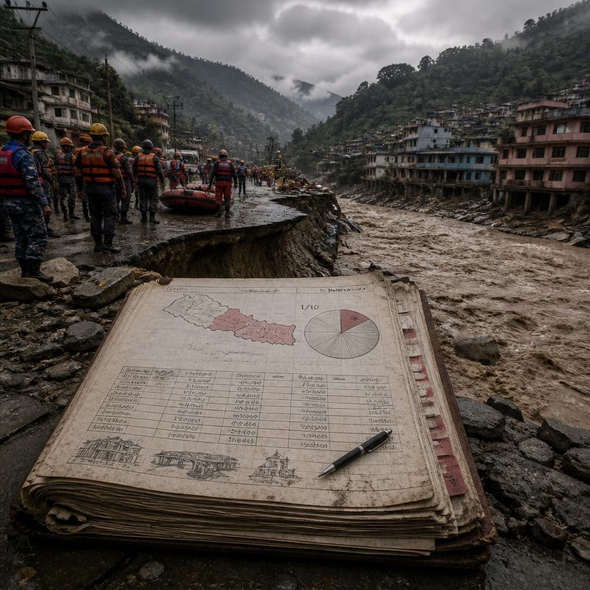
The reconstruction estimate is not merely a large number. It is a pressure map. Nepal needs outside capital, but every funding channel carries a process for ranking roads, homes, utilities, and public services, making the first recovery plan a test of whether money follows urgent need or institutional convenience.
Nepal is asking for technical assistance and billions of dollars after destructive floods, while bad weather continues to obstruct rescue work. Reuters reports that reconstruction may cost as much as one-tenth of the country’s economy. That estimate turns washed-out roads, damaged homes, and interrupted services into a national financing emergency before rescuers have finished reaching people.
The mechanism matters. Nepal’s government can direct public money, seek grants from foreign governments and donors, pursue loans, and hire contractors to rebuild. Outside institutions can supply capital and technical expertise. They can also impose application schedules, procurement rules, reporting demands, and project categories that determine which damage becomes financeable.
A disaster spreadsheet has a cruel sorting function. A major road can promise measurable economic returns and attract funding quickly. A smaller local route, water system, clinic, or household repair may be indispensable to residents but less legible to a distant committee. Technical assistance can improve decisions; it can also define the menu before affected communities reach the table.
The form of the money will decide who eventually pays. Grants reduce the immediate burden on Nepal’s balance sheet. Concessional loans still create future obligations. Cost-sharing requirements can push expenses toward the national budget or local authorities. If public revenue must cover debt service and reconstruction together, schools, health services, maintenance, and household support may compete with the recovery itself.
Contractors occupy another gate. Large projects favor organizations able to satisfy complex tenders, mobilize equipment, and wait for reimbursement. That capacity can accelerate work, but it can also concentrate contracts and leave smaller Nepali firms or local labor at the edge of the program. Speed is necessary. So are public prices, clear scopes, and records showing who received the work.
None of this makes foreign help suspect by definition. Nepal needs expertise and capital at a scale the reported estimate makes plain. The relevant question is narrower: whether assistance expands Nepal’s ability to choose or makes access contingent on priorities set elsewhere. The bill is large enough for financing procedure to become recovery policy.
The first reconstruction plan should therefore be read for sequence as much as total spending. Watch which districts appear first, how housing competes with transport and utilities, what share comes as grants rather than debt, which procurement rules govern contractors, and whether displaced households receive direct support. Those choices will show where the tenth of an economy lands.
Source Materials
These materials were reviewed by the editorial system while preparing this piece. Muerte.casa may interpret, satirize, reframe, or disagree with them.
- EXCLUSIVE: Nepal's flood damage may cost up to a tenth of economy to rebuild Reuters · August 28, 2026 · Primary signal · Direct source
- Nepal wants technical help for flood, billions of dollars as bad weather hampers rescue Reuters · August 28, 2026 · Direct source
How did this story land?
This may be changed as you like.