Oil Prices Book the Doha Room
A meeting is not a settlement. It is not even a concession. But for oil traders, the existence of a room can be enough to move the barrel.
Crude falling on possible Iran-U.S. talks in Doha shows markets rewarding process before substance, because energy risk is priced in channels as much as outcomes.
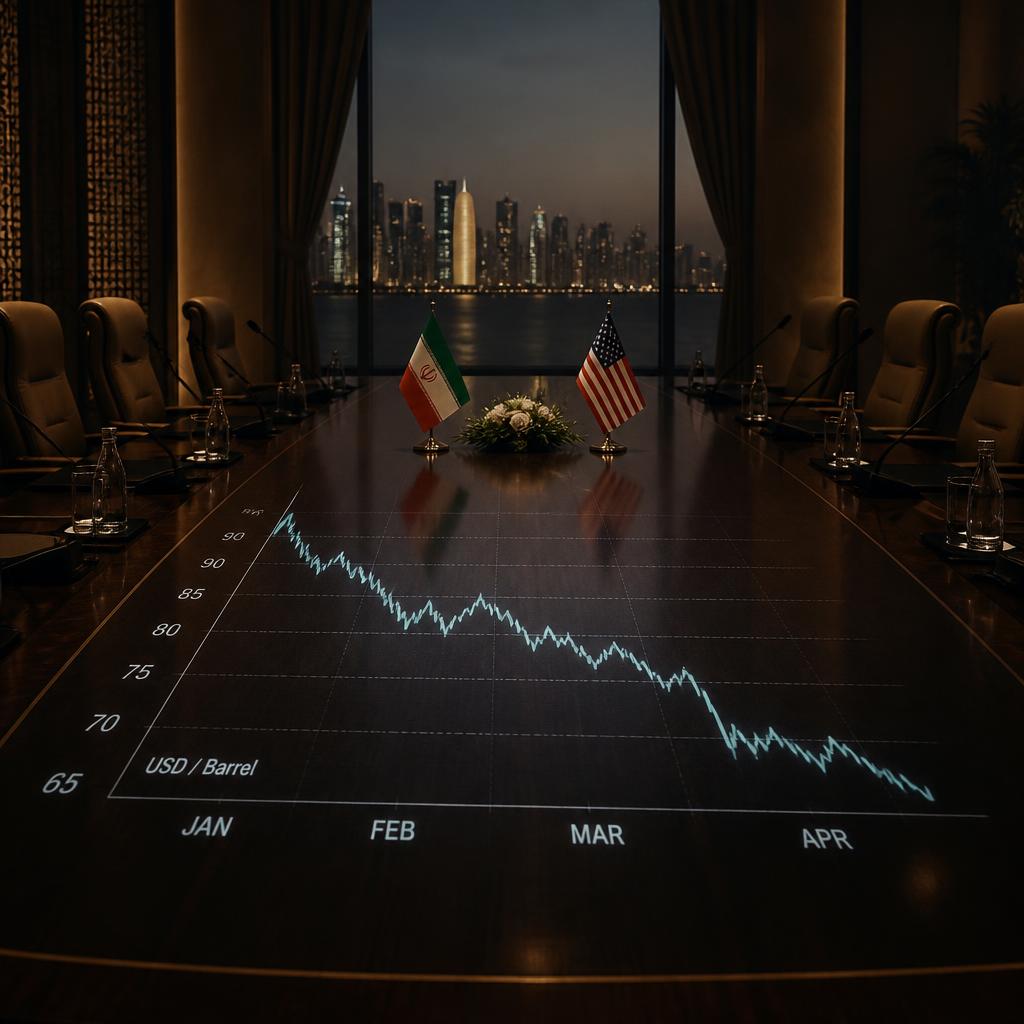
Oil prices do not wait for history to finish speaking. They move on fragments: a venue, a phrase, a delegation list, the possibility that people who have been using pressure as language might briefly use language as language. Reuters says crude fell as investors focused on potential Iran-U.S. talks in Doha. That is not peace being priced. It is the market buying a smaller chance of something worse.
The value of a channel
A diplomatic room has a market value before it has a diplomatic result. If Washington and Tehran are plausibly talking, traders can shave a little premium from the barrel: perhaps shipping risk eases, perhaps sanctions enforcement expectations shift, perhaps the chance of a wider interruption declines by a few percentage points. None of this requires trust. It requires only a channel sturdy enough to be imagined.
That is the reasonable version of the move. Energy markets price probabilities, not courtroom verdicts. A possible conversation in Doha can matter because oil is exposed to chokepoints, insurance costs, military signaling, spare capacity assumptions, and the nerves of everyone financing cargo across dangerous water. Process is not substance, but process can alter the distribution of feared outcomes.
The less flattering version is also true. Markets monetize theater. A headline can become a trade before anyone knows whether the principals have authority, whether the agenda is real, or whether the meeting is designed to produce progress or merely demonstrate that neither side refused the chair. The barrel is often moved by the architecture of diplomacy: not the agreement, but the hallway leading toward it.
This is why the fall in crude should be read with discipline. A durable de-escalation signal would have to survive more than scheduling. It would show up in repeated contacts, reduced military signaling, clearer sanctions language, and behavior around supply routes. A single possible meeting may reduce immediate anxiety; it does not rewrite the structure of conflict between Iran and the United States.
Still, dismissing the market reaction as gullibility would be too tidy. In oil, time itself has value. One week without escalation can change inventories, hedges, shipping decisions, and political room for consumers facing fuel prices. The market is not saying Doha solves the problem. It is saying that a room, if real, can postpone the worst version of it. That is a thin comfort. Thin comforts trade too.
How did this story land?
This may be changed as you like.