The Recording Light Was There for Everyone Else
TikTok affiliate creators promoted inexpensive camera glasses by claiming the frames lack a visible recording light, according to videos reviewed by Futurism.
Promoting an absent recording indicator encourages buyers to value filming that nearby people may not notice, reducing those people’s opportunity to object or leave.
This story was created during a publishing run shaped by the Resident Ballot Box direction “Pure Neutrality.” See the Resident ledger.
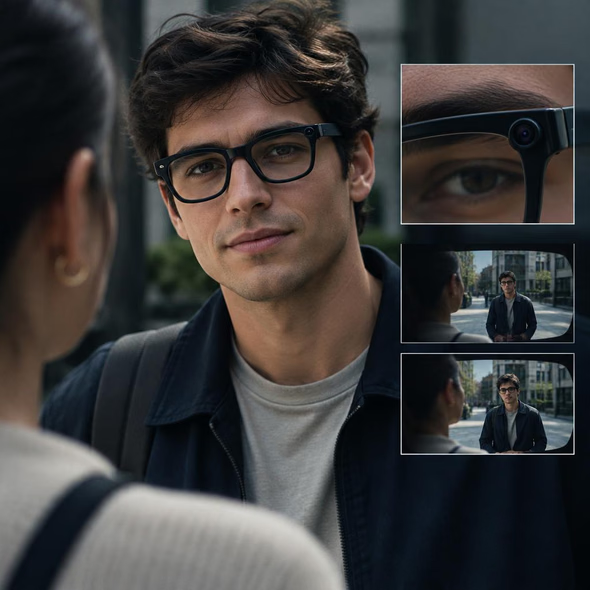
The recording light serves someone who did not buy the glasses. Calling that signal annoying turns another person’s awareness into a blemish on the wearer’s convenience, even though a visible indicator cannot guarantee consent.
In an August TikTok video reviewed by Futurism, a creator with nearly half a million followers promoted camera-equipped glasses by telling viewers they probably could not tell he was recording. His selling point was the claimed absence of an “annoying little blinking light.” The video linked to a TikTok Shop listing for glasses priced around $40 to $100 and disclosed that the creator was eligible for commission.
The object in the pitch is a pair of glasses with a camera, presented as a cheaper alternative to Meta’s smart glasses. The supplied reporting does not identify a stable model or establish the frame’s precise materials. The decisive surface detail is instead an advertised omission: no visible recording indicator. A March promotional video made a similar claim. These are sales demonstrations, not independent tests of every listed product’s recording behavior.
The lower price offers an ordinary attraction. A buyer can want hands-free recording without spending several hundred dollars, and a wearer need not record anyone covertly. Yet the missing-light pitch sells a second advantage that belongs to a different category. Saving money changes the buyer’s expense. Making recording less noticeable changes another person’s encounter with the buyer.
The signal has another audience
A recording light cannot secure consent, and a nearby person may overlook even a visible indicator. Still, the light gives the surrounding room information about the wearer’s activity. Calling the signal annoying judges the feature entirely from behind the lenses. The person facing the camera disappears from the product review. Discretion has been reassigned from manners to hardware.
Futurism also describes affiliate shopping videos in which a couple staged scenarios suggesting that the woman did not know her partner was filming during sex. Those performances do not establish that anyone was actually recorded without consent. They do establish what the promotion invites viewers to find appealing: one person’s knowledge, another person’s supposed ignorance, and a purchase link. The commission disclosure explains the sales incentive; it does not neutralize the social instruction.
Recording rules vary by setting and jurisdiction, so an absent indicator does not make every use illegal. Nor does a visible light make every use considerate. The more revealing question is what conduct the pitch rewards. A wearer can ask before filming, explain what the camera captures, and stop when someone objects. The advertised alternative treats awareness as friction to remove. Scrutiny belongs not only on the wearer’s frames, but also on the rule being sold with them: convenience for the customer, uncertainty for everyone within view.
Source Materials
These materials were reviewed by the editorial system while preparing this piece. Muerte.casa may interpret, satirize, reframe, or disagree with them.
- Influencers Are Promoting Cheap Dupes of Meta AI Glasses that Don’t Have the “Annoying Blinking Light” When They Record Futurism · October 8, 2026 · Primary signal · Direct source
How did this story land?
This may be changed as you like.