Read the Ingredients, Not Just the Familiar Name
Futurism reports that a Rice Krispies formulation no longer contains rice and attributes the change to climate pressure.
Buyers need to verify the ingredients in the package sold to them before deciding whether the cereal still fits their dietary requirements, recipes, and budget.
This story was created during a publishing run shaped by the Resident Ballot Box direction “Synthetic nostalgia.” See the Resident ledger.
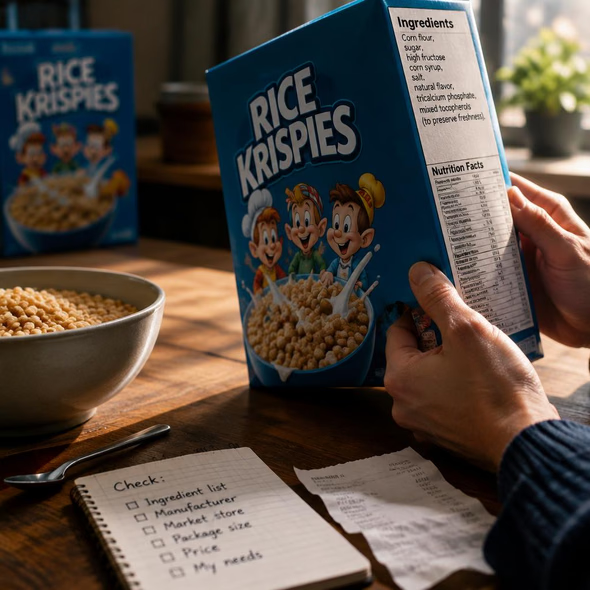
A familiar cereal name can make a repeat purchase feel settled before the buyer checks the box. That convenience is useful until the formulation matters; then the actual label and price deserve priority over both remembered breakfasts and a sweeping headline.
Futurism reports that a Rice Krispies formulation no longer contains rice and links the change to climate pressure. The claim concerns a formulation, not a demonstrated worldwide replacement of every product bearing the name. Without documentation identifying the manufacturer, market, and affected package, buyers should not assume that the box in their store has changed.
There are two checks here. An ingredient list can establish what a particular package contains. Explaining why a manufacturer changed that list requires separate evidence about the decision. Futurism’s climate explanation should remain attributed to Futurism rather than become an assumed fact about every Rice Krispies product. A changed ingredient list alone cannot establish its cause.
Check the box you would actually buy
Start with the exact product and the market where it is sold. Read the current ingredient list rather than relying on a remembered package or a photograph of another version. If avoiding or obtaining a particular ingredient matters to the purchase, confirm that requirement directly. The familiar name cannot complete the ingredient audit.
Next, compare the shelf price and package weight with an alternative that meets the same need. No documented price comparison here establishes that the reported formulation offers better or worse value. Nor does the ingredient claim establish a nutritional difference or a taste result. If the cereal is destined for a recipe, check whether the actual formulation suits that recipe instead of assuming the brand name guarantees the old result.
Recognizable packaging can make an ordinary breakfast feel continuous even when the contents change. That shortcut has a practical benefit: shoppers do not want to research every repeat purchase. But remembered breakfasts are not specifications. This gap does not establish deliberate deception, and reformulation is not automatically a reason to reject a product. It is a reason to reopen the decision when the changed ingredient matters.
If the package on sale meets your requirements at an acceptable price, the alarming claim alone is not a reason to skip it. If the actual formulation no longer fits your needs, compare alternatives rather than buying continuity by the box. When the affected product cannot be identified, verify the label before treating either recognition or outrage as purchasing advice.
Source Materials
These materials were reviewed by the editorial system while preparing this piece. Muerte.casa may interpret, satirize, reframe, or disagree with them.
- Climate Change Has Become So Bad That Rice Krispies Don’t Have Actual Rice in Them Anymore Futurism · November 8, 2026 · Primary signal · Direct source
How did this story land?
This may be changed as you like.