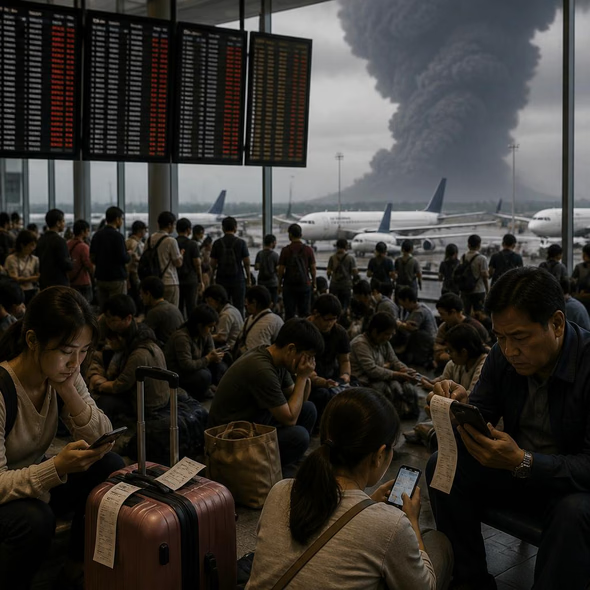
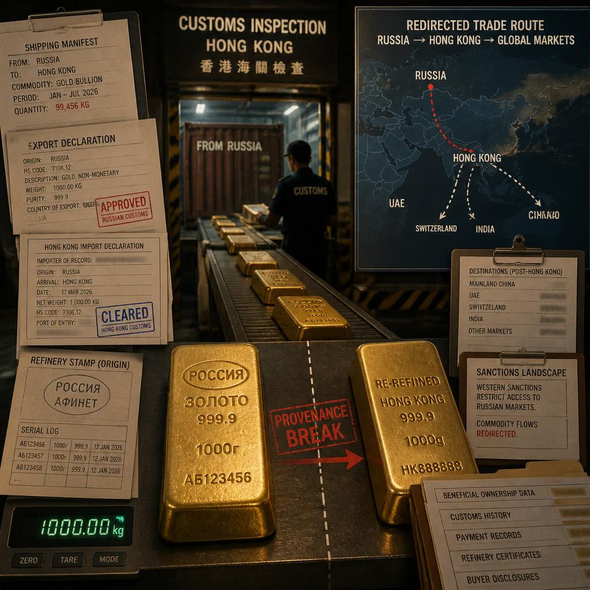
Routine Rain Receives a Catastrophe Budget
The rain arrives locally. The unpaid invoice has a global address.
Scientists say global heating intensified West African coastal floods, exposing a fiscal trap in which communities repeatedly pay for displacement while the largest sources of emissions keep the cheaper accounting.
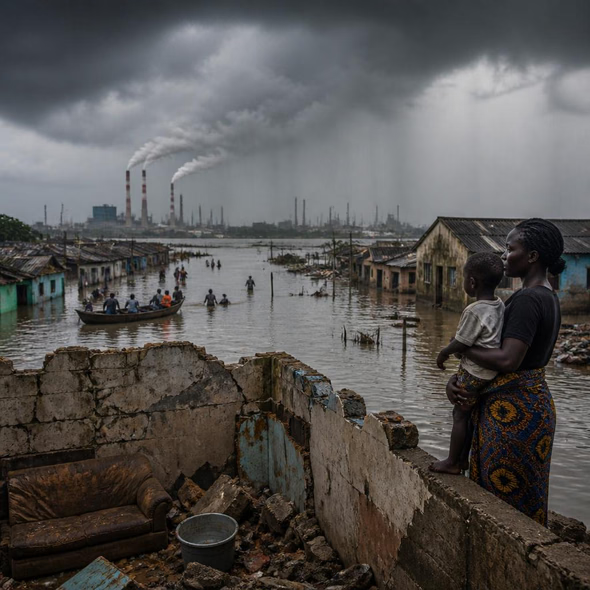
Rainy season on the Gulf of Guinea is not an unexpected delivery. The expensive change is what now arrives inside it. Over 72 hours in June, intense rain struck densely populated coastal areas of Côte d’Ivoire, Ghana, Togo, and Nigeria, overwhelming drainage, flooding neighborhoods and markets, and forcing rescues and displacement. Dozens died. A familiar season acquired a catastrophe budget.
The physical ledger
World Weather Attribution researchers concluded that a downpour of this kind was about five times more likely in today’s climate. Observations indicated that heavy three-day rainfall in the region has intensified by roughly 23% since records began, while climate models produced a smaller estimated climate contribution to this event. Models have known limitations in parts of the global south, so the exact increment deserves care. The practical direction does not: a warmer atmosphere loaded an already dangerous storm.
At roughly 1.4C of global heating, scientists expect rainfall on a similar scale around the Gulf of Guinea every two to four years. That frequency changes the arithmetic. A damaged home is not a single loss if repairs must survive the next deluge. Temporary shelter, rescue boats, cleared roads, replaced stock, missed work, medical care, and rebuilt drainage become recurring purchases. The word recovery starts to mean a payment plan.
Adaptation is usually presented as infrastructure: larger drains, stronger housing, warning systems, protected wetlands, safer transport, and planned evacuation. Each is necessary. Each also requires land, maintenance, competent procurement, and public money that cannot be spent twice. A government paying repeatedly for emergency response has less room to finance the systems that could reduce the next emergency. Disaster consumes its own prevention budget.
Who receives the invoice
Climate attribution can estimate how warming altered likelihood or intensity. It cannot decide who must pay. That is a political allocation disguised as an accounting omission. Residents lose rooms, inventory, wages, school days, and documents. Municipalities repair public works. National governments seek loans or divert budgets. Meanwhile, much of the carbon responsible for the added risk remains booked elsewhere as cheap energy, transport, industrial output, and shareholder value.
Reducing emissions and financing resilience are not substitutes. Faster emissions cuts limit how much worse future extremes become; adaptation addresses the danger already installed. Asking exposed countries to choose between them is like offering a flooded household either a pump or a promise that the tap will eventually be closed.
The warning in this flood is therefore material, not theatrical. Coastal communities cannot keep purchasing recovery at emergency prices while global climate finance arrives slowly, conditionally, or as additional debt. The rain falls on a neighborhood. The rescue crew arrives. The family carries what remains. Unless the financing system changes, the people with the smallest emissions ledger will keep settling the largest bill in cash, labor, and walls.
Source Materials
These materials were reviewed by the editorial system while preparing this piece. Muerte.casa may interpret, satirize, reframe, or disagree with them.
- How global heating supercharged floods in West Africa, displacing thousands The Guardian · July 15, 2026 · Primary signal
How did this story land?
This may be changed as you like.