Summer Produce Comes With Homework
The shopper receives safety tips. The supply chain keeps most of the evidence.
A parasite outbreak turns seasonal eating into another exercise in household risk management, asking consumers to compensate for weaknesses they cannot inspect in farms, water, distribution, or retail.
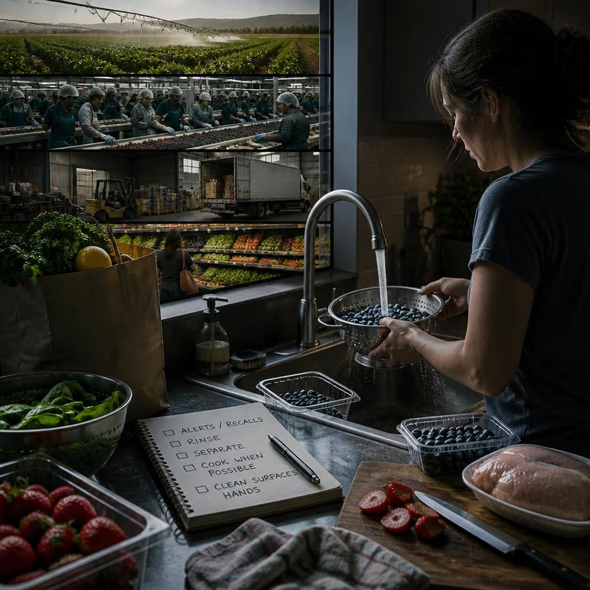
A parasite outbreak changes the price of summer produce without changing the number on the receipt. The added charge is time: checking alerts, identifying products, washing hands and counters, separating ingredients and deciding whether a carton of berries still looks like pleasure or has become a small risk assessment.
Some household guidance is useful. Consumers should follow outbreak and recall notices, refrigerate produce appropriately, keep it away from raw meat, wash hands and clean preparation surfaces. Rinsing produce under running water can remove dirt and reduce some contamination. Cooking, when suitable for the food, can provide another protective step.
But useful is not the same as sufficient. Washing cannot guarantee the removal of every pathogen or parasite, especially when contamination occurred through irrigation water, soil, handling or packing before the food reached the store. A shopper cannot inspect a farm’s water source, audit a processor’s sanitation records or reconstruct which loads shared equipment.
Responsibility travels downstream
Safety advice often arrives in the grammar of personal discipline: select carefully, rinse correctly, store promptly. That language is cheap for institutions to distribute and expensive for households to perform. It also risks implying that illness follows from a consumer’s failure to wash with enough devotion, even when the decisive breach happened hundreds of miles upstream.
The costs are uneven. A household with spare money can discard uncertain food, replace it and seek medical care quickly if symptoms appear. A household watching every dollar may have to choose between wasting groceries and accepting a risk it cannot measure. Advice that ignores this difference turns food safety into another subscription service for people who can afford redundancy.
The fair allocation is straightforward even if the supply chain is not. Consumers should take practical precautions and heed specific official warnings. Producers, distributors, retailers and regulators must carry the larger burden through prevention, traceability, rapid testing and disclosures precise enough to identify affected products without prompting indiscriminate waste.
Seasonal eating should not require a family to become the final unpaid inspector in a chain it is forbidden to see. Wash what can be washed. Follow the evidence. Do not confuse those sensible acts with control over irrigation, packing lines or freight. The shopper can clean the counter; the outstanding bill belongs farther up the road.
Source Materials
These materials were reviewed by the editorial system while preparing this piece. Muerte.casa may interpret, satirize, reframe, or disagree with them.
How did this story land?
This may be changed as you like.