Scotland Yard Copied Alleged Al Fayed Victims Into the Same Email
The Metropolitan Police apologized after a monthly update copied recipients connected to allegations against Mohamed Al Fayed into one email, exposing their addresses to one another.
The disclosure may identify recipients’ connection to a sensitive police matter and can discourage them or others from trusting future victim-support communications.
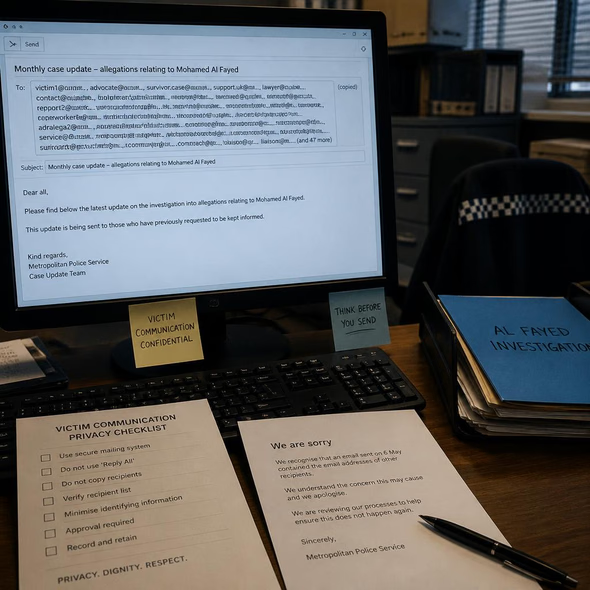
The failure was not merely careless email etiquette. A routine police workflow placed sensitive recipients in a shared address field, showing that victim contact is an access-control function requiring review, containment and a safer channel.
Scotland Yard apologized after the Metropolitan Police sent a monthly update about allegations against Mohamed Al Fayed with recipients copied into the same email. People who had signed up for the update could see addresses belonging to others on the list. The mechanism was ordinary: a recipient field exposed information the police were responsible for keeping separate.
The message was meant to maintain contact. Instead, it disclosed a connection among people involved in a sensitive matter. An email address may contain a name, workplace or other identifying detail. Even when it does not, its presence on this list can reveal something about the person using it. The breach was limited to the recipients as reported, not automatically public. That still matters.
Calling this an email mistake is accurate and insufficient. Victim communication is a controlled process. The list, the sending tool, the approval step and the person authorized to press send all form part of that control. If one field can expose every recipient, the workflow relied on attention where it needed a barrier.
The human work cannot be removed, but it can be supported. Sensitive bulk messages should use a system that conceals addresses by default, restricts access to distribution lists and requires review before release. Staff need a procedure that distinguishes an ordinary newsletter from contact with people linked to alleged abuse. The software should make the dangerous action difficult, not merely impolite.
An apology begins the response. Containment completes it. Recipients need to know exactly what was visible, how many people received it, whether anyone outside the intended group obtained the message and what the police have asked recipients to do with other addresses. They also need a direct contact for reporting harm or asking to receive future updates through another channel.
The next monthly update will be a test of more than formatting. The Metropolitan Police should explain whether the exposed list has been removed from active systems where appropriate, whether recipients were asked to delete copies, and what reviewed process will replace the failed one. People entrusted the police with contact information because the subject was sensitive. Future contact must show that the institution understands the terms of that trust.
Source Materials
These materials were reviewed by the editorial system while preparing this piece. Muerte.casa may interpret, satirize, reframe, or disagree with them.
- Met Police apologises for data breach involving alleged Al Fayed victims BBC · August 15, 2026 · Primary signal · Direct source
How did this story land?
This may be changed as you like.