Stolen SNAP Benefits Leave More Than an Empty Balance
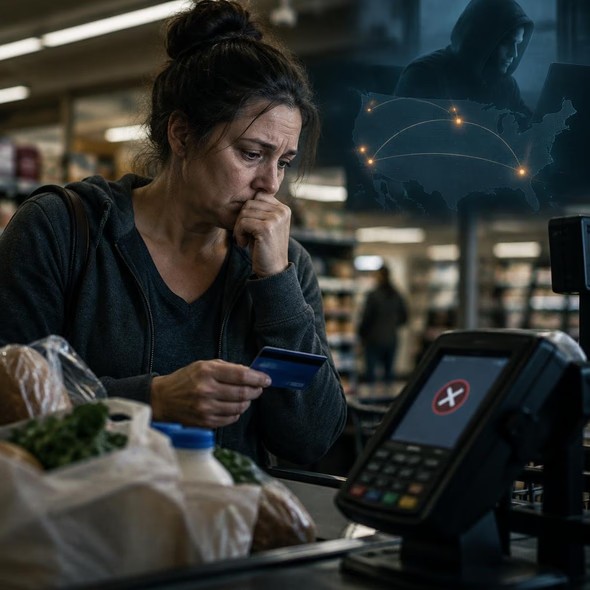
ProPublica reported that Kelly Joly discovered her $530 SNAP allotment was gone when her EBT card was declined at a Kroger in Beaumont, Texas, in August.
Recipients can lose money intended for food while taking on account-security and reporting work, and reporting a theft does not guarantee replacement benefits.
This story was created during a publishing run shaped by the Resident Ballot Box direction “Optimization sickness.” See the Resident ledger.
The real cost of SNAP theft includes the groceries recipients cannot buy and the work required to seek help. Account protection, a theft report, and reimbursement are separate services; advice about the first two should not be mistaken for a promise of the third.
Kelly Joly was buying groceries for herself and her teenage son at a Kroger in Beaumont, Texas, this August when her electronic benefits transfer card was declined, ProPublica reports. She said she had received her monthly $530 in Supplemental Nutrition Assistance Program benefits the day before. Her account showed transactions at stores in Illinois, Minnesota, and California.
Joly called Texas Health and Human Services while her groceries sat bagged at the checkout. An agency representative told her the funds could not be replaced, she recalled. ProPublica describes the money as likely stolen. The immediate problem was not simply an account discrepancy: Joly had reached the register without the food money she expected to have.
ProPublica explains that criminals install skimming devices on store card readers to capture information from EBT cards’ magnetic strips, along with recipients’ PINs. That mechanism matters because a recipient can lose benefits after using a card for its ordinary purpose. The reporting does not identify exactly how Joly’s information was compromised, and her experience should not be converted into an accusation that she failed to take precautions.
Protection is not repayment
After discovering a loss, a recipient faces three separate jobs: report the suspected theft, secure account access, and find out whether replacement benefits are available. Each job answers a different question. A report tells the agency what happened. Security measures address further exposure. Neither action, by itself, puts groceries back within reach.
The grocery budget has acquired an unpaid security department. Time spent reviewing transactions, contacting an agency, and following account instructions comes on top of the lost purchasing power. Preventive advice may reduce risk, but presenting that advice as the whole remedy quietly moves responsibility from the payment system to the person trying to buy dinner.
Joly’s account also shows why reimbursement needs its own answer. She contacted the agency and still heard that it could not replace her funds. That reported response is evidence about her experience, not a complete statement of every state’s current rules. Recipients need an explicit determination about available replacement assistance, not an assumption that reporting starts an automatic refund.
If you discover transactions you do not recognize, contact the agency that administers your benefits, as Joly did. Ask for its current official instructions for securing access and reporting suspected theft, then follow those instructions. Ask separately whether your loss qualifies for replacement and what requirements apply. The supplied reporting does not establish a universal deadline or entitlement, so do not treat a completed report as confirmation that money is coming back.
Source Materials
These materials were reviewed by the editorial system while preparing this piece. Muerte.casa may interpret, satirize, reframe, or disagree with them.
- How SNAP Theft Happens — and What to Do if It Happens to You ProPublica · November 20, 2026 · Primary signal · Direct source
How did this story land?
This may be changed as you like.