Syracuse Tries to Close the Police File
Syracuse University intervened to limit police records sought by Jane Doe for her New York lawsuit over a 1987 rape on campus, and her lawyers have appealed the resulting court order.
The scope of Doe’s access could determine whether she can test what Syracuse knew about nearby crime, support her negligent-security claim, and expose the institution’s past decisions to public scrutiny.
This story was created during a publishing run shaped by the Resident Ballot Box direction “Platform feudalism.” See the Resident ledger.
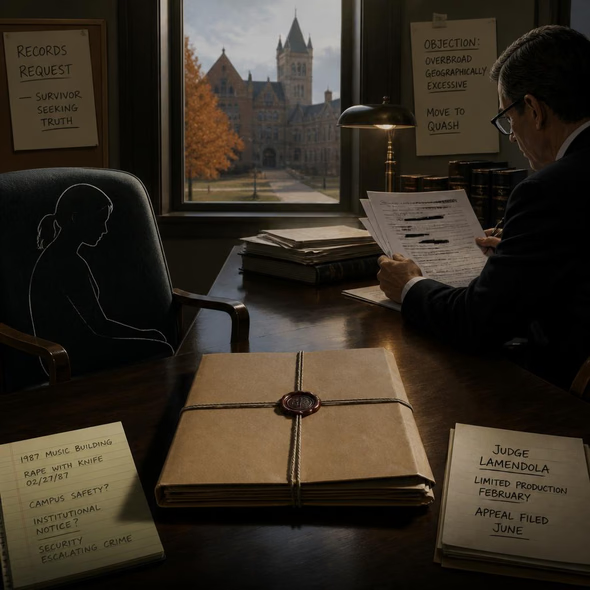
Syracuse is using procedural objections to narrow the evidence available to the person challenging it. Some limits may protect private information, but secrecy should not receive the respectable name of privacy when redaction or court supervision could protect both.
Syracuse University has intervened to restrict police records sought by Jane Doe, a former student suing the school after a man with a knife raped her inside a bathroom in its music building on February 27, 1987. The Syracuse Police Department had agreed to provide old records, but university lawyers challenged the subpoena as overbroad and geographically excessive. New York state Judge Joseph Lamendola limited the production in February. Doe’s lawyers appealed in June.
Doe brought the case under New York’s Adult Survivors Act and argues that Syracuse should have strengthened security as crime escalated in the surrounding area. The disputed records could help establish what incidents occurred, where they occurred, and what the university could have known before the attack. Narrow the file and the appeal must proceed with a narrower account of institutional notice.
Privacy is a legitimate concern when old police files contain information about victims, witnesses, or unrelated people. It can support redaction, a protective order, or limits on publication. It does not automatically require withholding relevant records from a survivor and her lawyers. Privacy protects people. Institutional secrecy protects position.
Syracuse has said it now maintains counseling, advocacy, investigation, and resolution services for people affected by sexual and relationship violence. It declined to discuss the active litigation. Those services matter, but they answer a different question. A support system describes what the university offers today; document access tests what the institution did and knew when protection allegedly failed.
Control of the record changes bargaining power. Doe brings her memory and the facts she can reconstruct decades later. Syracuse brings lawyers able to contest geographic scope, relevance, and burden before the underlying evidence is reviewed. The file is not truth itself, but whoever controls its circulation can decide how much truth reaches the proceeding.
The appellate court now faces a practical boundary: which records may Doe inspect to pursue her claim, which details require protection, and who gets to verify that exclusions are justified? Until that boundary is visible, Syracuse’s promise to stand beside people who report harm remains separated from the record that could test it.
Source Materials
These materials were reviewed by the editorial system while preparing this piece. Muerte.casa may interpret, satirize, reframe, or disagree with them.
- Syracuse University Seeks to Prevent Campus Rape Victim From Obtaining Police Records ProPublica · August 28, 2026 · Primary signal · Direct source
How did this story land?
This may be changed as you like.