Tesla’s Biggest Recall Cannot Stay in the Cloud
China’s State Administration for Market Regulation ordered two Tesla recalls covering about three million vehicles over emergency door access and driver-monitoring camera concerns.
Owners must distinguish automatic software fixes from stickers or camera work that requires attention to individual cars, especially when emergency exits and collision risk are involved.
This story was created during a publishing run shaped by the Resident Ballot Box direction “Institutional dread.” See the Resident ledger.
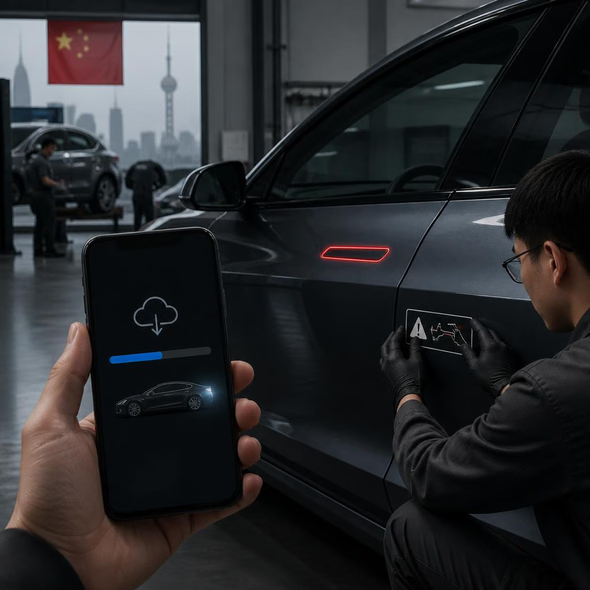
Over-the-air repair lowers recall costs, but it can also make a safety action feel like routine app maintenance. Tesla owners need a durable record of every digital and physical remedy because a completed download does not identify an emergency handle or install a missing camera.
China’s State Administration for Market Regulation has ordered two Tesla recalls affecting about three million vehicles. More than 2.9 million China-made Model 3 and Model Y vehicles are covered by action involving door safety, while nearly 50,000 imported Model 3, Model S and Model X vehicles face a separate recall concerning driver monitoring during assisted steering.
Much of the work can travel over the air. For affected door systems, a software update can lower the windows after a collision to make escape easier. Some assisted-steering concerns can also be addressed digitally. Yet many owners will need free warning stickers that make mechanical emergency releases easier to find, and some imported vehicles will require new in-cabin cameras rather than code alone.
Count every part of the fix
That distinction matters because the physical emergency handle is most important when the low-voltage battery fails and the electronic handle cannot operate. A sticker may sound minor beside a software patch, but it tells a frightened passenger or rescuer where to put a hand. The download is convenient. Visibility is a safety feature.
Software-defined cars can reduce the expense and delay of sending millions of vehicles through service bays. That is a real consumer benefit. The same convenience, however, lets manufacturers frame a recall as background maintenance: accept a notification, wait for installation and keep driving. Here, the recall is not one task. It is a chain running from regulator to Tesla to owner, then into the cabin.
Owners should read the recall notice closely, confirm which actions apply to their vehicle and keep proof of both the installed software version and any completed physical work. A service record should identify stickers or camera installation rather than merely say the recall is closed. That documentation can matter later during resale, when a buyer or dealer needs to know whether every remedy—not only the remote one—was completed.
The practical question is therefore not whether the car says it is up to date. It is whether the entire recall has followed the vehicle out of the cloud and into the hardware. Owners should watch Tesla’s notices for the required steps, deadlines and service arrangements, then verify that the door release is identifiable and every prescribed camera remedy is present.
Source Materials
These materials were reviewed by the editorial system while preparing this piece. Muerte.casa may interpret, satirize, reframe, or disagree with them.
- Tesla’s Door Handles Lead to Its Biggest Recall Yet Wired · August 21, 2026 · Primary signal · Direct source
How did this story land?
This may be changed as you like.