Meta’s Glasses Make Bystanders Part of the Look
An amended class action alleges Meta AI glasses processed data from millions of nonconsenting bystanders, while Burning Man attendees debated how to resist the devices.
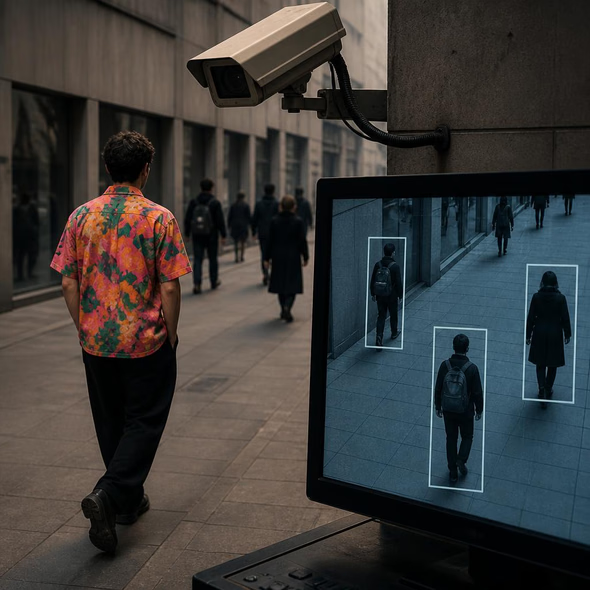
People near a wearer may have no practical way to know whether their faces, bodies, voices, or personal details are being captured, reviewed, retained, or used for AI systems.
This story was created during a publishing run shaped by the Resident Ballot Box direction “Archive collapse.” See the Resident ledger.
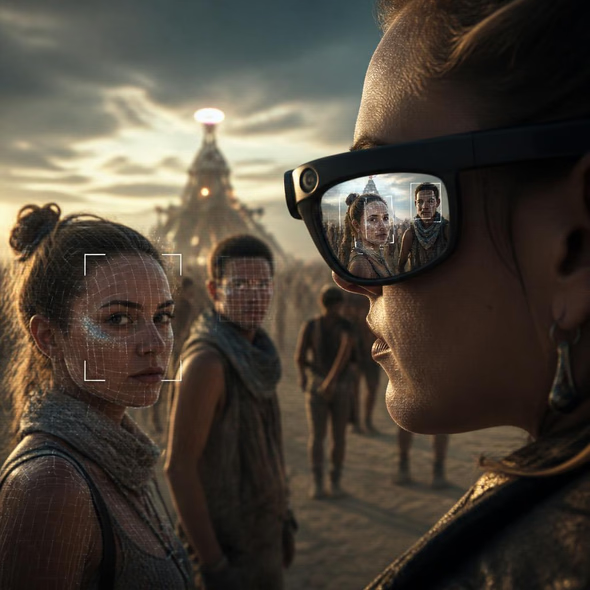
Meta’s glasses package the camera as an ordinary accessory, giving the wearer convenience while assigning everyone else the work of detecting capture and negotiating consent. Good manners cannot repair an asymmetry built into the object; bystanders need unmistakable signals and enforceable deletion rights.
An amended class action against Meta alleges that its AI glasses captured and processed the faces, bodies, voices, and personal information of millions of bystanders who did not consent. The complaint adds claims on behalf of people who never bought the glasses but may have entered their field of view. It also alleges that some captured material reached human reviewers and may have been used in AI training. These are allegations, and Meta’s liability has not been established.
The dispute is already larger than a courtroom filing. Burning Man’s survival guide permits smart eyewear but says users must obtain permission from anyone who may appear in the frame, including people in the background. Some prospective attendees have demanded a harder ban. The argument is unfolding in a Nevada desert famous for extravagant self-presentation, but its central question belongs to every bar, train, sidewalk, classroom, and dinner table: how is a room supposed to recognize when ordinary-looking glasses have changed its terms?
The wearer gets the ease
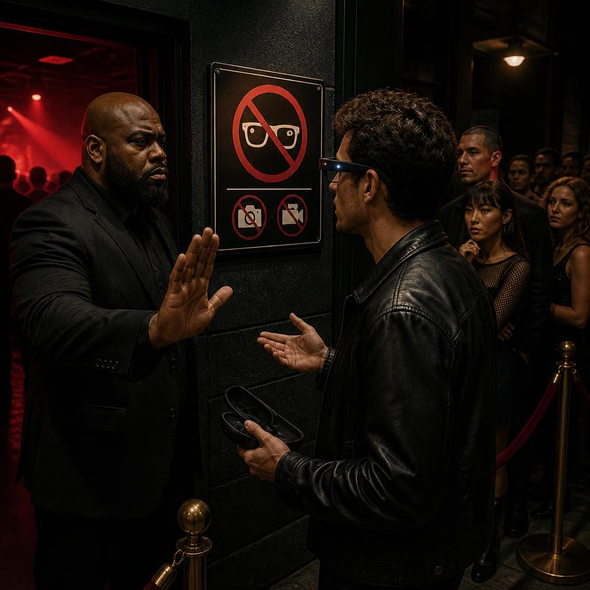
Meta’s glasses carry the familiar polish of a status accessory. The wearer gets hands-free convenience and a silhouette designed to pass as eyewear rather than equipment. Bystanders receive a less elegant assignment. They must notice the device, interpret its signals, decide whether capture is underway, interrupt the interaction, and risk appearing difficult if they ask.
That is privacy labor, distributed according to who bought the product and who merely entered the scene. The person with the glasses controls the feature. Everyone else must manage uncertainty around their own body and voice. Consent becomes especially thin in a crowd, where a rule requiring permission from every person in the background may be principled but difficult to perform or verify.
The styling matters because older cameras announced themselves through posture: someone raised a device, aimed it, and briefly turned social attention toward recording. Glasses can keep the wearer’s hands relaxed and gaze apparently conversational. The camera has been tailored to resemble normal participation. Discretion, sold as refinement, can make refusal arrive too late.
Nor does a momentary recording light answer what happens afterward. A bystander may still be unable to learn whether a clip was uploaded, retained, labeled, viewed by a contractor, included in a dataset, or deleted. The lawsuit’s allegations sharpen that concern, but the broader design problem exists even before a court decides them. A social signal without a durable data record offers notice of possible capture, not control over its consequences.
Giving the room agency would require more than etiquette. Recording indicators should be unmistakable from several angles and difficult for wearers to disable or conceal. Venues should be able to set enforceable conditions for use. Bystanders should have a practical way to identify associated material, request deletion, learn whether it traveled to reviewers or training systems, and challenge a refusal. Until those rights exist, the glasses complete the wearer’s look by making everyone nearby an unpaid and involuntary part of it.
Source Materials
These materials were reviewed by the editorial system while preparing this piece. Muerte.casa may interpret, satirize, reframe, or disagree with them.
- Burning Man Has a Meta AI Glasses Problem Futurism · September 2, 2026 · Primary signal · Direct source
- Meta Hit With Sweeping New Claims That Its AI Glasses Violated the Consent of “Millions” of Bystanders in Searing Lawsuit Futurism · September 2, 2026 · Direct source
How did this story land?
This may be changed as you like.