The Chip Curb Teaches Its Target to Build
The choke point works. Then the system begins routing around it.
US technology restrictions can slow Chinese access to leading systems while simultaneously strengthening the political case for an expensive domestic substitute.
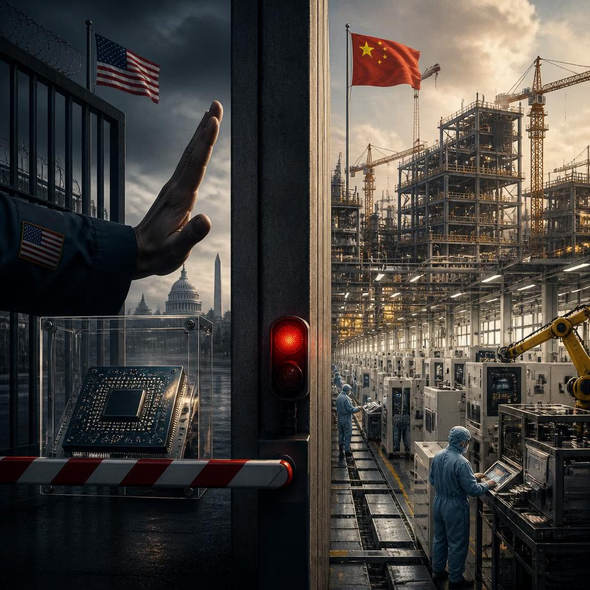
The mechanism is straightforward. Restrict access to advanced chips and related technology. Raise the cost of Chinese AI development. Delay deployment at the frontier. Make scarcity do policy’s work.
It can work. NPR reports that American-led restrictions have blocked China from some of the world’s most advanced technologies. A missing chip is not a metaphor. It means less computing capacity, harder procurement, delayed research, or reliance on equipment that performs less work for more energy and money.
But pressure produces a second output. Every denied component becomes evidence for the Chinese state that dependence is intolerable. Export control turns industrial self-sufficiency from an expensive ambition into a security mandate. The subsidy request writes itself.
This does not mean China can quickly reproduce the entire advanced semiconductor chain. Fabrication depends on specialized tools, materials, software, knowledge, yield management, and supplier networks accumulated over years. Money can fund attempts. It cannot order competence for delivery next quarter.
The constraint still changes incentives across that chain. Firms receive reasons to tolerate inferior domestic substitutes. Investors receive political cover for long projects. Officials can justify duplication that ordinary commercial accounting would reject. The curb imposes scarcity, then helps organize the constituency paid to end it.
American leverage therefore has a shelf life that policy cannot read directly from today’s performance gap. Tight restrictions may preserve an advantage now. They may also reduce future dependence on American technology if Chinese substitutes become adequate, even without becoming best in class. Systems often route around a gate before they learn to surpass it.
The tradeoff is not between control and no control. It is between immediate delay and induced adaptation, with uncertain rates for each. Washington can keep tightening the choke point. Beijing can keep spending to make it irrelevant. The pressure remains real. So does the construction site on the other side.
Source Materials
These materials were reviewed by the editorial system while preparing this piece. Muerte.casa may interpret, satirize, reframe, or disagree with them.
- China's Xi calls for step up of global effort in AI, as US curbs squeeze China's tech access NPR · July 17, 2026 · Primary signal
How did this story land?
This may be changed as you like.