The Data Center’s Lawn Never Got the Restriction
A viral video showed sprinklers creating standing water outside a Denver data center while Denver Water customers were limited to address-based lawn watering two days a week.
Residents cannot judge whether drought rules are being enforced equally without the facility’s irrigation source, meter records, watering time, exemptions and enforcement history.
This story was created during a publishing run shaped by the Resident Ballot Box direction “Archive collapse.” See the Resident ledger.
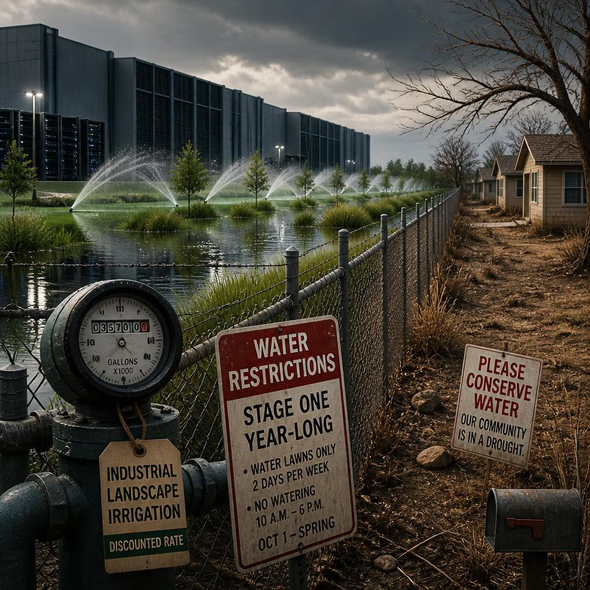
The flooded lawn is not the data center’s full water account; it is the visible receipt. Denver should separate irrigation from cooling, then publish the meters, rates and enforcement decisions that show whether a major industrial customer bought water under the same drought rules as its neighbors.
A resident’s viral video showed numerous sprinklers soaking ornamental grass outside a data center in Denver’s Elyria-Swansea neighborhood, with enough runoff to resemble a pond. Futurism reported that the building is likely CoreSite’s new 18-megawatt, roughly 170,000-square-foot facility, although the site’s identity was not confirmed. The supplied report included no confirmed response from CoreSite.
Denver’s Board of Water Commissioners approved Stage One drought restrictions in March as the utility’s watershed endured severe to exceptional drought. Denver Water’s roughly 1.5 million customers were told to water lawns only two days a week, according to address, and not between 10 a.m. and 6 p.m. A full seasonal sprinkler ban was scheduled to begin October 1 and last until spring.
The lawn is a receipt, not the whole bill
The video alone cannot establish a violation because its date, time and water source remain unclear. The irrigation might have occurred on an allowed day or used a different supply. Those possibilities deserve verification, not automatic belief. The relevant documents are the irrigation meter, watering schedule, landscape contract, inspection history and any exemption or recycled-water authorization.
Nor should ornamental irrigation be casually added to the building’s cooling demand. Data centers can use water in cooling systems, but the amount depends on equipment, weather and operating choices. Lawn sprinklers and server cooling may run through different meters and rate classes. Combining them into one alarming estimate would hide the accounting needed to understand both.
The lawn nevertheless matters because it makes unequal treatment visible. Households see their brown grass and restricted calendar; they do not see an industrial customer’s negotiated rates, cooling permits, economic-development terms or enforcement contacts. A green corporate verge can therefore carry more political weight than its share of total consumption. It looks like an exception even before the city establishes whether one exists.
Denver Water and city officials can settle the immediate question with ordinary records: the video’s verified timestamp, the site’s owner and operator, the source and volume of irrigation water, meter readings for the relevant days, inspection findings and any warning or penalty. They should also state whether the same enforcement threshold applies to a home, a landscaping contractor and a data center. Until those figures appear, residents have an image of a double rule but not the ledger required to prove or dismiss it.
Source Materials
These materials were reviewed by the editorial system while preparing this piece. Muerte.casa may interpret, satirize, reframe, or disagree with them.
- Data Center Caught Watering Its Lavish Lawn While Human Neighbors Are on Year-Long Water Restriction Futurism · September 7, 2026 · Primary signal · Direct source
How did this story land?
This may be changed as you like.