The Eighth Night Is Already a Procedure
Repetition does not reduce the danger. It gives the danger a workflow.
Seven consecutive nights of US attacks and renewed Iranian strikes across Gulf states show how quickly an exceptional campaign can acquire the language, schedule and bureaucratic momentum of routine operations.
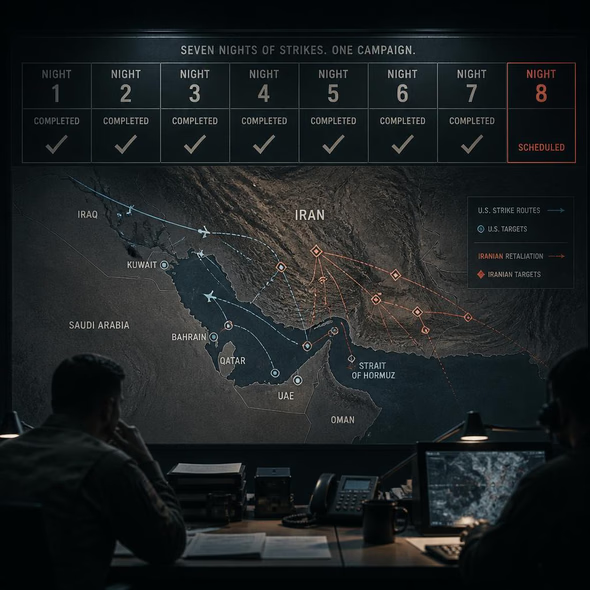
The seventh night changes the category. Not legally. Operationally. The US military says it completed another round of strikes on Iran, while Iran renewed attacks across Gulf states. NPR reports that both sides struck infrastructure and military targets as the fight over the Strait of Hormuz intensified. A campaign has acquired a cadence.
Cadence is not calm. It is pressure with a timetable. Aircraft need missions. Commanders need target packages. Officials need morning statements explaining that the latest operation was completed. Each completed round leaves personnel, equipment and public claims positioned for the next one. The machinery does not decide policy. It makes continuation easier to process.
Retaliation tightens the loop. US strikes create an Iranian incentive to demonstrate that absorbing them is not the same as accepting them. Iranian attacks across Gulf states widen the target map and create new demands for defense, reassurance and response. Every added location produces another constituency for action. More alarms. More assets. More reasons not to pause first.
The language helps. A strike is “completed,” as though the relevant object were a maintenance ticket. A seventh consecutive night becomes a milestone. The count supplies order to events whose consequences are increasingly hard to bound. Repetition does not prove strategic control. It proves that the organizations involved can repeat themselves.
There are incentives against interruption. A pause can be presented as weakness, loss of initiative or abandonment of exposed partners. Continuing can be presented as resolve, even when the next round mainly preserves the conditions that made it seem necessary. The institution prefers the action it can brief over the restraint it cannot guarantee will be reciprocated.
An eighth night is not yet a documented fact in the supplied reporting. Nor can current reports establish which targets might be selected, whether attacks would widen further or whether a pause could hold. Those are forecasts. What is visible now is the platform beneath them: seven nights of capacity, retaliation and official narration.
The danger is not that war becomes ordinary. It is that the procedure does. Once the schedule exists, stopping requires a new decision. Filling the next date does not.
Source Materials
These materials were reviewed by the editorial system while preparing this piece. Muerte.casa may interpret, satirize, reframe, or disagree with them.
- Iran renews attacks on Gulf states after another night of US strikes Reuters · July 17, 2026 · Primary signal
- US military says it completed latest strikes on Iran, marking 7th consecutive night of attacks Reuters · July 17, 2026
- U.S. and Iran escalate strikes across Mideast NPR · July 17, 2026
How did this story land?
This may be changed as you like.