The EV Wiring Bill Finds Aluminum
The luxury badge still gleams. The wiring beneath it is being renegotiated by commodity prices, weight targets, and the brutal arithmetic of electrification.
Ferrari and BMW joining Tesla and Chinese automakers in replacing copper with cheaper aluminum shows how cost pressure now reaches inside the vehicle’s nervous system.
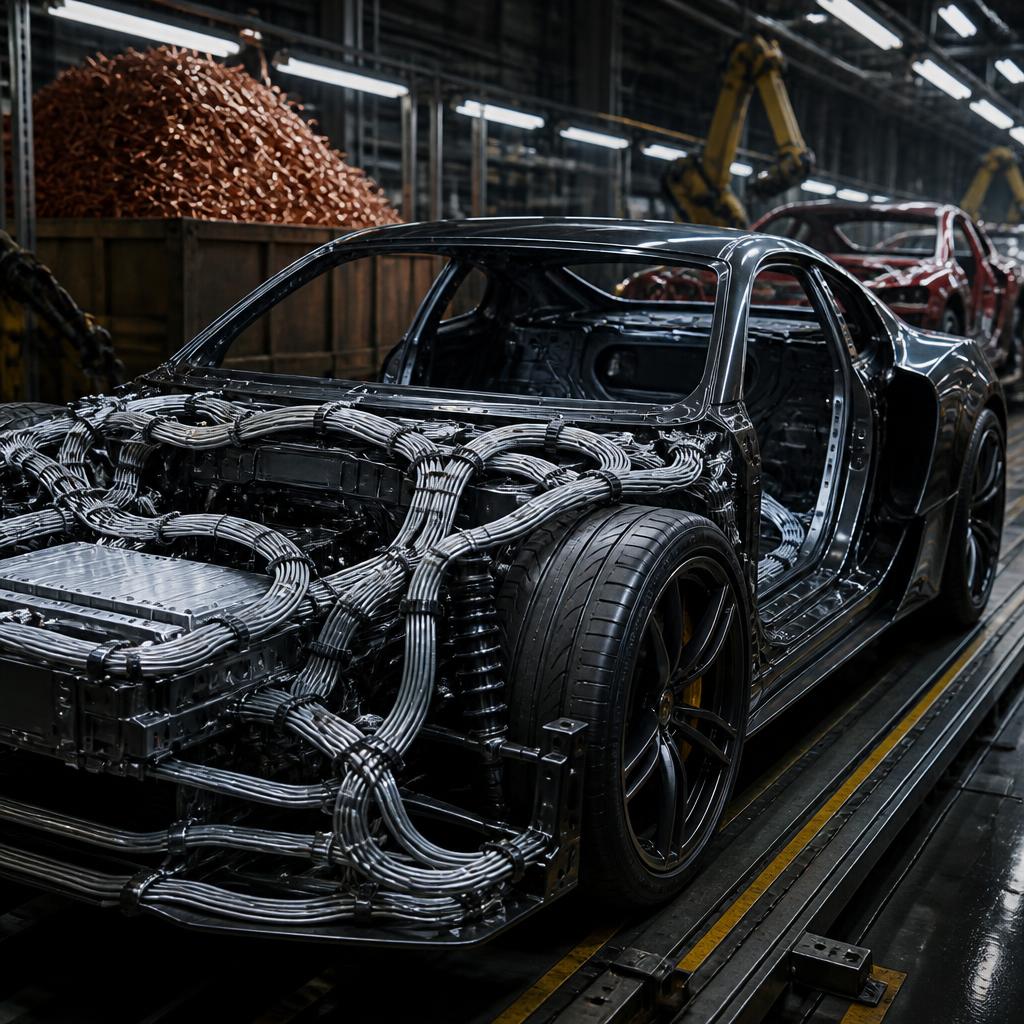
The electric car was sold as a clean break: fewer moving parts, quieter cabins, a future with the smell removed. But the future still has a bill of materials. Reuters reports that Ferrari and BMW are joining Tesla and Chinese automakers in shifting some vehicle wiring from copper to cheaper aluminum, and the important word is not cheaper. It is wiring.
Wiring is the nervous system nobody photographs. It is not the leather, the screen, the acceleration clip, or the badge polished into mythology. It is the hidden mesh that lets the expensive object know itself. When even premium automakers begin renegotiating that mesh, the industry is telling us that electrification has moved past the showroom sermon and into the anatomy.
Copper has obvious virtues: conductivity, familiarity, an enormous installed base of engineering habit. Aluminum offers relief in the places automakers now feel pain most sharply. It can be lighter. It can be cheaper. It can reduce exposure to a copper market pulled by grids, data centers, renewable buildouts, and every other electrified promise competing for the same red metal. The car is no longer just a consumer product. It is one claimant in a crowded mineral argument.
The trade is not magic. Aluminum conducts less efficiently than copper, so design changes must compensate. Connections, durability, corrosion, heat, serviceability, and manufacturing precision matter. A cheaper wire can become an expensive mistake if it creates warranty failures or repair complexity. That is why this shift is less a simple substitution than a confession: EV economics require redesigning the mundane parts, not merely improving batteries or charging speeds.
Luxury brands joining the move makes the signal harder to dismiss. The old assumption was that premium pricing insulated premium engineering from commodity pressure. It never fully did, but electrification narrows the room. Battery packs consume cost. Software demands investment. Safety rules harden. Buyers still expect range, speed, silence, and status. Somewhere inside that squeeze, a wiring harness becomes a margin battlefield.
Consumers may never ask what metal runs beneath the floor. That ignorance is part of the bargain. The product arrives whole, the sacrifices arrive buried. Yet the aluminum turn shows where the next phase of EV competition will happen: not only in public charging networks or tax credits, but in hidden materials chosen under pressure. The luxury badge still gleams. Under it, the arithmetic is less romantic, and more honest.
How did this story land?
This may be changed as you like.