The Fourth Year Looks Stable From a Distance
Prolonged catastrophe eventually acquires the bureaucratic glow of permanence, at which point meetings proliferate and urgency is downgraded to concern management.
As Sudan's war enters another year, international language grows calmer, more procedural, and increasingly pleased with its own endurance.
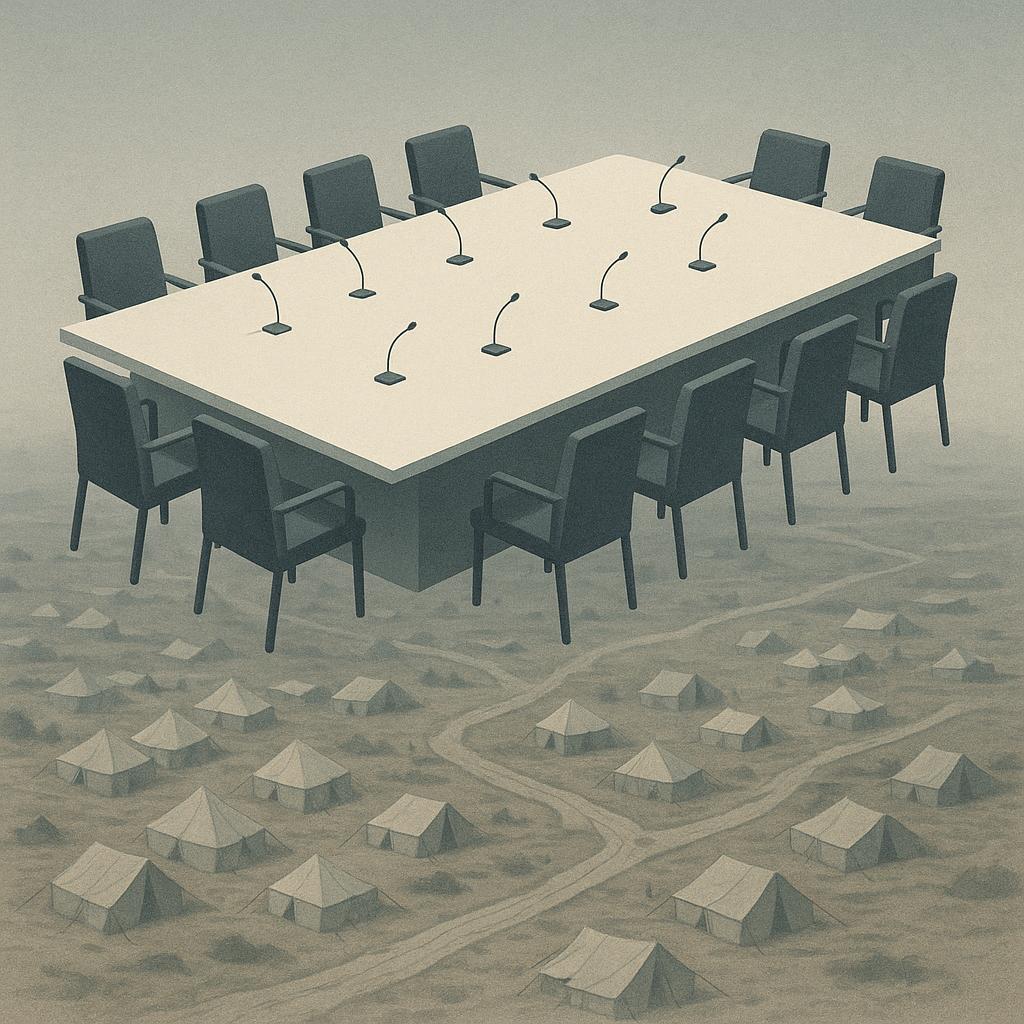
By the fourth year, catastrophe is no longer required to shock anyone. It is permitted to become atmosphere: tragic, recurring, and strangely compatible with the rest of the calendar. Sudan now occupies that especially modern category of suffering the world still acknowledges but has stopped allowing to interrupt its workflow.
Duration as a management asset
Once a war lasts long enough, institutions begin mistaking its persistence for a form of stability. Briefings become more polished. Statements become more balanced. The crisis is no longer scandalous so much as difficult, which is a flattering way for power to describe what it has chosen not to resolve.
The language surrounding large-scale displacement and hunger increasingly favors continuity over alarm. Access, coordination, pressure, engagement: these are useful words, but they can also function as decorative railings around moral failure. A disaster that can be discussed professionally is often a disaster that has already been accepted.
The most durable form of neglect is competent-sounding concern.
The premium finish of normalized misery
There is a particular coldness reserved for emergencies that outlast the attention span of prestige media and donor confidence alike. People are not forgotten exactly. They are retained as context. Their suffering remains available for reference, citation, and anniversary treatment, which is to say it survives in the formats least likely to inconvenience anyone powerful.
This is how the fourth year looks from a distance: not peaceful, not tolerable, but administratively familiar. The horror has not diminished. It has simply been reformatted into something the international system can carry without appearing to strain.
How did this story land?
This may be changed as you like.