The Healthy Diet Moves Behind Glass
The guidance says fresh and varied. The receipt says otherwise.
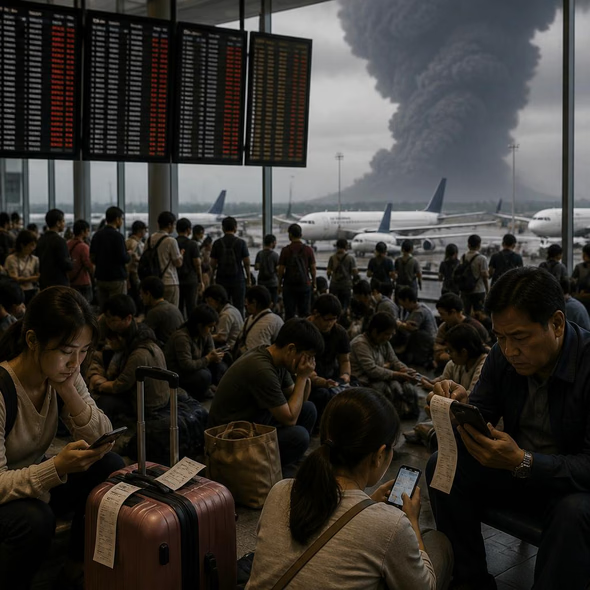
With 2.69 billion people reportedly unable to afford a healthy diet and millions of UK households struggling for essentials, nutritional advice increasingly describes a lifestyle whose admission price keeps rising.
A healthy diet now costs more than good intentions. The latest UN assessment puts the number of people unable to afford a diverse, nutritionally adequate diet at 2.69 billion. It estimates the daily cost at 4.28 purchasing-power-parity dollars, well above the three-dollar extreme-poverty line. The arithmetic is blunt: for a vast share of the world, eating well is priced beyond the income used to define severe deprivation.
The second price tag
Food is only the first charge. Ingredients must be stored, washed and cooked. A household choosing between heating, electricity and groceries cannot treat an oven as a free final step, and reporting that 7.4 million UK households are struggling to buy essentials makes the familiar advice to prepare fresh meals sound incomplete. A bag of vegetables is not dinner until time, refrigeration, fuel and equipment have also been paid for.
This is where nutritional guidance can become an exercise in transferred responsibility. The shopper is told to plan better, batch-cook, compare labels, reduce waste and develop discipline. Each suggestion may be useful. Together they imply that the main obstacle sits inside the household rather than in wages, energy prices, agricultural priorities, retail access and supply chains. Policy failures return wearing the apron of personal choice.
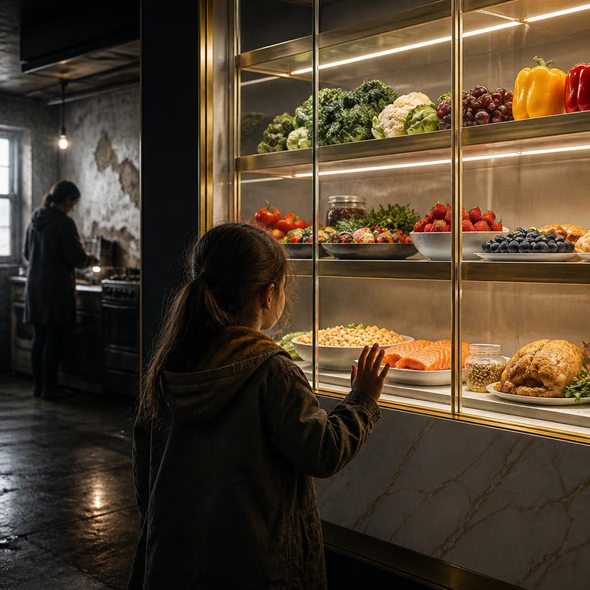
The global figures contain real progress: hunger declined for a third consecutive year in 2025, affecting 7.8% of people compared with 8.1% in 2024. But sufficient calories and a healthy diet are not interchangeable achievements. The UN report notes that public support has often favoured cereals and starchy staples over fruit, vegetables, dairy and other nutrient-rich foods. That can make basic energy cheaper while leaving dietary variety behind the glass.
Wellness without purchasing power
A large maintenance industry flourishes in this gap. Meal plans, tracking applications, supplements and premium convenience foods promise to repair diets whose underlying problem is often price. They sell control to the individual while the market withholds affordable ingredients and the state subsidises an incomplete plate. Those with money receive variety as lifestyle; those without it receive instruction as correction.
More efficient supply chains and investment in infrastructure could lower the cost of perishable foods, as the report suggests. Income support, affordable energy and better access to cooking facilities matter too. None offers a single glamorous cure, but each recognises that nutrition is produced by material systems before it is expressed as personal behaviour.
A recipe cannot compensate for an empty meter. Advice that ignores the full cost of preparing food does not merely fail; it misidentifies the customer as the cause. Until healthy eating is affordable after the oven is switched on, the guidance will remain fresh, varied and financially out of reach.
Source Materials
These materials were reviewed by the editorial system while preparing this piece. Muerte.casa may interpret, satirize, reframe, or disagree with them.
- 'He launched me in the air': Grandfather recounts terrifying Yellowstone Park bison attack BBC · Primary signal
- Healthy diet too expensive for one in three people globally, UN report finds The Guardian · July 21, 2026
How did this story land?
This may be changed as you like.