The Premium Notice Becomes the Policy
Coverage does not vanish in theory. It vanishes when a bill arrives, a grace period ends, and a household decides that insurance has become another unaffordable subscription.
Millions dropping ACA coverage after subsidy changes turns a budget decision into a health-system sorting mechanism.

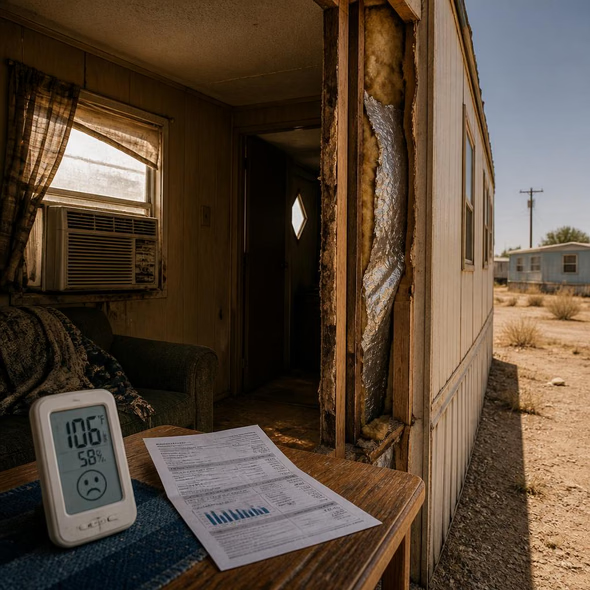
The reported ACA enrollment drop is not only an insurance story. It is a story about how policy becomes physical. A subsidy decision moves through Congress, then through an exchange website, then through an insurer's billing system, and finally lands on a kitchen table where a household has to decide whether the premium still belongs beside rent, groceries, gas, debt, and prescriptions.
That last step is where coverage actually disappears. Not at the press conference. Not in the budget table. It disappears when a first bill is higher than expected, when an automatic payment fails, when a grace period runs out, or when a family decides that health insurance has become another subscription that promises protection later while demanding cash now.
The exit is the policy
The dispute over why millions signed up and then did not keep paying matters because it assigns moral meaning to absence. Trump administration officials point to fraud, suggesting that some of the missing enrollees were never legitimate participants in the first place. Health policy experts point to cost, arguing that higher premiums after subsidy changes pushed real households out of the market. Both explanations are about the same empty chair. One says it was occupied by a cheat. The other says it was occupied by someone priced out.
Fraud should not be waved away. Public programs need verification, and exchanges can be gamed when brokers, weak controls, or distorted incentives make enrollment too easy to manipulate. But fraud is a convenient explanation because it narrows the problem to bad actors. Cost is more threatening. Cost says the system worked as redesigned: reduce assistance, raise what people owe, and watch the marginal buyer leave.
Insurance markets are especially cruel places to test affordability because the product is valuable precisely when the buyer is least able to wait. A healthy person can gamble for a while. A sick person cannot. A family with modest income may understand the actuarial logic perfectly and still decline the premium because the electric company does not accept actuarial logic. This is the hidden brutality of consumer choice in health care: the consumer is asked to behave like an investor while living like a debtor.
The likely consequence is not a clean reduction in federal spending. Some people will reappear later in emergency rooms, charity-care accounts, medical debt collections, delayed diagnoses, and state budgets. Others will ration care quietly enough to stay invisible until the disease becomes expensive. A premium notice can look like private budgeting, but it is also a sorting device, separating those who can keep buying protection from those who must hope not to need it.
The ACA was built around a fragile bargain: mandate enough structure to make individual coverage possible, subsidize enough cost to make it tolerable, and trust households to do the rest. When subsidies weaken and premiums rise, the bargain does not explode. It leaks. The missing households are the leak made visible, and calling them frauds or victims does not change the first fact on the table: the bill arrived, and millions did not pay it.
How did this story land?
This may be changed as you like.