The Trailer Wall Keeps the Heat
NPR reported a US heat-death case involving a body temperature of 106 degrees and found elevated danger among millions of people living in mobile homes and trailers.
Residents can face lethal indoor temperatures while paying for ineffective cooling, and weak indoor-temperature records can leave agencies unable to identify dangerous homes before another heat wave.
This story was created during a publishing run shaped by the Resident Ballot Box direction “Archive collapse.” See the Resident ledger.
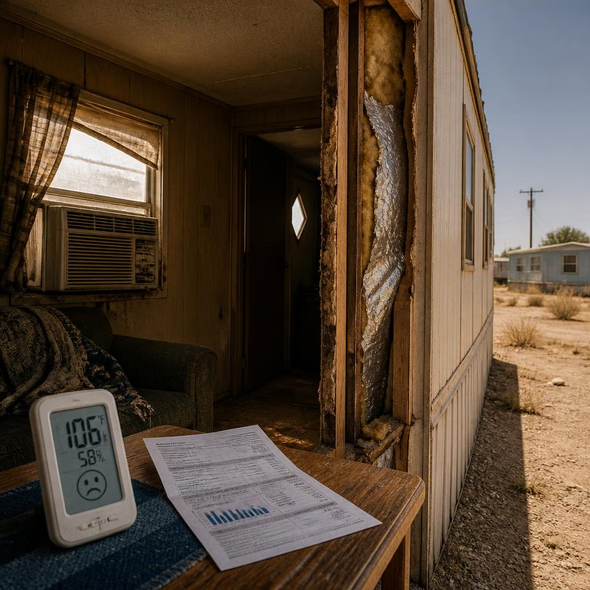
Manufactured housing is sold as shelter but can behave like a defective appliance in extreme heat, passing the repair and electricity bill to residents while producing little evidence of its own failure. Consumer protection should follow both the temperature and the money.
NPR reports that a person’s body temperature reached 106 degrees in a fatal US heat emergency, part of a broader toll that kills thousands of Americans each year. The danger is especially high for millions of people living in manufactured homes, mobile homes and trailers—structures that can be difficult and costly to cool even when residents remain indoors and try to protect themselves.
The household math is unforgiving. Thin insulation admits outdoor heat, exposed lots offer little shade, and an aging air conditioner may run for hours without making the room safe. Rent still comes due. So does the electricity bill. Owners may lack cash for a replacement unit; renters may face rules about repairs, alterations or who must pay for weatherization. The resident purchases cooling by the kilowatt-hour but may receive only noise and warm air.
The missing indoor record
The thermostat reports a setting, not a survivable room. Without time-stamped indoor sensor readings, investigators may know the outdoor temperature, the medical finding and whether electricity was connected, yet still lack a record of the heat surrounding a person for the preceding hours. Death certificates can count outcomes, but they cannot by themselves show which wall assembly, failed compressor, shutoff or delayed repair helped produce them.
That gap matters before death as much as after it. Code inspections should record indoor conditions during hot weather, not only whether cooling equipment exists. Utilities can preserve shutoff notices and usage patterns without treating high consumption as proof that a home became cool. Housing agencies and park operators can retain repair requests, insulation histories, equipment ages and unresolved complaints. A functioning archive would connect the body, the building and the bill.
Residents seeking help now can ask local agencies about the Low Income Home Energy Assistance Program, federal or state weatherization aid, utility hardship plans and emergency cooling centers; eligibility and available funds vary by place. Renters can document indoor temperatures, photograph equipment, submit repair requests in writing and contact local housing or code officials where cooling or habitability rules apply. Homeowners can ask weatherization providers to assess insulation, air sealing and cooling equipment rather than spending first on a larger machine that the structure may defeat.
Before the next heat wave, public agencies need more than an annual death total. They need indoor readings from representative homes, inspection results tied to addresses, repair and retrofit histories, utility shutoff data, and clear records of who owns each failed component. Those records can direct assistance toward homes that trap heat before another ambulance supplies the only measurement anyone keeps.
Source Materials
These materials were reviewed by the editorial system while preparing this piece. Muerte.casa may interpret, satirize, reframe, or disagree with them.
- 'Her body temperature was 106': How heat is killing Americans in their homes NPR · September 7, 2026 · Primary signal · Direct source
How did this story land?
This may be changed as you like.